





The Psychology of a Packet
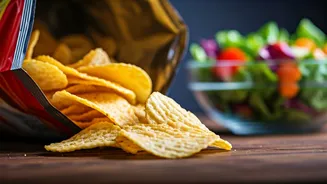
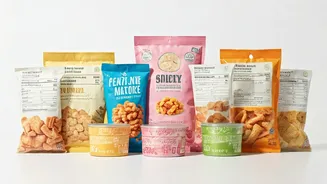
Before you even taste a snack, you’ve already consumed it with your eyes. That’s not an accident; it’s a carefully crafted science. Packaging is the silent seller, using colours, fonts, and images to create an emotional response. Green packaging often
signals freshness and health, while earthy browns and matte textures suggest a product is rustic, natural, and wholesome. Glossy, minimalist white packaging can imply a clean, simple product. Even the shape matters: rounded edges can feel more friendly and approachable. This is what’s known as a “health halo,” a cognitive bias where a single positive attribute—like a green label—makes us perceive the entire product as healthy, often incorrectly. It's a powerful psychological tool designed to make you feel good about your purchase before you’ve even checked the facts.
Decoding the Buzzwords
The front of the pack is prime real estate for marketing buzzwords that sound healthy but often have little regulated meaning. Words like "natural," "superfood," and "clean eating" are powerful marketing tools but aren't scientifically defined terms. For example, "natural" simply suggests the food doesn't contain added colour or artificial flavours, but it doesn't mean the product is inherently healthy or low in sugar. "Multigrain" just means more than one type of grain is present; they are often still refined grains, not necessarily whole grains which offer more fibre. And a "sugar-free" product might not contain refined cane sugar, but it could be sweetened with sugar alcohols or artificial sweeteners, and still contain high levels of naturally occurring sugars from fruit concentrates. These terms create a vibe of healthfulness that can be misleading.
The Truth Is on the Back
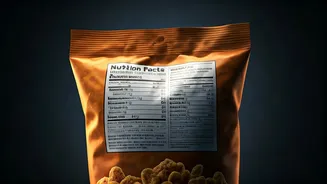
The most honest part of any food package is the back. This is where the marketing stops and the evidence begins. There are two key areas to focus on: the ingredients list and the nutrition facts table. The ingredients are listed by weight, from the highest amount to the lowest. A simple rule of thumb is to look at the first three ingredients. If sugar (under any of its many names like high-fructose corn syrup, dextrose, or maltose), refined flour, or hydrogenated oils appear at the top of the list, it's a strong sign that the snack is highly processed and not as healthy as its front-of-pack vibes suggest. Generally, a shorter ingredient list with names you recognise is a better sign.
Your Five-Second Label Scan
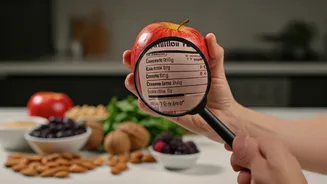
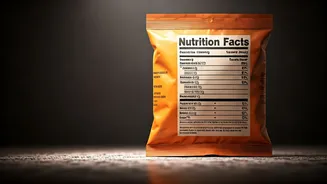
Don't have time for a deep analysis? Develop a quick scanning habit for the nutrition facts table. First, check the serving size at the top. Marketing claims are often based on a surprisingly small serving, and you may be eating two or three times that amount. Next, glance at the calories, but more importantly, look at the “Added Sugars” and sodium content. These are the nutrients often overconsumed in processed snacks. A daily value (%DV) of 5% or less for a nutrient is considered low, while 20% or more is high. Use this as a quick guide to see if a snack is high in things you want to limit. A study from the University of Sydney found that many snacks in health food aisles are only marginally healthier than regular snacks, so being able to read the label is crucial.