





What Exactly Is Microgravity?
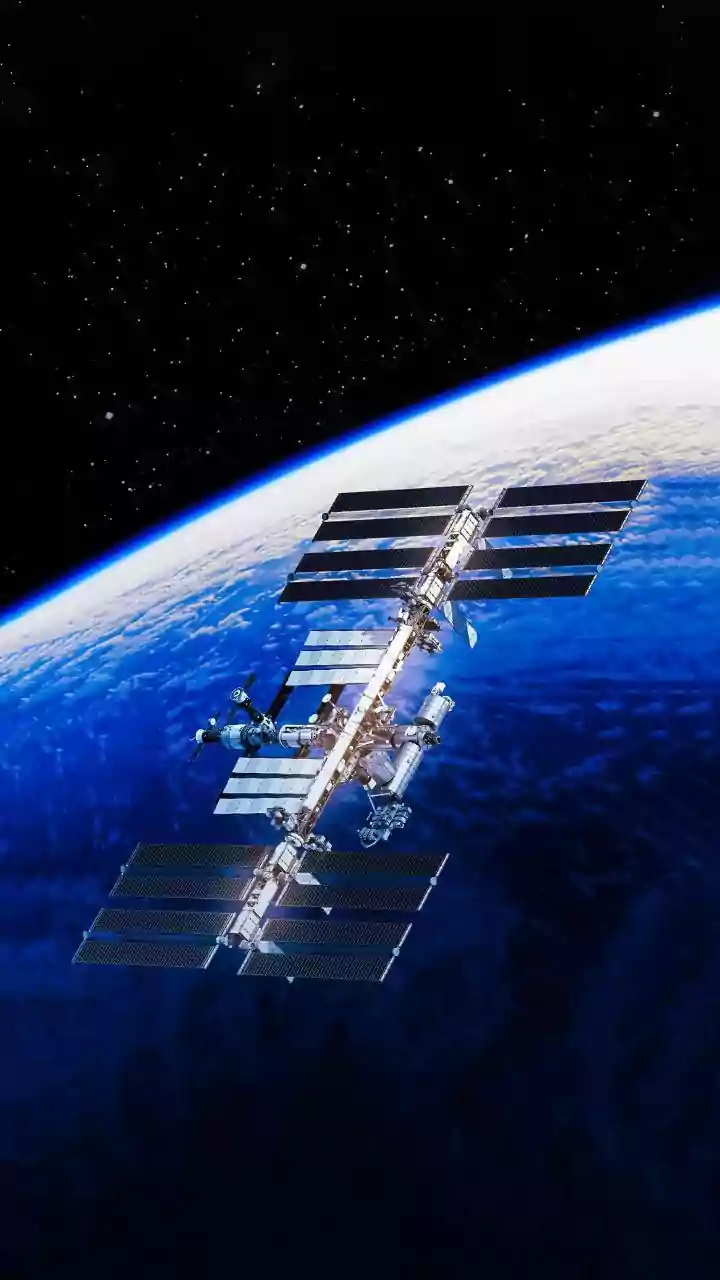
Often mistakenly called 'zero gravity', microgravity is a state of near-weightlessness. It’s not that gravity disappears in space; in low Earth orbit, where spacecraft like the International Space Station (ISS) operate, about 90% of Earth's gravity is still
present. However, because the spacecraft and everything inside it are in a constant state of free-fall, they fall 'around' the Earth together. This continuous fall creates the sensation of floating, an environment where the usual effects of gravity are reduced to a tiny fraction of what they are on the surface. This unique setting allows scientists to observe phenomena that are normally masked or distorted by gravity's immense force.
Why Is This Environment So Valuable?
On Earth, gravity dominates everything. It causes denser materials to settle and lighter ones to rise, a process called sedimentation. It creates convection currents in fluids and gases. In microgravity, these forces vanish. Without sedimentation, it becomes possible to create perfectly blended metal alloys or grow purer, more uniform crystals. This is crucial for developing next-generation semiconductors and pharmaceuticals. Similarly, studying how fluids and flames behave without gravity can revolutionise everything from fuel efficiency to fire safety in space and on Earth. The environment acts as a unique laboratory for fundamental science.
ISRO’s Leap into Microgravity Research
ISRO is actively stepping into this domain, viewing its human spaceflight missions not just as technological feats but as opportunities for cutting-edge science. The Gaganyaan programme and the upcoming joint mission with Axiom Space to the ISS are key platforms for these ambitions. ISRO has invited Indian researchers to propose experiments through initiatives like IMEx-2026, covering a vast range of fields including materials science, biotechnology, pharmacology, and in-space manufacturing. These short-duration missions will serve as a crucial stepping stone, building a foundation of knowledge and expertise.
Breakthroughs in Medicine and Health
Some of the most exciting potential lies in medicine. In microgravity, protein crystals can grow larger and with fewer defects, allowing scientists to map their structures more accurately. This is a game-changer for drug development, helping design more effective therapies for diseases. Furthermore, the human body itself becomes a subject of study; conditions like muscle atrophy and bone density loss occur much faster in space, offering a model to understand aging and osteoporosis on Earth. ISRO-selected experiments already include studies on muscle regeneration and how stem cells grow in 3D structures that better mimic human tissue.
Advanced Materials and Future Technologies
The ability to manufacture in microgravity could unlock a new industrial era. By removing gravity-driven defects, researchers hope to create superior fibre optics, high-performance metal alloys, and more efficient solar cells. Understanding how materials behave and combine without the pull of gravity can lead to innovations across countless sectors, from defence and communications to consumer products. These experiments are not just for discovery but for developing practical, high-value products that could one day be manufactured in orbit.
The Road to a 'Bharatiya Antariksha Station'
These initial experiments are foundational for ISRO's long-term vision: establishing the 'Bharatiya Antariksha Station' (BAS) by 2035. This modular space station is designed to be a dedicated hub for long-duration microgravity research. With plans for five modules, including dedicated science and laboratory sections, the BAS will allow Indian astronauts to conduct sustained studies for months at a time. The first module is targeted for a 2028 launch. This permanent address in orbit will transition India from a nation that conducts space missions to one with a continuous strategic and scientific presence in space.