









Beyond the Textbook
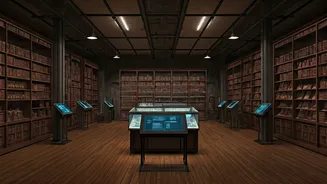
History is not just something you read in a textbook; it’s a living narrative pieced together from fragments of the past. The Delhi Archives, a treasure trove of the city's rich history, offers students a unique chance to become a part of that process.
It houses the non-current records of the Government of NCT of Delhi, preserving everything from rare documents and maps to manuscripts and photographs. A fellowship here isn't just about reading old papers; it's an exercise in 'doing history' like a real historian. It is a systematic investigation of records to discover and preserve information, providing an in-depth understanding that secondary sources often lack. By engaging with primary sources, students can develop critical thinking skills, learn to connect evidence with valid arguments, and gain a profound appreciation for how historical accounts are constructed.
The Opportunity on Offer
The Government of NCT of Delhi, through its Department of Delhi Archives, has periodically initiated a Fellowship Programme designed to preserve the archival heritage of the capital. These one-year fellowships cover a surprisingly wide range of fields, appealing to students from various academic backgrounds. Key areas include Records Management, Conservation, Research and Publication, Digitisation, Microfilming, and even specialisations in Oriental Languages like Urdu and Persian. This multi-faceted approach shows a commitment not just to preservation but also to making the archives accessible and relevant in a digital age. Past announcements have detailed posts for both Junior and Senior Research Fellows, offering a structured path for young researchers to contribute meaningfully.
Who Can Apply?
While specific eligibility can vary with each announcement, the fellowships are generally targeted at young researchers and scholars. Typically, applicants must be under 40 years of age for most fields, though this limit has been waived for language specialisations in the past. A key condition is that applicants should not already be receiving a fellowship from another state or central government agency. The programme is designed to attract independent scholars, researchers, authors, and PhD candidates who are passionate about archival work. While a background in history or social sciences is a natural fit, the inclusion of areas like digitisation and conservation opens the door for students with technical and scientific skills as well.
Why This Is a Game-Changer for Your CV
In a competitive job market, a fellowship from the Delhi Archives is a significant differentiator. It’s more than just an academic pursuit; it’s hands-on professional experience. Working with archival materials—whether restoring a fragile document, digitising a collection, or researching a historical narrative—builds a set of skills that are highly valued. You learn project management, meticulous data handling, and the art of storytelling from raw data. Engaging directly with primary sources sparks imagination and instills a desire for independent research. Furthermore, it provides an unparalleled networking opportunity, connecting you with seasoned archivists, historians, and government officials. It's a cost-effective way to conduct deep research without the usual expenses of travel and extensive fieldwork.
How to Prepare Your Application
Though the application window is not always open, aspiring fellows should prepare in advance. The process typically requires an application form, which can be downloaded from the official Delhi Archives website (archives.delhi.gov.in) when the call is active. Applications are often accepted offline and must be sent to the Department of Delhi Archives. Start by monitoring the website for announcements. In the meantime, hone your research interests. Develop a clear idea of what you would want to study or what skills you could bring to the archive. A strong statement of purpose is often crucial in such applications. Reflect on why you are drawn to archival work and what you hope to achieve. Having a clear, passionate, and well-defined project idea will make your application stand out when the opportunity arises.