





The Mystery of the Failed Recipe
You found the perfect recipe for a chocolate cake, followed every step with care, but it came out of the oven dense and dry. It's a frustratingly common experience that can make even seasoned home cooks question their skills. The immediate impulse is
often to blame the recipe itself—maybe the ratios were off, or an ingredient was missing. While bad recipes certainly exist, another culprit is far more common and hides in plain sight: inconsistent measurement. Baking, unlike general cooking, is a science. The chemical reactions between flour, fat, sugar, and leavening agents are precise. Even small deviations in quantities can dramatically alter the final texture and taste, turning a potential masterpiece into a disappointment. The real question then becomes: did the recipe fail you, or did your measurements?
Why Your Measuring Cups Can Be Deceiving
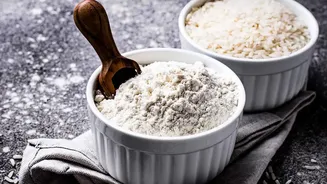
In many kitchens, measuring cups are the go-to tool for portioning dry ingredients. However, they are notoriously inaccurate. The primary issue is the difference between volume (the space an ingredient occupies) and weight (its mass). A cup is a measure of volume, and the weight of a 'cup' of a dry ingredient like flour can vary wildly. For instance, if you scoop flour directly from the bag, it becomes compacted, and you could end up with 150 grams or more. If you fluff the flour first and gently spoon it into the cup before levelling it, you might have only 120 grams. That 30-gram difference, which is over 25% more flour, is enough to transform a moist cake into a dry brick. This variability makes it impossible to achieve consistent results and is one of the single biggest mistakes home bakers make.
The Power of Precision: Embracing the Kitchen Scale
The most effective way to eliminate measurement errors is to use a digital kitchen scale. Measuring by weight (in grams or ounces) is the standard in professional bakeries for a reason: it's exact and repeatable. One hundred grams of flour is always 100 grams of flour, regardless of how compacted it is. This precision brings consistency to your baking, allowing you to replicate successful recipes perfectly every time. A scale also simplifies the process and reduces cleanup. Instead of dirtying multiple cups and spoons, you can place your mixing bowl on the scale, press the 'tare' or 'zero' button, and measure each ingredient directly into the bowl. This method is faster, cleaner, and ultimately makes baking more enjoyable and less stressful.
Better Technique Without a Scale
While a scale is the gold standard, you can still improve your accuracy with measuring cups if you don't have one. The key is to use the 'spoon and level' method for dry ingredients like flour, cocoa powder, and icing sugar. First, use a fork or spoon to fluff up the ingredient in its container to aerate it. Then, use a spoon to transfer the ingredient into your measuring cup until it is overflowing. Do not pack it down. Finally, use the flat edge of a knife to scrape off the excess, creating a perfectly level surface. This technique helps prevent the compaction that occurs when scooping directly from the bag and gets you closer to a consistent measurement, though it will still not be as accurate as weighing.
Is It You or the Recipe?
Once you begin measuring your ingredients consistently by weight, you gain a powerful advantage: you can confidently troubleshoot your results. If a recipe doesn't turn out well despite your ingredients being weighed precisely, you can start to look at other factors. Perhaps the oven temperature was inaccurate—an oven thermometer can verify this. Maybe the leavening agent was old, or the dough was overmixed, which can create a tough texture. Or, you might finally be able to confirm that the recipe itself is flawed. By removing quantity errors from the equation, you can correctly diagnose the root cause of a baking failure. This methodical approach separates you from a cook who just follows instructions and turns you into a baker who truly understands their craft.