

Understanding the 'Danger Zone'
The core principle of food safety revolves around temperature. Bacteria that cause foodborne illness multiply rapidly in what is known as the 'danger zone'. According to food safety authorities, this temperature range is between 5°C and 60°C. Leaving
perishable food in this zone for more than two hours gives harmful bacteria the perfect opportunity to thrive, often without changing the food's taste, smell, or appearance. If the ambient temperature is high, such as over 32°C, this window shrinks to just one hour.
The Problem with Large, Hot Pots
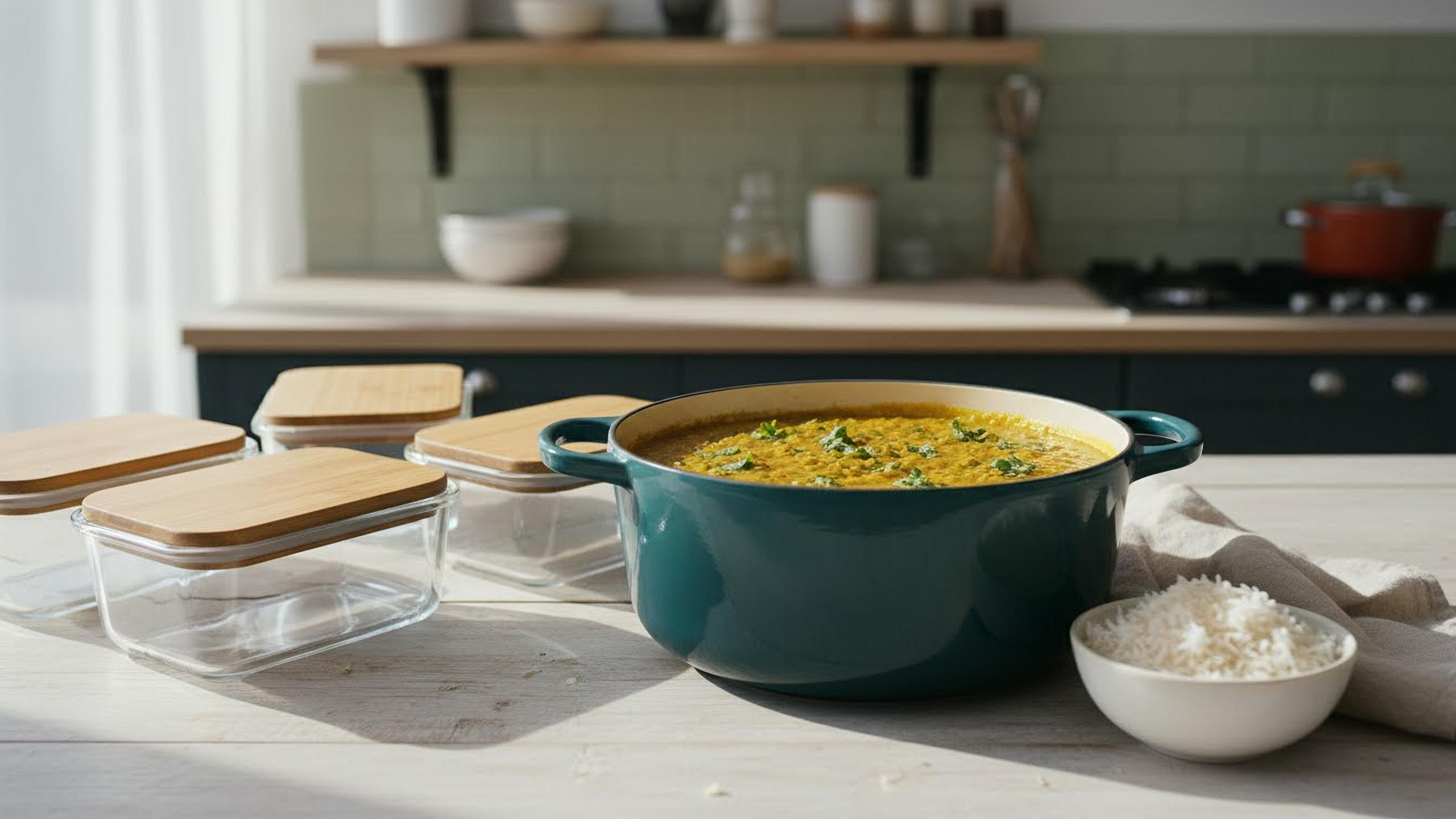
A large, deep pot of hot food is its own worst enemy when it comes to cooling. The sheer volume and density act as insulation, keeping the centre of the food within the danger zone for a prolonged period. Even a modern refrigerator will struggle to cool the mass down quickly. Placing a very hot, large pot directly into the fridge can also be risky for other foods, as it can raise the appliance's internal temperature, putting everything inside at risk. The goal is to get the food through the danger zone as quickly as possible, and a big pot simply cools too slowly on its own.
The Cooling and Covering Method
The headline points to two key decisions: cooling and covering. Here's how to navigate them. First, focus on rapid cooling. Never place a large, steaming pot directly into the refrigerator and seal it with a tight lid. The lid will trap steam and heat, dramatically slowing the cooling process. Instead, the first step is to reduce the temperature quickly. Once the cooling process is underway, covering the food becomes important. A loose cover, or leaving a corner of the lid ajar, protects the food from contaminants while still allowing heat to escape. Once the food has cooled to a safe temperature (around 21°C), it can be sealed tightly for refrigeration. This balances the need for rapid cooling with protection from cross-contamination.
The Two-Stage Cooling Process
For maximum safety, food safety experts recommend a two-stage cooling method. This is the standard followed in professional kitchens and is easily adapted for home use. In the first stage, food should be cooled from 60°C down to about 21°C within two hours. In the second stage, it should be cooled from 21°C to 5°C or below within the next four hours. Using a food thermometer can help you ensure you are meeting these targets and keeping your leftovers safe.
Practical Tips for Faster Cooling
To meet the timelines of the two-stage method, you need to be proactive. The single most effective technique is to divide the contents of the large pot into several smaller, shallow containers. Spreading the food out increases the surface area, allowing heat to escape much more efficiently. Aim for containers where the food depth is no more than a few inches. For an even faster cool-down, you can use an ice bath. Place your smaller containers of food into a larger basin or a clean sink filled with ice and water. Stirring the food periodically during this process will help release heat even more quickly, ensuring it cools down safely and evenly.