


Divine Adornment of the South
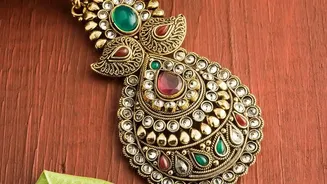
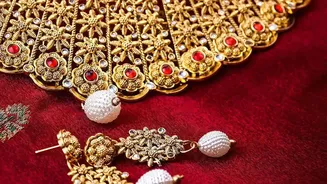
South Indian temple jewellery is a prime example of ornamentation as devotion. Originally crafted exclusively to adorn the idols of gods and goddesses in temples during the Chola dynasty, these pieces were considered sacred offerings. Made from gold and often
embedded with kemp stones, rubies, and emeralds, the designs feature motifs directly inspired by temple architecture and religious iconography. Figures of deities like Lakshmi, the goddess of wealth, or motifs such as lotuses, peacocks, and elephants, are central to these designs, each carrying profound spiritual meaning. Over centuries, this style transitioned from temple sanctuaries to the attire of classical Bharatanatyam dancers and eventually became a cherished part of a bride's trousseau, symbolising blessings, prosperity, and a deep connection to heritage.
The Fused Narratives of Thewa
Originating over 400 years ago in Pratapgarh, Rajasthan, Thewa is a unique and secretive art form. The name itself comes from a local word meaning 'to set', which perfectly describes the intricate process of fusing a finely carved sheet of 23-karat gold onto coloured glass. What makes Thewa extraordinary is that each piece tells a miniature story. Artisans depict elaborate scenes of royal hunts, courtly life, mythological tales, and local folklore. This art was historically patronised by royalty, and the techniques were a closely guarded secret passed down through a single family of artisans, the 'Raj-Sonis'. Wearing a piece of Thewa jewellery is like wearing a tiny, shimmering painting that connects the owner to Rajasthan's royal history and artistic legacy.
Vibrant Enamel of Meenakari
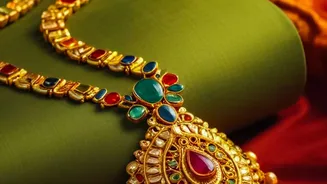
Meenakari, the art of colouring metal surfaces with brilliant enamel, brought a splash of Persian artistry to India via the Mughals in the 16th century. The word 'Meenakari' is derived from Persian, with 'Mina' meaning heaven or paradise, alluding to the vibrant, heavenly colours used. While initially used for decorating objects in the royal court, the technique was masterfully adapted for jewellery, with Jaipur in Rajasthan becoming a major hub for the craft. Artisans engrave intricate patterns, often of flowers and birds, onto gold or silver, which are then filled with coloured enamel and fired. The result is a piece that is as vibrant on its back as it is on its front, a testament to the detailed craftsmanship that goes into every ornament.
The Raw Beauty of Tribal Jewellery
Far from the polished gold of royal courts, India's diverse tribal communities create jewellery that is raw, earthy, and deeply connected to nature and identity. Using materials sourced from their environment—like bone, wood, shells, clay, and oxidised silver—these pieces are bold statements of belonging. For many tribes, jewellery is a form of spiritual protection, a marker of social status within the community, or a way to celebrate life's milestones. The geometric patterns seen in the beadwork of the Apache or the heavy silver cuffs of the Lambani people are not merely decorative; they are symbolic languages that tell stories of lineage, spirituality, and a profound connection to the natural world. This jewellery serves as a powerful reminder that beauty and value are not always measured in carats, but in cultural authenticity.