



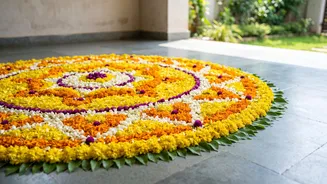

1. The Minimalist Marvel
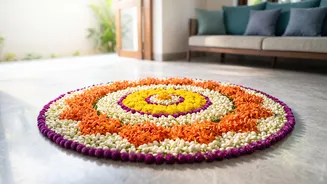
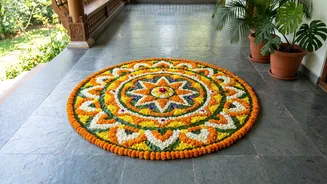
Beauty doesn't always need abundance. A minimalist pookalam focuses on a strong design rather than a large volume of flowers. Think simple geometric shapes, elegant spirals, or a single large motif at the centre. By using fewer petals and leaving more
open space, or by using a base of white rice flour to make the colours pop, you create a striking, modern look. This approach not only saves money but also highlights the artistry of the design itself, proving that less can truly be more. For small apartments, a compact, simple design can be more effective and welcoming.
2. Go Green with Foliage
Flowers may be the stars, but leaves can be the perfect supporting cast. Incorporating various types of leaves can add texture, volume, and beautiful shades of green to your pookalam. Think mango leaves, tulsi, and other locally available greenery. You can create entire sections of your design with chopped or whole leaves, using them as borders or fillers between more expensive flower petals. This not only reduces costs but also adds a wonderfully natural and eco-friendly element to your festive decorations.
3. The Rangoli Fusion
Who says you have to choose between a pookalam and a rangoli? Combining the two traditions can lead to stunning and budget-friendly results. Create a smaller central pookalam with fresh petals and then extend the design outwards using colourful rangoli powders or even coloured rice. This allows you to create a large, impressive design at your entrance without needing heaps of flowers. The fine texture of the powder contrasts beautifully with the soft petals, creating a unique and eye-catching welcome for King Mahabali.
4. The Single-Flower Strategy
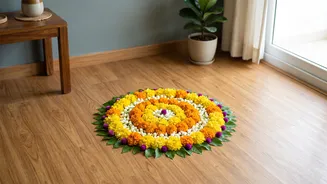
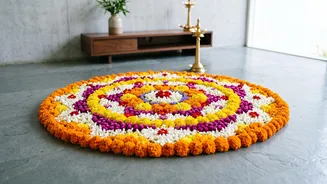
Instead of buying small quantities of many expensive flowers, focus on one or two affordable and abundant varieties. Marigolds (jamanthi) are a classic choice for a reason: their vibrant yellow and orange hues are instantly festive and they are often more affordable, even during peak season. A pookalam made entirely of concentric circles of yellow and orange marigolds is a timeless, traditional, and cost-effective option. You can also use other readily available flowers like globe amaranth (vaadamalli) or chrysanthemums to create a beautiful, unified design.
5. The Kitchen Garden Pookalam
Look no further than your own kitchen for creative pookalam materials. While not strictly traditional, this is a fun and modern twist. The different colours and textures of pulses and grains can create a rustic and charming effect. You can also use colourful spices like turmeric powder for yellow and chilli powder for red (use sparingly!) to add vibrant touches. Some people even incorporate finely chopped vegetables or fruit peels to add colour and texture, making the pookalam a true celebration of the harvest.
6. The Power of the Outline
A great pookalam starts with a great drawing. Focus on creating a more intricate and complex design with chalk, but fill it in selectively. By having more lines and smaller sections, you give the impression of a very detailed and full pookalam, even if many sections are filled with cheaper materials like leaves, rice flour, or a single colour of affordable petals. The intricacy of the outline becomes the main attraction. This technique tricks the eye into seeing a more elaborate design while keeping your flower budget in check.
7. The Eco-Conscious Creation
Celebrate Onam with a thought for the environment. Alongside a few flowers, you can use natural, found materials. Think painted pebbles, colourful seeds, sawdust dyed with natural colours, or even recycled materials. This approach encourages creativity and resourcefulness. An eco-friendly pookalam is not only light on your wallet but also kind to the planet, allowing you to compost the organic materials easily after the festivities are over. It's a wonderful way to blend tradition with modern environmental consciousness.