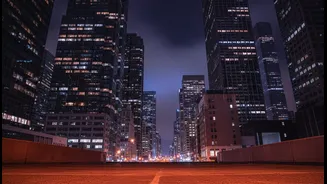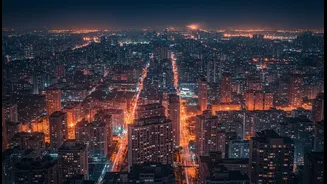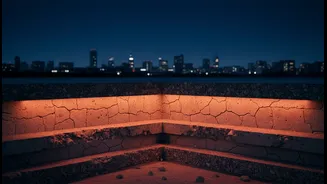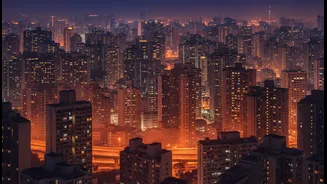






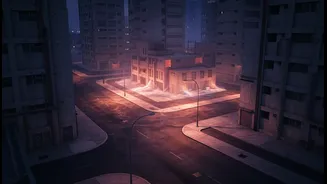


The Great Urban Heat Sponge
During the day, our cities are bombarded with solar radiation. While natural landscapes like forests and fields reflect a good portion of this energy, urban centres do the opposite. They soak it up. Materials like asphalt, brick, and especially concrete,
which dominate our residential clusters, act like giant sponges for heat. Concrete has a high 'thermal mass,' meaning it can absorb and store significant amounts of heat energy without its own temperature rising dramatically at first. All day long, our buildings, roads, and pavements are quietly charging up like massive thermal batteries, storing the sun’s energy within their dense structures. This phenomenon is the primary driver of the Urban Heat Island (UHI) effect, where cities become significantly warmer than their surrounding rural areas.
The Slow Burn of the Midnight Window
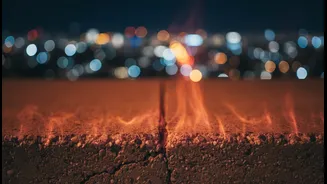
As the sun sets, a natural cooling process should begin. In the countryside, the ground cools relatively quickly. But in the city, those supercharged thermal batteries start to release their stored energy. Concrete and asphalt are slow to let go of the heat they’ve absorbed. This slow release process means that while you’d expect temperatures to drop after dusk, urban areas continue to be actively heated from within by their own infrastructure. The peak of this heat radiation often occurs hours after sunset, creating what is known as the 'midnight window'—a period late at night when temperatures remain stubbornly, and dangerously, high. This effect is why the temperature difference between the city and a nearby village is often greatest not at midday, but late at night.
A Silent Threat to Health
Sustained high temperatures, particularly at night, pose a serious health risk. Our bodies rely on the cooler nighttime air to recover from daytime heat stress. When there is no relief, the body's core temperature can remain elevated, interfering with sleep and preventing this crucial recovery process. This puts immense strain on the cardiovascular system and can lead to heat exhaustion, heatstroke, and even death, with the elderly, children, and those with pre-existing health conditions being most vulnerable. Studies have shown that high nighttime temperatures carry a significant additional risk for heat-related mortality, particularly from conditions like stroke. The inability to cool down overnight is not just uncomfortable; it’s a critical public health emergency in the making for India's dense urban centres.
Engineering Cooler, Safer Cities
The good news is that since this is a man-made problem, it has man-made solutions. Urban planners and architects in India are increasingly looking at strategies to mitigate the urban heat island effect. One of the most effective methods is increasing the reflectivity, or 'albedo,' of surfaces. Using 'cool roofs' with reflective white coatings can bounce sunlight back instead of absorbing it, significantly lowering building temperatures. Another key strategy is increasing green cover. Planting more trees provides shade, and creating green roofs or walls helps cool the air through evapotranspiration. Blue-green infrastructure, which integrates parks and water bodies into urban design, can also create cooling corridors. Materials science offers solutions too, with innovations like permeable concrete that allows water to evaporate and cool the surface, mimicking a more natural landscape.