






The Guardiola Verdict
In a recent interview, Pep Guardiola, who managed Messi at Barcelona and competed against Ronaldo's Real Madrid, articulated what many fans have long suspected: the two superstars made each other better. He suggested their careers would have likely been
shorter and less productive without the other as a constant benchmark. 'They had each other in their rearview mirrors,' Guardiola explained, noting that seeing what the other was achieving forced them to elevate their own game. This constant push, this desire to be better and win more, was the engine that powered their sustained excellence.
A Symbiotic Arms Race
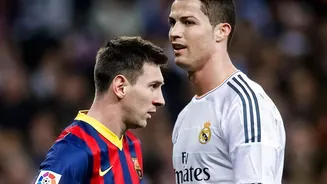
Guardiola's insight frames the rivalry not as one of animosity, but of mutual, albeit unintentional, benefit. Before their ascent, scoring 30 goals in a season was the mark of an elite forward. Messi and Ronaldo transformed that standard, making 50-goal seasons the new expectation. This relentless statistical arms race created a powerful feedback loop. A hat-trick from one was often followed by a spectacular performance from the other. This dynamic was most potent during their nine seasons together in La Liga, where every 'El Clásico' became a global event and a direct referendum on who was the world's best player. The constant pressure left no room for complacency; to rest was to cede ground to your greatest adversary.
Two Styles, One Goal
The debate over who was superior was endlessly fueled by their contrasting styles. Messi was often portrayed as the natural genius—a player of innate talent, sublime dribbling, and otherworldly vision. Ronaldo, conversely, was seen as the ultimate professional—a physical specimen forged through relentless hard work, discipline, and an unquenchable thirst for goals. Guardiola himself praised Ronaldo as a 'competitive animal' and an 'extraordinary' goalscorer, capable of finding the net with either foot or his head. This dichotomy of the artist versus the machine created a compelling narrative that captivated fans and media, turning the Ballon d'Or award into a two-man race for a solid decade.
The Evolution of Greatness
Perhaps the most compelling evidence for Guardiola's theory is how both players adapted their games to prolong their dominance. As the explosive pace of his youth waned, Ronaldo transformed from a dynamic winger into one of the most efficient and lethal penalty-box strikers in history. He focused on positioning, power, and clinical finishing. Messi, meanwhile, evolved from a 'false nine' and prolific goalscorer into a deeper-lying playmaker. He began to orchestrate play from the midfield, using his unparalleled vision and passing to create chances for others while still contributing a remarkable number of goals. This intelligent evolution was a direct response to the physical toll of aging, but also to the impossibly high bar they had set for one another.
A Legacy of Competition
As both players have entered the twilight of their careers, the football world has begun to appreciate the era they defined. Their rivalry transcended club loyalties and became a global phenomenon. They didn't just break records; they shattered the very concept of what was considered possible on a football pitch, scoring over 800 goals each in their careers. They inspired a new generation of players who now have a new blueprint for greatness, one built not just on talent, but on incredible consistency and a relentless competitive drive. The debate about who was better will likely never end, but as Guardiola suggests, that might be the wrong question. The more important truth is that football was the ultimate winner, gifted a golden age by two once-in-a-lifetime talents who refused to let the other be the best alone.