





What is a Caretaker Government?
In Israel, a government transitions to 'caretaker' or 'interim' status following an election, a no-confidence vote, or the prime minister's resignation. Its purpose is to ensure the country is never without a functioning executive while a new government is being
formed. According to Israel's Basic Law: The Government, this outgoing administration continues to perform its duties until a new one is sworn in. This is designed to prevent a power vacuum. However, while it holds the legal authority of a regular government, it operates under a cloud of diminished democratic legitimacy, as it no longer has a clear, current mandate from the voters. This creates what some analysts call a 'constitutional paradox'.
The Unwritten Rules of Restraint
Interestingly, Israeli law itself does not explicitly outline a reduced set of powers for a caretaker government. The term 'caretaker government' does not even appear in the legislation. Instead, the limits have been defined over time by a series of Supreme Court rulings and directives from the Attorney General. The key principle, established in a landmark 2001 case, is that an interim government must exercise 'restraint'. This means it should act reasonably and avoid making major, irreversible decisions unless there is a 'vital public need for action'. The court applies a stricter standard of reasonableness to a caretaker government's decisions compared to one with a full mandate.
What's Off-Limits?
The duty of restraint primarily applies to two major areas. The first is making significant, long-term policy changes that would tie the hands of a future government. This could include major economic reforms or other far-reaching domestic initiatives. The second, and often more contentious area, is the appointment of senior officials. A caretaker government is expected to avoid appointing key figures like a police chief, attorney general, or Supreme Court justices. The logic is that such appointments should be made by a government that has the full confidence of the Knesset and the public. The Attorney General has issued specific directives to regulate these appointments during an election period.
The Netanyahu Factor
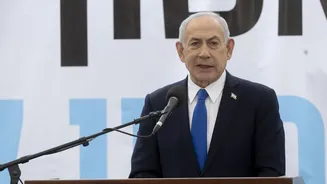
The debate over caretaker powers has become particularly intense during Benjamin Netanyahu's various stints as interim leader. His long tenure and ongoing legal battles have led to accusations that he has pushed the boundaries of his authority. Critics and political opponents have frequently voiced concerns that Netanyahu might use his position to influence his corruption trial or make critical security decisions for political gain. These concerns, whether proven or not, highlight how the personality and political context of the caretaker leader can amplify the tensions inherent in the system. Any major decision, even in areas where a caretaker government has more leeway, is met with intense scrutiny and often legal challenges.
The National Security Exception
The one area where a caretaker government retains significant power is national security and foreign affairs. The Supreme Court has historically been reluctant to intervene in decisions related to war or military operations, viewing them as a core executive function necessary for the state's survival. This means a caretaker prime minister can legally take the country to war, though such a decision would be politically explosive. Even here, however, the principle of restraint is expected. While a prime minister cannot unilaterally declare war, they can frame intelligence and present options to the security cabinet, retaining significant influence over critical defence matters even without a full electoral mandate.