



What is Computational Astrophotography?
At its core, computational astrophotography is a triumph of software over hardware. For decades, taking photos of faint, distant objects like stars and nebulae required large camera sensors and lenses to gather as much light as possible. Smartphones,
with their tiny sensors and compact lenses, are at a physical disadvantage. To overcome this, manufacturers turned to computation. Instead of trying to build a better camera eye, they built a better camera brain. This approach uses complex algorithms and artificial intelligence to assemble a final image that is far greater than the sum of its parts, effectively sidestepping the physical limitations of a mobile device.
The Software Magic Explained
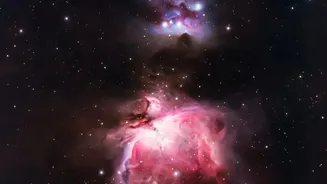
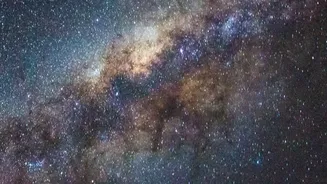
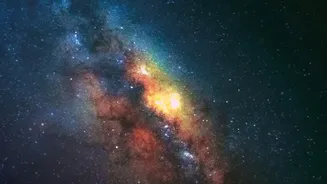
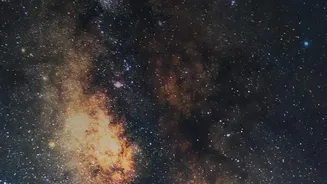
When you use a dedicated astrophotography mode on a smartphone, you are not taking a single picture. Instead, your phone captures a rapid sequence of many short-exposure photos over several seconds or even minutes. An algorithm then gets to work. First, it aligns all these individual frames, correcting for tiny movements and even the rotation of the Earth. Then, it 'stacks' them. This process averages out the random digital 'noise' that plagues low-light photos, making the image cleaner. It also combines the light and colour information from every shot, bringing out faint stars and details that would be invisible in a single exposure. Finally, AI-powered processing enhances the image, boosting the visibility of celestial objects and balancing the colours for a breathtaking final result.
From Niche Hobby to Point-and-Shoot
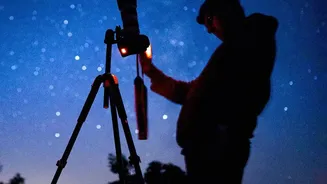
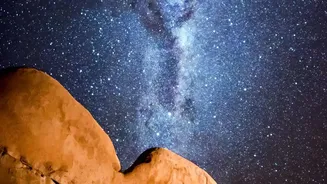
This technological leap has democratised a once-exclusive hobby. Traditional astrophotography often involves thousands of dollars in equipment, including DSLR cameras, tracking mounts to follow the stars, and powerful editing software. Computational astrophotography packs much of that workflow into an automated, user-friendly feature. While a tripod is still highly recommended to keep the phone perfectly still during the long exposure, the process has been simplified to little more than pointing the phone at the sky and pressing a button. This accessibility means millions of people can now experiment with capturing everything from constellations to the Milky Way, sharing a connection with the night sky that was previously reserved for dedicated enthusiasts.
The Leaders of the Pack
Google pioneered this field with its dedicated Astrophotography mode on Pixel phones, which remains a benchmark for its ease of use and stunning results. When the phone detects it is stable and pointed at a dark sky, it automatically enables the mode, which can capture exposures up to four minutes long. Samsung's flagship Galaxy devices, like the S26 Ultra, leverage their high-resolution sensors and the 'Expert RAW' app to give users more manual control over long exposures and star tracking. Apple's iPhones use powerful computational techniques in their standard Night Mode to capture impressive starfields, though they currently lack a separate, long-exposure astro mode like their competitors. Other brands popular in India, such as OnePlus and Xiaomi, have also integrated capable night and long-exposure modes into their camera systems.
Limitations and the Road Ahead
While impressive, smartphone astrophotography isn't without its limits. Light pollution from cities remains the biggest challenge, washing out all but the brightest stars. A trip to a darker location will yield dramatically better results. And while these modes are powerful, they can't defy physics entirely; they won't replace a dedicated telescope for viewing planets or distant galaxies. The future, however, is bright. As processors become more powerful and AI algorithms more sophisticated, we can expect even better performance. Future developments may include improved AI to subtract light pollution, real-time processing, and the ability to capture clearer shots without a tripod, further blurring the lines between mobile and professional photography.