The Ghost of a Star
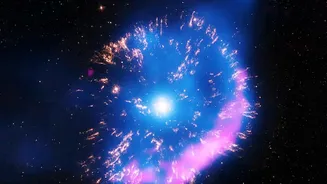
To understand this cosmic rebirth, we first need to meet the ghost: a white dwarf. When a star similar to our Sun runs out of its nuclear fuel, it doesn't just switch off. It swells into a massive red giant, often swallowing any inner planets, before
shedding its outer layers into space. What's left behind is a super-dense, Earth-sized core called a white dwarf. It’s the stellar remnant, slowly cooling over billions of years. For decades, scientists believed this stage was the final epilogue for a solar system. The discovery centred around a white dwarf named HS 0209+0832, located about 270 light-years away, suggests a new chapter might be possible.
A Second Chance at Creation
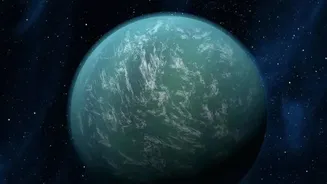
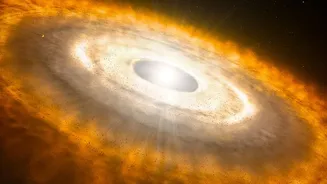
Planets as we know them, including Earth, are 'first-generation'. They formed from the primordial disc of gas and dust that surrounded our Sun at its birth, billions of years ago. A 'second-generation' planet is a world that forms much later, from the material a star expels during its death throes. While this has been suspected around extremely rare objects called pulsars, finding evidence for one around a common white dwarf was completely unexpected. It implies that the violent end of a star can create the raw materials for a new round of planetary creation, a process previously thought to be highly unlikely for these stellar remnants.
Solving a Decades-Old Mystery
The clue that unlocked this possibility was a 25-year-old cold case in the data archives of the Hubble Space Telescope. Back in 1999, observations of the white dwarf HS 0209+0832 showed a bizarre chemical makeup in its atmosphere, including over 100 unidentified features. By reanalysing this old data with modern databases, a team led by researchers from the University of Warwick made a breakthrough. They identified the mystery signatures as belonging to unusual heavy elements, most notably niobium. These elements, heavier than iron, can only be forged in the exotic and intense conditions inside a dying star as it swells into a red giant.
The Smoking Gun: Niobium
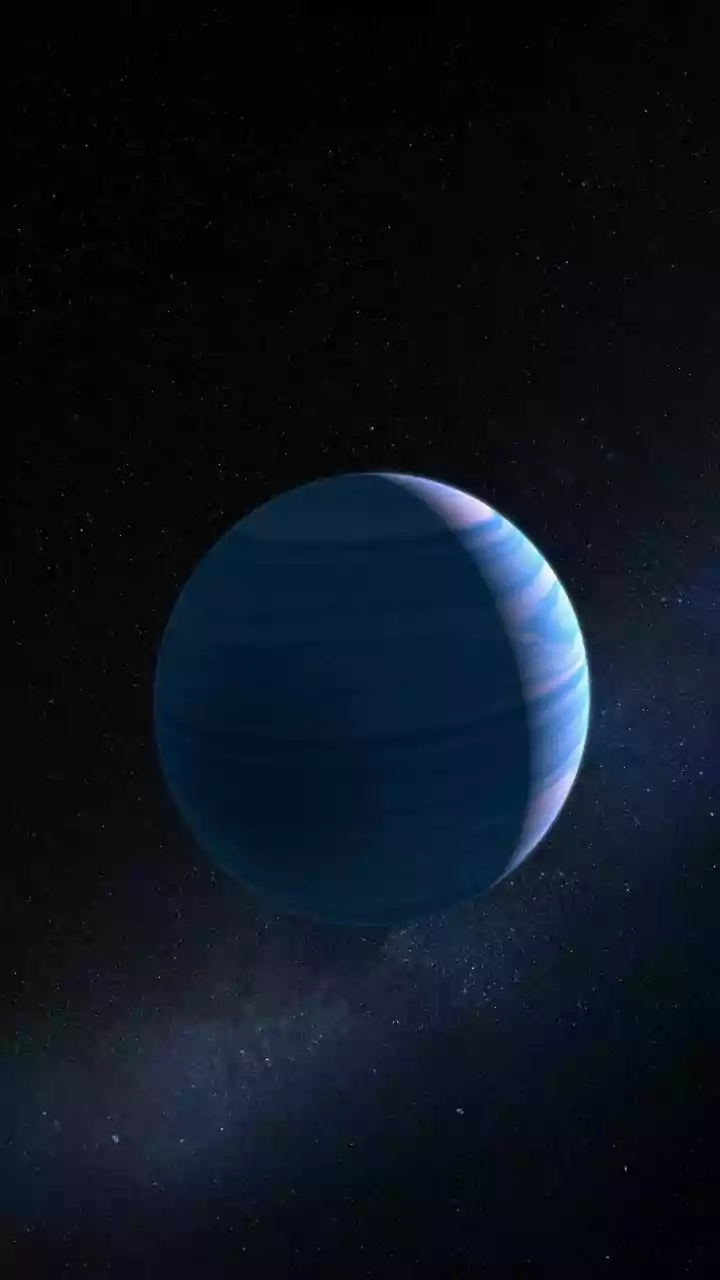
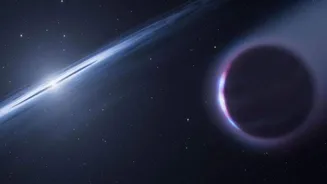
The atmosphere of HS 0209+0832 contained levels of niobium more than 1,000 times higher than that of our Sun. This peculiar chemical fingerprint is the smoking gun. It strongly suggests that the white dwarf is currently pulling in, or 'accreting', material that was created inside its own parent star long ago. The most plausible explanation is that after the star died, the expelled material, rich in these heavy elements, coalesced into a debris disc and eventually formed a new, giant planet. This Jupiter-sized candidate planet is thought to be orbiting extremely close to the hot white dwarf, causing its atmosphere to be blasted away and funnelled onto the star's surface, which is how we can detect its composition.
What This Means for the Cosmos
While the planet itself has not been directly seen and remains a candidate, the evidence is compelling. Data from NASA's TESS satellite detected a regular dimming signal every 4.4 days, consistent with a large planet orbiting the white dwarf. This discovery, if confirmed, would be the first of its kind and could fundamentally change our view of planetary life cycles. It suggests that stellar systems might not just have one life, but a second act where new worlds can rise from the ashes. It opens up a new way to search for these 'reborn' planets by looking for similar chemical signatures in other white dwarfs, hinting that the end of a star is not just an ending, but a transformation.