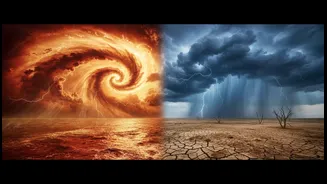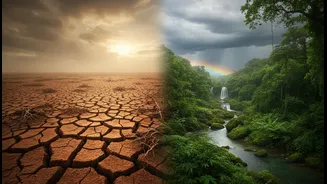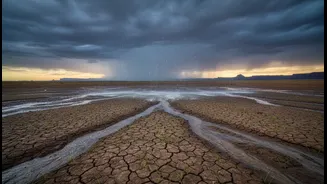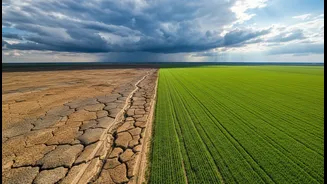







First, What Is This 'El Niño'?
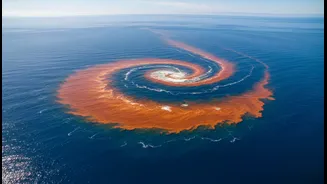
At its heart, El Niño is a climate pattern marked by the unusual warming of surface waters in the central and eastern equatorial Pacific Ocean. This isn't a new phenomenon; it's the warm phase of a natural cycle called the El Niño-Southern Oscillation
(ENSO), which swings between warm (El Niño), cool (La Niña), and neutral conditions every two to seven years. Think of it as a giant, slow-moving pendulum in the world's largest ocean. When the water there warms up significantly, it doesn't just stay there. This massive shift of heat releases energy into the atmosphere, disrupting weather patterns on a global scale, from South America to Africa and, crucially, to India.
How Does The Pacific Affect Our Monsoon?
The connection lies in a delicate atmospheric balance. In a normal year, strong trade winds blow from east to west across the Pacific, pushing warm surface water towards Indonesia and Australia. This creates a pool of warm, moist air and a low-pressure system in the western Pacific, which helps to pull the moisture-laden monsoon winds towards India. During an El Niño, this entire system weakens or even reverses. The trade winds falter, allowing the warm water to slosh back eastward, away from Asia. The low-pressure zone, the engine that helps draw in the monsoon, shifts with it. As a result, the powerful circulation that typically brings vital rain to the subcontinent is suppressed, often leading to a weaker, more erratic monsoon.
The Real-World Impact Across India
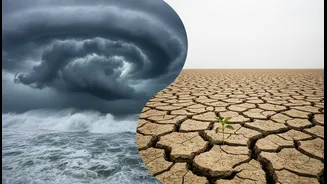
This isn't just abstract climate science; the consequences are felt in fields and homes across the country. A weakened monsoon directly threatens India's kharif crops—like rice, maize, and soybeans—which are heavily dependent on summer rainfall. Historically, a significant number of India's drought years have coincided with El Niño events. This agricultural stress can lead to lower crop yields, which in turn can drive up food prices and inflation, affecting household budgets everywhere. Beyond the farm, deficient rainfall puts a strain on water resources, impacting everything from drinking water supplies in reservoirs to the generation of hydroelectric power.
Is It Always A Recipe For Disaster?
While the link is strong, it's not a perfect one-to-one relationship. Not every El Niño year results in a catastrophic drought for India. Other climate factors can play a moderating role. One of the most important is the Indian Ocean Dipole (IOD), sometimes called the Indian Ocean's own version of El Niño. When the IOD is in a 'positive' phase, the western Indian Ocean becomes warmer than the east. This can help generate more moisture and strengthen the monsoon winds, sometimes offsetting the drying effect of an El Niño in the Pacific. For instance, the strong El Niño of 1997 did not cause a drought, in part thanks to a strong positive IOD. Conversely, a 'negative' IOD can amplify the drought-like conditions of an El Niño.
What's The Forecast For This Year?
For 2026, climate agencies have confirmed that El Niño conditions, which began developing earlier in the year, are now active and expected to strengthen. This has raised concerns, especially after India recorded one of its driest Junes in recent memory. The India Meteorological Department (IMD) has forecast below-normal rainfall for July across most of the country, coupled with above-normal temperatures. There is a glimmer of hope, however. Forecasters are closely watching the IOD, which is currently neutral but could transition to a positive phase later in the monsoon season. While this may not be enough to completely reverse the early deficits, a positive IOD could help salvage the second half of the season, providing much-needed relief for agriculture and water resources.