



The Treacherous Trio: Landslides, Flash Floods, and Swollen Streams
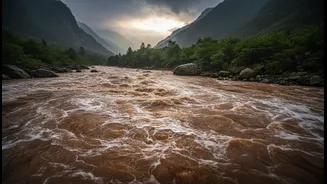
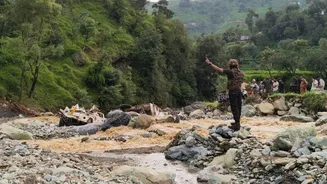
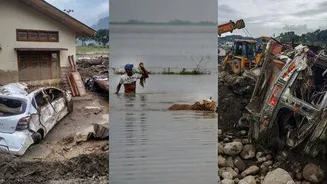
The single most significant danger during a monsoon trek comes from the sheer volume of water. Prolonged or sudden heavy rainfall saturates the soil on mountain slopes, dramatically increasing the risk of landslides. [3] These can block trails, roads,
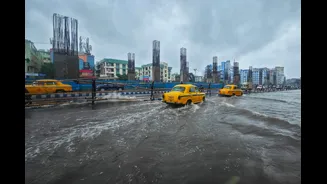
and, in the worst cases, sweep away entire sections of a path. [8] Similarly, what might be a dry riverbed or a gentle stream in other seasons can become a raging torrent within minutes due to a downpour upstream. [23] This phenomenon, known as a flash flood, can trap trekkers and is powerful enough to move boulders and uproot trees. [24] Many trekking accidents during the monsoon are due to attempts to cross these unexpectedly swollen and fast-flowing water bodies. [3, 9] Official bodies like the Akhil Maharashtra Giryarohan Mahasangh (AMGM) consistently issue guidelines highlighting these dangers. [9]
Invisible Dangers: Hypothermia and Poor Visibility
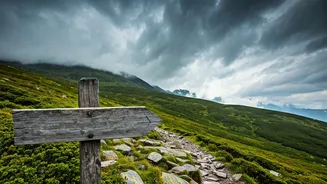
Rain is only part of the weather equation. Constant dampness combined with wind can lead to a rapid drop in body temperature, posing a risk of hypothermia even in seemingly mild climates. [5] Getting wet is almost unavoidable, and if your gear isn't fully waterproof or you don't have quick-drying layers, your body can lose heat dangerously fast. [5] Another major risk is poor visibility. Monsoon clouds, fog, and mist can descend rapidly in the mountains, reducing visibility to just a few meters. [3] This makes navigation extremely difficult and increases the chances of getting lost, straying from the trail, or accidentally approaching a dangerous drop-off. On high-altitude routes, a sunny morning can quickly turn into a disorienting whiteout. [2]
Beyond 'Rain or Shine': What to Actually Check
A thorough weather check goes beyond a simple precipitation forecast. For a safe trek, you need to look at multiple data points. First, check the *intensity* and *timing* of the rain. Many monsoon showers are heaviest in the afternoon, so an early start can help you avoid the worst of it. [5] Second, monitor wind speed forecasts, as high winds compound the cold and can make walking on exposed ridges unsafe. Third, consult official warnings. The India Meteorological Department (IMD) issues specific alerts (like yellow or orange) for heavy rainfall, thunderstorms, and gusty winds in various regions. [18, 19, 20] These alerts are crucial indicators of potentially hazardous conditions like landslides. [15] Finally, look at elevation-specific forecasts if available, as conditions at the summit can be vastly different from the base. [6]
Your Modern Weather Toolkit
Relying on a single generic weather app is often not enough for the mountains, where microclimates can create unpredictable changes. [13] It's best to cross-reference information from multiple reliable sources. The IMD's official 'Mausam' app provides localised forecasts and warnings for districts across India. [18] For Himalayan treks, specialised platforms like Mountain-Forecast.com or Windy.app offer detailed, elevation-specific data on wind, precipitation, and temperature. [6] However, technology can be unreliable due to poor network connectivity in remote areas. [3] Therefore, your most valuable resource is often local knowledge. Always speak to local guides, guesthouse owners, or villagers about the current trail conditions and weather patterns before you set out. [13] They have firsthand experience of how the local environment reacts to rain. Trekking with experienced groups or certified leaders who are trained in monsoon navigation is also a highly recommended safety measure. [10]