







The New Baseline Skill
Just as knowing how to use a web browser or a spreadsheet became a non-negotiable skill for professionals two decades ago, basic AI fluency is rapidly becoming the new standard. AI tools are being integrated into everything from legal workflows to software
development, automating routine tasks and accelerating productivity. Companies are increasingly seeking employees who can comfortably use these tools, with job postings requiring AI competency rising dramatically. This shift means that AI literacy—understanding the concepts—is no longer enough; fluency, the ability to apply AI in specific job roles to achieve results, is the new expectation. Simply put, being fluent with AI is becoming table stakes, the minimum requirement to play the game in the modern professional world.
The 'Guarantee' Trap
The problem with any skill that becomes ubiquitous is that it loses its power as a differentiator. When everyone has AI superpowers, they cease to be superpowers. A recent survey highlighted that while 95% of companies list AI as a formal hiring requirement, 59% have made a bad AI hire in the past year—someone who could talk about AI but couldn't apply it effectively. This reveals the "fluency gap": the difference between knowing the jargon and possessing the judgment to use the tools well. Relying on AI fluency alone as a ticket to success is a trap because the tools themselves are a commodity. The real value isn't in knowing how to generate a response from an AI, but in knowing what to do with that response.
Beyond the Prompt: The Durable Skills
If AI fluency is the new context, then what is the guarantee? Experts argue it lies in the cultivation of distinctly human, or 'durable,' skills that AI cannot easily replicate. These include critical thinking, strategic judgment, empathy, and creativity. Critical thinking is perhaps the most crucial; it's the ability to evaluate information, challenge assumptions, and identify the biases that can be present in AI-generated content. As one expert put it, you have to possess the subject matter expertise to know when the AI is wrong. Similarly, skills like empathy, relationship-building, and conflict resolution are becoming more valuable, as they are core to collaboration and leadership.
The Human-AI Partnership
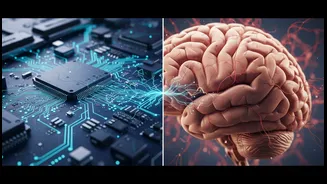
The most successful professionals of the future won't be those who compete with AI, but those who collaborate with it. This model is about augmentation, not replacement. Think of it as a human-AI symbiosis, where the human provides the direction, ethical oversight, and contextual understanding, while the AI provides the speed and scale to process vast amounts of information. A person who can frame the right question, spot bad assumptions in data, and explain the business implications of an AI-generated insight is far more valuable than someone who simply knows how to write a prompt. This ability to make judgment calls in ambiguous situations and apply creativity to solve problems is where humans maintain a clear edge.
What This Means for You
For students and professionals, the path forward requires a dual focus. First, embrace AI fluency as a foundational skill. Learn the tools relevant to your field and understand how to integrate them into your workflow. However, do not stop there. The second, more important step is to actively cultivate the skills that AI complements but cannot replace. Focus on developing your critical thinking by questioning and verifying AI outputs. Sharpen your communication skills, as the ability to translate complex data into a clear path forward is highly prized. Seek opportunities to build strategic judgment and emotional intelligence. The future doesn't belong to the person who is best at using AI; it belongs to the person who uses AI to become the best thinker, strategist, and leader.