





Personalised Learning at Scale
One of the most significant impacts of AI in education is the ability to deliver personalised learning experiences to every student. Traditionally, a teacher addresses a classroom of diverse learners, making it difficult to cater to each individual's
pace. AI-powered adaptive learning platforms are changing this dynamic. These systems can analyse a student's performance in real time, identifying their unique strengths and weaknesses. If a student is struggling with a concept, the platform can offer additional resources and practice problems. Conversely, if a student is excelling, it can introduce more challenging material to keep them engaged. This creates a customised learning journey for each student, allowing them to progress at their own speed without feeling left behind or bored.
The New Teacher's Assistant
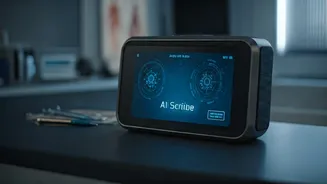
Educators often find themselves buried under a mountain of administrative work that takes valuable time away from teaching and mentorship. AI is emerging as a powerful assistant, automating many of these time-consuming tasks. AI tools can now grade multiple-choice quizzes, analyse student work for common errors, and even help draft lesson plans and create instructional materials. By handling these routine duties, AI frees up teachers to focus on what they do best: fostering critical thinking, providing one-on-one support, and building meaningful relationships with their students. This shift doesn't replace the teacher but rather enhances their role, allowing them to be more effective and present in the classroom.
Interactive Tools and Intelligent Tutors
Beyond personalising lesson plans, AI is also powering a new generation of interactive learning tools. AI-driven educational games, virtual reality simulations, and intelligent tutoring systems are making learning more engaging and accessible. These tools can provide instant feedback, helping students correct mistakes and build confidence. For instance, AI chatbots can function as 24/7 tutors, answering student questions at any time, which can be especially helpful for shy students who hesitate to ask questions in class. From language apps that use AI to teach vocabulary to smart math platforms that adjust problem difficulty, these technologies are creating a more dynamic and supportive learning environment.
Navigating the Challenges and Ethical Concerns
The integration of AI into education is not without its challenges. One of the primary concerns is the potential for algorithmic bias. If AI systems are trained on biased data, they can perpetuate and even amplify existing inequalities in grading and student evaluation. Data privacy and security are also major issues, as these platforms often collect sensitive student information. Furthermore, there is a risk of over-reliance on technology, which could hinder the development of critical thinking and problem-solving skills if students come to depend on AI for answers rather than as a tool for inquiry. A significant hurdle is also the lack of AI literacy among many educators, making it difficult to implement these tools responsibly.
The Road Ahead for Indian Classrooms
As AI continues to evolve, its role in the Indian education system will likely grow. With a large and diverse student population, the potential for AI to provide scalable, personalised education is immense. It could help bridge gaps in access to quality resources and support teachers in managing large class sizes. However, successful implementation will require significant investment in infrastructure, comprehensive teacher training programs, and the development of clear ethical guidelines to ensure equitable and safe use. The key will be to adopt AI not as a silver bullet, but as a thoughtfully integrated tool that empowers both educators and students, preparing them for a future where human and artificial intelligence work together.