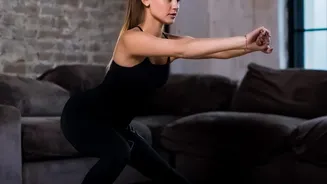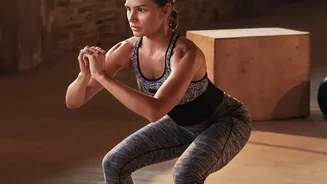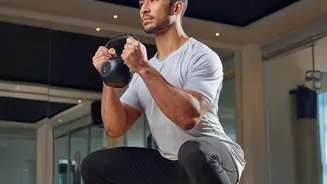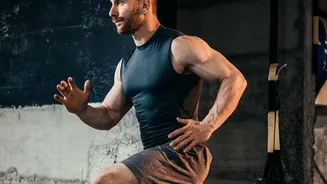




Squats and lunges are powerhouse exercises for building strong, toned thighs. But knee pain can be a common and frustrating side effect. The key isn't to avoid these moves, but to master them safely to reap the benefits without the strain.
Understanding the Load on Your Knees
The knee is
a complex joint, and exercises like squats and lunges place significant demands on it. Overloading occurs when the stress on the knee joint and its surrounding tissues exceeds their capacity to cope. This can be due to several factors: poor form, adding too much weight too soon, or simply doing too many repetitions without adequate recovery. When form breaks down, pressure is often mistakenly placed on the knee joint instead of being distributed through the large muscles of the thighs and glutes, which are designed to handle the load. This can lead to conditions like patellofemoral pain syndrome (runner's knee), tendonitis, or general inflammation and discomfort. Recognising the difference between normal muscle soreness and joint pain is crucial; sharp pain, swelling, or instability are warning signs to stop and reassess.
Perfecting Your Squat Form
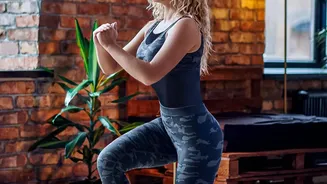
Proper squat form is your best defence against knee pain. The goal is to engage your glutes and hamstrings, not just your quads. Start by standing with your feet shoulder-width apart or slightly wider, with your toes pointing slightly outwards. Initiate the movement by pushing your hips back as if you're about to sit in a chair, keeping your chest up and your core engaged. Lower yourself until your thighs are at least parallel to the floor, ensuring your knees track in line with your toes and do not cave inward. Your weight should be distributed evenly through your feet, with your heels firmly on the ground. Push through your heels to return to the starting position, squeezing your glutes at the top.
Common Squatting Mistakes to Avoid
Several common errors can shift the load onto your knees. The most frequent is 'knee valgus', where the knees collapse inward during the squat. This is often a sign of weak glute muscles. Another mistake is leaning too far forward, which puts excessive pressure on the patellar tendon. Lifting your heels off the ground is also problematic, as it shifts your weight forward and strains the knee joint. Many people also make the mistake of having a 'knee-dominant' squat, where they initiate the movement by bending their knees forward instead of pushing their hips back. Focusing on a hip-hinge movement first is key to protecting your knees.
Mastering the Lunge for Safety and Strength
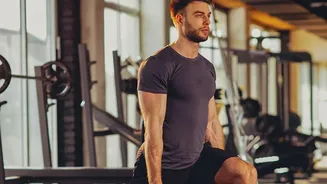
Lunges are challenging because they work one leg at a time, requiring more stability. To perform a lunge safely, step one foot forward. Your feet should remain about hip-width apart to maintain balance. Lower your hips straight down until both knees are bent at approximately a 90-degree angle. The front knee should be aligned over your ankle, not drifting past your toes, and your back knee should hover just above the floor. Keep your torso upright and your core engaged throughout the movement. Push off the front foot to return to the start. A reverse lunge, where you step backward instead of forward, is often considered a more knee-friendly option as it reduces the forward force on the knee.
Modifications for Sensitive Knees
If you experience discomfort, don't give up. Instead, modify the exercises. For squats, try reducing the depth; a half-squat or 'chair squat' where you only lower partway can still be effective. You can also perform wall squats, using a wall for support to ensure proper form. For lunges, try reducing the range of motion by not going as low. Static lunges (also called split squats), where your feet remain in place, eliminate the stepping motion and can be easier to control. Using a chair or wall for balance can also provide support. The most important rule is to listen to your body; if an exercise causes sharp pain, stop and try a different variation.