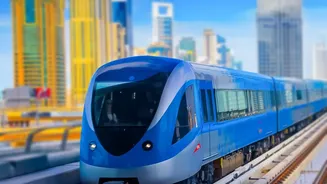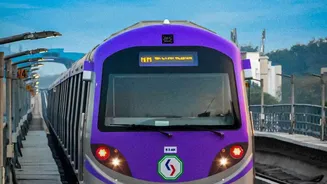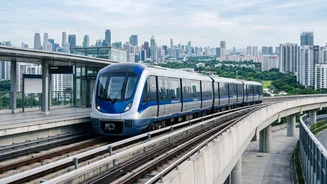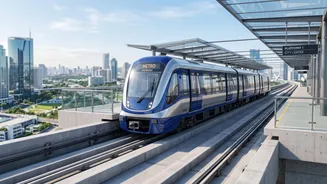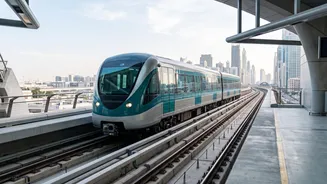




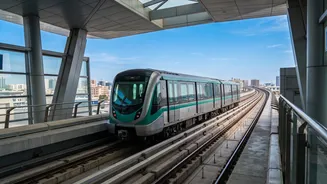
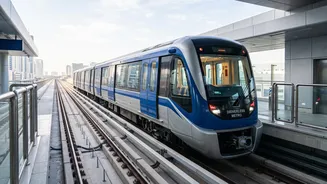
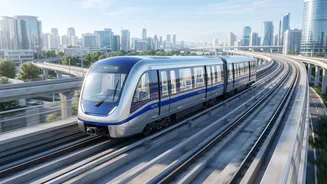
Delhi Metro's futuristic driverless trains are a massive hit, recently carrying a record 1.6 million people in a single day. But as this advanced technology gains popularity, it begs a crucial question: is it worth the high price tag?
The Rise of the Automated Train
On December 28, 2020,
India stepped into the future of urban transport with the launch of its first driverless metro on Delhi's Magenta Line. This was soon followed by the Pink Line, creating a driverless network spanning nearly 97 kilometres, one of the largest in the world. These trains, operating on what is technically known as Unattended Train Operation (UTO) technology, are now an integral part of the capital's commute. As of November 2026, Delhi Metro operates 100 driverless trains across its Magenta and Pink lines, covering about 29% of its total network. The system has proven its capability by handling massive passenger loads, exemplified on November 2, 2026, when driverless trains served 1.6 million commuters amid the pre-Diwali rush. This figure represented about one in five of the metro's total daily passengers, showcasing both public acceptance and the system's robustness.
More Than Just No Driver
The benefits of driverless technology extend far beyond simply removing the operator from a cabin. According to the Delhi Metro Rail Corporation (DMRC), automation brings greater flexibility to operations, significantly reduces the chance of human error, and improves the availability of coaches for service. The system relies on advanced Communication-Based Train Control (CBTC), which allows trains to communicate with the control centre in real-time. This enables automated adjustments to speed and maintains a safe distance between trains, leading to higher efficiency and safety. Proponents argue that automation guarantees precise arrival and departure schedules, a key factor in a bustling metropolis. Furthermore, the DMRC highlights that the reliability of these trains has increased substantially due to exhaustive self-tests performed before each service run, which helps eliminate potential faults.
The Billion-Dollar Question
Despite the clear operational advantages, the 'high cost' aspect of the headline is a major point of debate. Critics, including some within the government, point to the steep upfront capital investment required for this sophisticated technology. While a definitive public cost-benefit analysis comparing driverless and conventional systems in India is not readily available, the initial expenditure for the advanced signalling systems, rolling stock, and maintenance infrastructure is substantial. Experts like Sudhanshu Mani, a key figure behind the Vande Bharat train, caution against blindly following global trends. He argues that because India's staffing costs are much lower than in developed nations, a separate cost analysis for the Indian context is essential before widespread adoption. The debate centres on whether the long-term gains in efficiency and safety justify the heavy initial price tag, especially when metro projects are already massive public investments.
A Blueprint for India's Future?
With metro services now operational in 26 Indian cities, the success of Delhi's driverless lines presents a compelling case study. DMRC's Managing Director, Vikas Kumar, has advocated for other metro projects to consider adopting the model, citing its proven flexibility and reliability. One of the primary concerns—job redundancy for train operators—has been proactively managed by the DMRC. Kumar has stated that no drivers have been laid off since automation began in 2020; instead, they have been redeployed to other crucial roles like station management and crowd control. The DMRC currently employs around 3,000 train operators. However, as India continues its urban expansion, each city will need to weigh the specific benefits against its own financial realities. Delhi's network is set to expand its driverless operations to nearly 198 km, further embedding this technology into its system.