


The Science of Spotting the Station
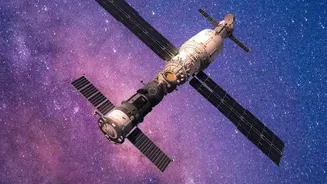
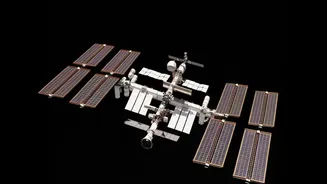
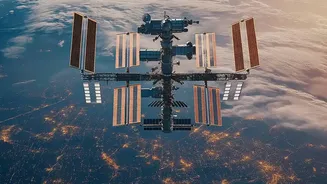
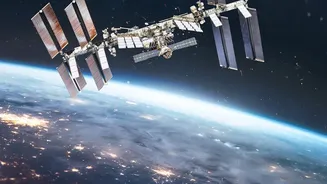
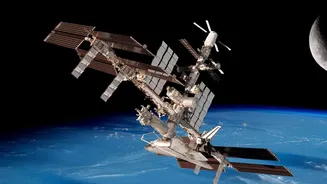
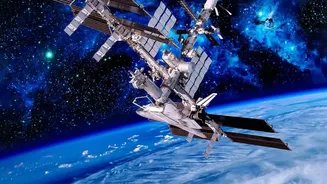
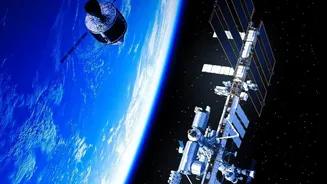
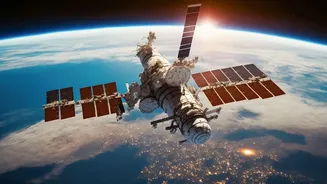
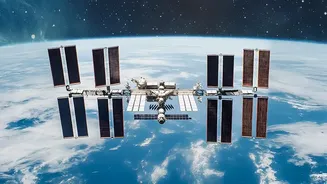
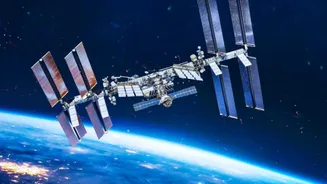
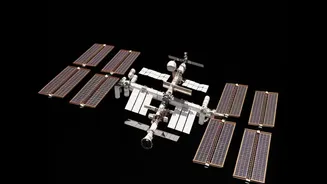
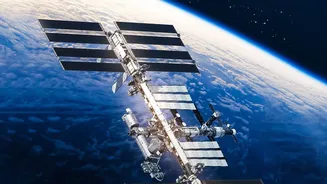
The International Space Station is the largest human-made structure in orbit, roughly the size of a football field. We can see it from Earth because its large surfaces and solar arrays reflect sunlight, making it appear as a very bright, steady point
of light. It's often the brightest object in the night sky, aside from the Moon, and can even be seen from light-polluted cities. The best times to view the ISS are at dawn or dusk. This is when your location on the ground is dark, but the station, orbiting about 400 kilometres above, is still high enough to catch the sun's rays. These viewing opportunities can happen multiple times a week, depending on your location and the station's orbital path.
What to Look For in the Sky
When you're ready to spot the station, look for a bright, white dot moving steadily and quickly across the sky. Unlike an aeroplane, the ISS does not have blinking or flashing lights. Its light is constant, though it might occasionally flare up in brightness as different parts of the station reflect sunlight at the perfect angle. A typical pass lasts for only a few minutes as it travels from one horizon to the other, usually rising in the west. You don't need any special equipment like binoculars or a telescope to see it, though they can enhance the view. The key is knowing exactly when and where to look.
NASA’s Spot The Station
For the most official and straightforward tool, NASA's own Spot The Station service is the perfect starting point. Available as both a website and a mobile app for iOS and Android, it's designed for one purpose: to tell you when the ISS will be visible from your location. You can sign up for email or text notifications that alert you a few hours before a good viewing opportunity. The app includes a simple list of upcoming sightings, how long they'll last, the maximum height the station will reach, and where it will appear and disappear in the sky. It also features an augmented reality (AR) view that uses your phone’s camera to show you the exact trajectory the station will follow across the sky.
ISS Detector
ISS Detector is another highly popular app for satellite spotting enthusiasts. Its main screen provides a clear list of upcoming passes for the ISS and, in its free version, for Starlink satellite trains. What makes it particularly user-friendly is its rating system for each pass, helping you decide which viewings will be the best. For a small fee, you can expand its capabilities to track a vast number of other satellites, comets, and planets. The app provides detailed information about each pass, including a sky map and visibility conditions, ensuring you’re well-prepared for the event. It also offers alerts to make sure you never miss a flyover.
General Stargazing Apps
Many all-in-one stargazing apps also include excellent ISS tracking features. Apps like SkyView, Stellarium, and Star Chart turn your phone into a mobile planetarium. You can point your device at the sky to identify stars, planets, and constellations in real-time. These apps also show the live position of the ISS and other prominent satellites. SkyView is known for its user-friendly interface, while Stellarium Mobile provides a highly realistic and detailed sky map. While they offer more features than a dedicated ISS tracker, they are fantastic tools for anyone wanting to learn more about the celestial objects they are seeing alongside the space station.
Tips for the Best Viewing
To make the most of your ISS spotting experience, a little preparation goes a long way. First, try to find a location with a clear, open view of the sky, away from tall buildings and bright city lights if possible. Head outside a few minutes before the pass is scheduled to begin to let your eyes adjust to the darkness. Use the app's compass or AR feature to determine the direction from which the station will appear. High passes, where the station travels to an elevation of 70 degrees or more, are often the brightest and longest-lasting, providing the most spectacular show.