
Why Your Breath Is a Superpower
Before diving into the 'how', it’s helpful to understand the 'why'. Your breath is directly linked to your nervous system. When you're stressed, your breathing often becomes shallow and rapid, triggering your body's 'fight-or-flight' response. By intentionally
slowing and deepening your breath, you activate the parasympathetic nervous system, also known as the 'rest-and-digest' system. This simple act can lower your heart rate, reduce blood pressure, and decrease levels of the stress hormone cortisol, signaling to your entire body that it's safe to relax. It’s a powerful, built-in tool for managing stress that you can access anywhere, anytime.
Setting the Stage for Calm
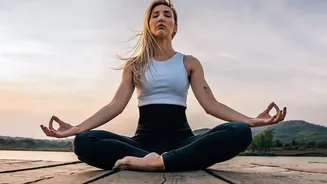
The beauty of a five-minute breathing meditation is its simplicity. You don't need special cushions, incense, or complete silence. All you need is a willingness to pause. Find a comfortable position, either sitting in a chair with your feet flat on the floor or lying down. If you're sitting, try to keep your back straight but not stiff. Rest your hands in your lap or on your belly. You can close your eyes if that feels comfortable, or simply lower your gaze. The goal is to minimize distractions for just a few minutes so you can turn your attention inward.
A Simple 5-Minute Breathing Practice
Ready to try? This exercise, often called diaphragmatic or 'belly' breathing, is perfect for beginners. 1. Settle In: Get into your comfortable position. Place one hand on your chest and the other on your belly, just below your rib cage. Take a few normal breaths. 2. Inhale Through Your Nose: Breathe in slowly through your nose for a count of four. As you inhale, focus on letting your belly expand like a balloon, pushing your hand up. Try to keep the hand on your chest as still as possible. 3. Exhale Through Your Mouth: Breathe out slowly through pursed lips (like you're blowing out a candle) for a count of six. Feel your belly gently contract as the air is released. The hand on your belly should lower. 4. Repeat: Continue this cycle of inhaling for four and exhaling for six for the next five minutes. Focusing on a longer exhale is key to promoting relaxation.
What If My Mind Wanders?
Welcome to the club. The most common challenge for beginners is a wandering mind. You'll start thinking about your to-do list, a conversation from yesterday, or what to have for dinner. This is completely normal. The goal of meditation is not to have an empty mind, but to notice when your mind has wandered. When you realize you're lost in thought, gently and without judgment, guide your attention back to the sensation of your breath. Each time you do this, you are strengthening your 'attention muscle'. Think of it as a mental bicep curl.
Making It a Daily Habit
Consistency is more important than duration. A five-minute practice every day is more beneficial than a 30-minute session once a week. To make it stick, try 'habit stacking'. Link your new meditation practice to an existing daily habit. For example, you could decide to meditate every morning right after you brush your teeth, or every evening just before you go to bed. By connecting it to something you already do automatically, you significantly increase your chances of success. Don't pressure yourself to do it perfectly; just show up for your five minutes.