



A World Without Weather
On Earth, nothing is permanent. A footprint on a sandy beach is erased by the next wave. A path through a forest is overgrown in a season. The constant forces of wind, water, and life work tirelessly to break things down. The Moon, however, is a world
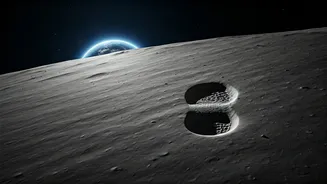
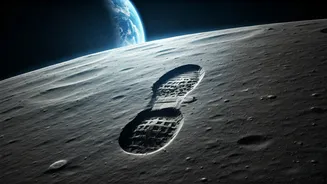
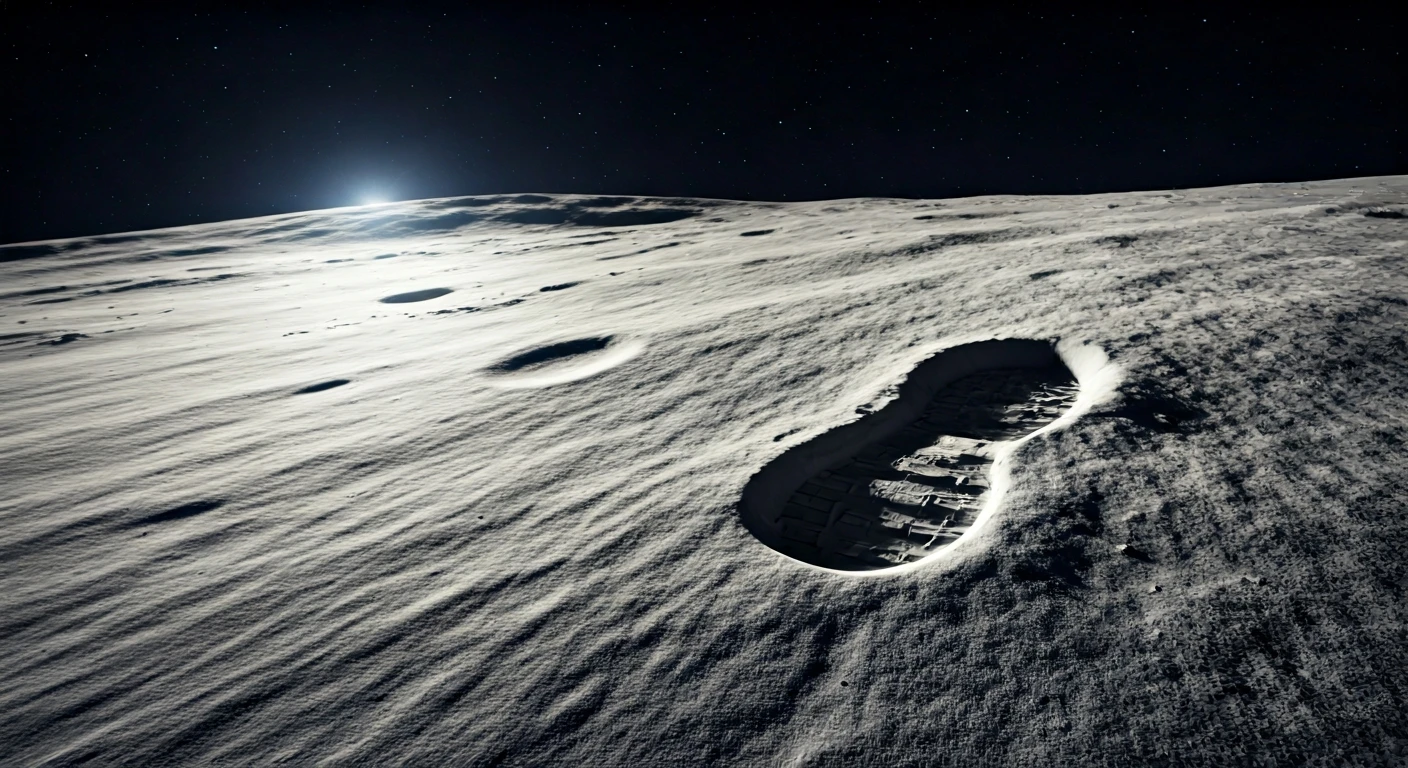
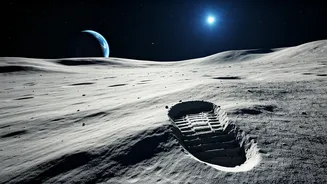
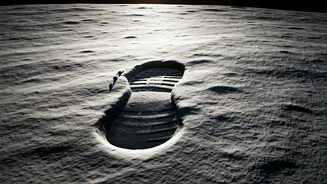
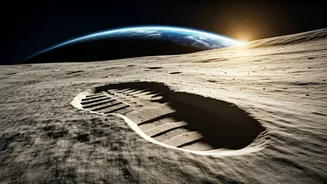
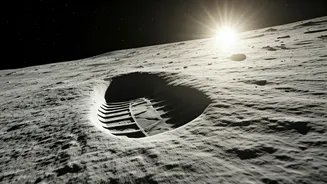
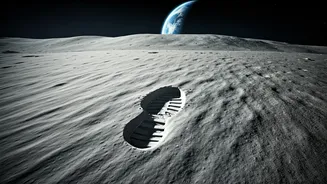
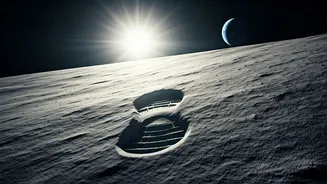
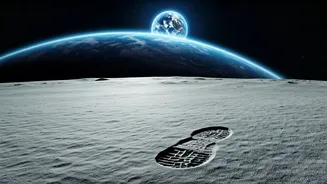
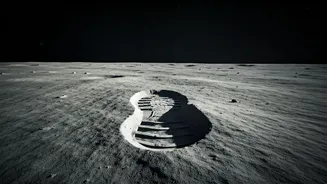
frozen in time. Its key feature is a profound lack of an atmosphere. Without a blanket of air, there is no weather as we know it. There is no wind to blow dust into the footprints, no rain to wash them away, and no oxygen to cause rust or decay. The lunar surface is a perfect, airless vault. When Neil Armstrong and Buzz Aldrin stepped onto the Sea of Tranquility in 1969, they pressed their boots into a fine, powdery soil called regolith. In the vacuum of space, those impressions have remained almost exactly as they were left, undisturbed by the elements that constantly reshape our own planet.
The Slow March of Cosmic Erosion
While the footprints will outlast any human civilization, they aren’t truly eternal. The Moon may not have weather, but it has its own subtle form of erosion: space weathering. The lunar surface is constantly bombarded by a gentle rain of micrometeorites—tiny particles of rock and dust, often no bigger than a grain of sand, travelling at incredible speeds. Each tiny impact creates a microscopic crater, kicking up a minuscule amount of dust. Over millions of years, this 'sandblasting' effect will gradually soften the sharp edges of the footprints, eventually filling them in and erasing them. It’s an impossibly slow process. Scientists estimate that the lunar surface is eroded by about 1 millimetre every 100,000 years. Given the footprints are a few centimetres deep, they are expected to remain visible for at least 10 million, and perhaps up to 100 million years. By then, the pyramids of Giza will have long turned to dust.
An Unofficial Archaeological Site
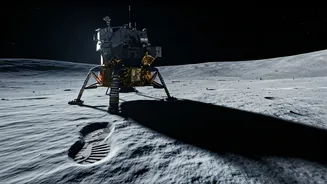
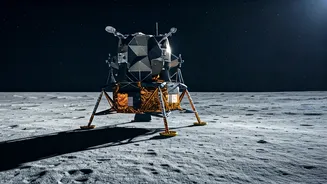
The footprints are the most poetic symbols of our visit, but they are far from the only things we left behind. The Apollo landing sites are effectively humanity’s first off-world archaeological zones. A total of 12 astronauts walked on the Moon between 1969 and 1972, and they left behind nearly 100 objects. These include scientific instruments, the American flags planted at each of the six landing sites, and even the lower stages of the lunar modules. More personal items also remain, such as the lunar rovers, Hasselblad camera equipment, and even bags of astronaut waste. An astronaut family photo was left on the surface by Apollo 16’s Charles Duke. These artifacts are a unique time capsule of 20th-century technology and culture. Organisations like For All Moonkind are working to have these sites recognised as UNESCO World Heritage sites, ensuring they are preserved as part of a shared human history.
Our Most Enduring Monuments
Consider the most ancient structures on Earth: the Great Pyramids, Stonehenge, or the remnants of Mohenjo-Daro. These are thousands of years old and have battled relentless erosion. We see them as symbols of permanence, yet their lifespan is a blink of an eye compared to the lunar artifacts. The footprints on the Moon will likely survive the complete erosion of every mountain on Earth, the shifting of continents, and potentially the end of life on our planet. They are an accidental monument, a testament to a fleeting moment when a species from the third planet in a quiet solar system reached out and touched another world. They weren't intended as a memorial, but the physics of a barren, airless world have made them the most durable thing we have ever built. The footprints will remain long after the names Armstrong and Aldrin are forgotten, a silent testament that, for a brief moment, we were there.