





What is Functional Core Power?
Before diving into the exercises, it's important to understand what 'functional core' means. Your core isn't just the 'six-pack' muscles (rectus abdominis). It’s a complex system of deep and superficial muscles in your trunk, including your back, obliques,
and pelvic floor. Functional core training focuses on strengthening this entire system to work together. The benefits go far beyond the gym: it improves posture, enhances balance and stability, reduces the risk of injury (especially lower back pain), and makes everyday movements like lifting and twisting safer and more efficient. These exercises are designed to build that real-world strength.
The Plank: Your Foundation for Stability
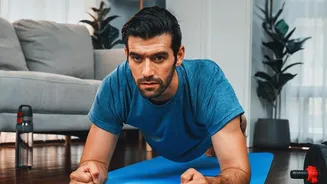
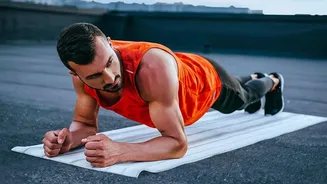
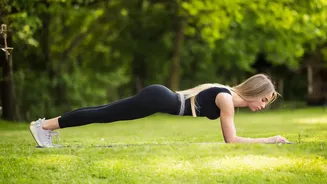
The plank is a fundamental exercise for a reason: it engages the entire core system. It’s an isometric hold, meaning you’re bracing your muscles to resist movement, which is a key function of the core. To perform a plank correctly, place your forearms on the floor with your elbows directly under your shoulders. Extend your legs straight back, coming onto your toes. Your body should form a straight line from your head to your heels. Avoid letting your hips sag or rise too high. Engage your abs by imagining you are bracing for a punch to the stomach, and squeeze your glutes. Hold this position, focusing on steady breathing. Start with 30 seconds and gradually increase the time as you get stronger.
The Bird-Dog: For Balance and Control
The Bird-Dog is a fantastic exercise for training your core to resist rotation, a crucial element of functional strength. It challenges your stability and coordination. Start on all fours, with your hands directly under your shoulders and your knees under your hips. Keep your back flat and your core engaged. Slowly extend your right arm straight forward and your left leg straight back simultaneously. The goal is to keep your torso completely still, without letting your hips twist or your back arch. Hold for a moment before slowly returning to the starting position. Repeat on the other side, extending your left arm and right leg. This controlled movement teaches your core to stabilize your spine while your limbs are in motion.
The Dead Bug: Protect Your Back
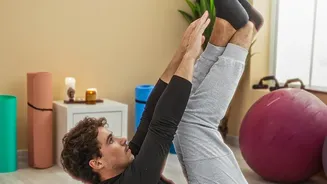
The Dead Bug is another excellent exercise for core stabilization that is particularly gentle on the lower back. Lie on your back with your arms extended toward the ceiling and your knees bent at a 90-degree angle over your hips (tabletop position). Press your lower back gently into the floor; there should be no arch. Slowly lower your right arm and your left leg toward the floor at the same time, exhaling as you move. Go as low as you can without letting your lower back lift off the floor. Return to the starting position with control and repeat on the opposite side. The slow, deliberate pace is key to engaging the deep transverse abdominis, your body's natural corset.
The Glute Bridge: Powering Your Posterior Chain
A strong core includes strong glutes. The glute bridge targets the back of your core system, which is essential for good posture and preventing lower back pain. Lie on your back with your knees bent, feet flat on the floor about hip-width apart, and your arms by your sides. Squeeze your glutes and lift your hips off the floor until your body forms a straight line from your shoulders to your knees. Avoid over-arching your back. Hold at the top for a second or two, focusing on the contraction in your glutes, then slowly lower your hips back down. This exercise strengthens the connection between your lower back, glutes, and hamstrings.
The Bicycle Crunch: Adding Controlled Rotation
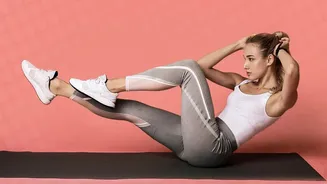
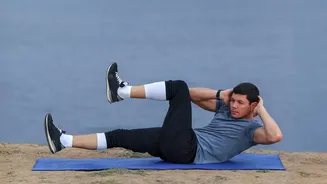
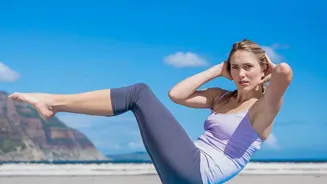
While uncontrolled twisting can be ineffective, a proper bicycle crunch is great for targeting the obliques. The key is control, not speed. Lie on your back and bring your knees to a tabletop position. Place your hands lightly behind your head, avoiding pulling on your neck. Lift your head and shoulders off the floor. Slowly bring your right knee toward your left elbow while extending your left leg straight. The twist should come from your torso, not just your arms. Pause, then switch sides, bringing your left knee toward your right elbow as you extend your right leg. A slow and controlled tempo ensures your core muscles are doing the work.