




The Deception of Cool, Humid Air
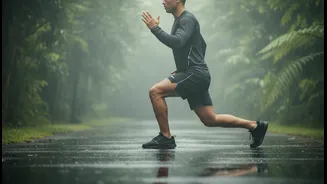
On a hot, dry day, sweat evaporates quickly, cooling you down. It’s a clear signal that your body is losing water. During the rainy season, however, high humidity changes everything. When the air is already saturated with moisture, your sweat has nowhere
to go. It drips off your skin instead of evaporating. This is a double-edged sword. First, your body’s primary cooling mechanism is compromised, causing your core temperature to rise faster. Second, because you don't feel the evaporative cooling effect, you might not perceive how much fluid you're actually losing. Your body responds by sweating even more to try and cool down, which only accelerates fluid and electrolyte loss without providing much relief.
Why Thirst Is a Poor Indicator
Many people rely on thirst as their primary cue to drink water, but this can be a critical mistake, especially during exercise. By the time you feel thirsty, you are often already in a state of mild dehydration. The thirst mechanism is a delayed response; an athlete can lose over a litre of body water before their brain signals thirst. In cooler, humid conditions, this signal can be even less reliable. The absence of intense heat can trick you into thinking you don't need to drink as much. Relying on thirst alone often leads to what experts call “voluntary dehydration,” where individuals don't drink enough to fully replace their fluid losses. A better indicator is the colour of your urine; pale, straw-coloured urine suggests good hydration, while a darker yellow or golden colour is a clear sign you need to drink more fluids.
Recognising the Signs of Dehydration
Since you can't always rely on thirst, it's crucial to recognise the other symptoms of dehydration. Early signs can be subtle and easily mistaken for general fatigue from a workout. These include headache, weakness, dizziness, and irritability. You might also experience a dry mouth, muscle cramps, and notice your heart rate is higher than usual. As dehydration worsens, it can impair cognitive function, slowing your reaction times and affecting your concentration. In some cases, a sign of significant dehydration is actually a lack of sweat during vigorous exercise when you would expect to be sweating heavily. Paying attention to these signals is key to preventing more serious complications like heat exhaustion.
Smart Hydration: Water vs. Electrolytes
For workouts lasting less than an hour in moderate conditions, plain water is generally sufficient to rehydrate. However, during the rainy season, intense or prolonged workouts (over 60 minutes) demand more. As you sweat, you don't just lose water; you also lose essential minerals called electrolytes, particularly sodium. Losing these can lead to muscle cramps and fatigue. In high humidity, when sweat loss is high, replacing electrolytes becomes critical. Drinking only plain water can dilute the sodium levels in your body, which can be counterproductive. For longer workouts, a sports drink containing electrolytes and a small amount of carbohydrates can help your body absorb fluid more effectively and replenish lost minerals. Coconut water is a natural source of potassium but is often low in sodium, so it may not be sufficient on its own for intense exercise.
A Practical Plan for Monsoon Workouts
Staying properly hydrated requires a proactive strategy, not a reactive one. Start your workout already well-hydrated by drinking about 500-600 ml of water two to three hours before you begin. During your workout, don't wait until you're thirsty. Make it a habit to sip 100-200 ml of fluid every 15 to 20 minutes. If your session is longer than an hour, make that fluid an electrolyte drink. After you finish, continue to rehydrate to replace what you've lost. A good rule of thumb is to drink 500-700 ml of fluid for every half-kilogram of body weight lost during exercise. You can determine this by weighing yourself before and after your workout. This proactive approach ensures your performance doesn't suffer and you stay safe, no matter how humid it gets.