



Why Choose Regional Ceramics?
Before we dive into the specific types, let’s understand why handmade pottery is such a powerful choice for sustainable styling. First, it’s about the material. Clay is a natural, earthen resource, making it inherently more eco-friendly than plastics
or synthetic resins. The creation process, often done in small, local kilns, has a significantly lower carbon footprint compared to large-scale industrial manufacturing. But the biggest benefit is human. When you buy regional ceramics, you are directly supporting artisan communities, preserving centuries-old craft traditions, and investing in a local economy. Each hand-molded piece carries a story, the touch of its maker, and an imperfection that makes it perfectly unique—something a factory-made item can never replicate.
The Rustic Charm of Khavda Pottery
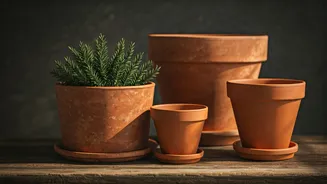
Hailing from the Kutch region of Gujarat, Khavda pottery is a stunning example of painted terracotta. What makes it special is its distinctive look, created without a potter's wheel. Potters shape the clay by hand, then coat it with a white clay slip (geru) before painting intricate geometric and nature-inspired patterns using natural red, white, and black pigments. These pieces are not glazed, giving them a beautifully matte and earthy finish. How to Style It: Khavda pots, with their graphic designs, make for incredible statement pieces. A large Khavda urn can anchor a dull corner of your living room, while smaller vessels are perfect for holding dried grasses or simply being displayed as art on a bookshelf. Their rustic charm pairs wonderfully with minimalist, bohemian, or eclectic interiors.
The Ethereal Beauty of Jaipur Blue Pottery
Instantly recognizable by its vibrant cobalt blue and turquoise hues, Jaipur Blue Pottery is not made from traditional clay. Instead, it uses a dough prepared from quartz powder, powdered glass, and other natural ingredients like fuller's earth (multani mitti). This unique composition means it doesn't develop cracks and is more durable. The craft, which has Turko-Persian origins, features delicate motifs of birds, flowers, and animals painted by hand before the piece is glazed and fired at low temperatures. How to Style It: Blue Pottery adds a pop of colour and regal elegance to any space. Use small tiles as coasters, place a decorative plate on a stand, or group a few small vases on a console table. Their bright, cheerful aesthetic can liven up a neutral colour palette and bring a touch of Rajasthani royalty into your home.
The Smoky Sophistication of Longpi Pottery
From the Ukhrul district of Manipur comes Longpi, or black pottery. This is another craft that eschews the potter’s wheel. Artisans use a special mixture of weathered black serpentine stone and clay, shaping it with molds and their hands. The pieces are fired in a bonfire, and while they are still hot, polished with a local leaf, which gives them their characteristic matte black finish and subtle sheen. Longpi pottery is not only beautiful but also functional—it’s traditionally used for cooking and is safe to use on a gas stove or in the oven. How to Style It: Longpi’s minimalist, modern aesthetic makes it incredibly versatile. A set of Longpi mugs brings a sophisticated touch to your morning coffee ritual. Use the bowls for serving salads or as elegant catch-alls for keys and trinkets. Its deep black colour provides a dramatic contrast against light-coloured wood or marble surfaces.
The Timeless Appeal of Khurja Ceramics
From Khurja in Uttar Pradesh, often called the 'Ceramic City', comes a wide array of pottery known for its durability and colourful designs. While the town produces ceramics on a larger scale, it still holds a strong tradition of hand-painted work. The most iconic style involves intricate floral patterns painted in vibrant colours, often with a signature blue, on a stark white or cream background. These pieces are double-fired, making them strong and suitable for everyday use. How to Style It: Khurja ware is perfect for adding a touch of functional art to your kitchen and dining areas. Colourful mugs, pickle jars (barnis), and serving platters can brighten up your daily meals. A collection of small Khurja pots on a kitchen windowsill, each holding a different herb, is a simple way to create a charming and lively display.