

Is it a tiny star or a super-sized planet? For decades, astronomers have puzzled over brown dwarfs, celestial objects that occupy a mysterious grey area. Now, new findings are clarifying what these 'failed stars' share with gas giants like Jupiter.
Meet the Cosmic Misfits
In
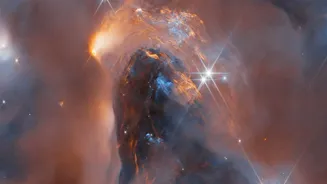
the vast cosmic theatre, some objects don't quite fit their roles. Brown dwarfs are one such case. First theorized in the 1960s and confirmed in the 1990s, they are born from collapsing clouds of gas and dust, just like stars. However, they never accumulate enough mass to kickstart the sustained hydrogen fusion that makes stars shine. Because of this, they are often nicknamed 'failed stars'. They are significantly more massive than even the largest planets — ranging from about 13 to 80 times the mass of Jupiter — but they lack the internal engine of a true star. Instead of shining brightly, they emit a faint glow as they slowly cool over billions of years, making them incredibly difficult to study.
A Planet in Star's Clothing
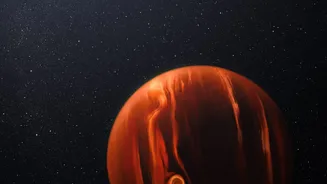
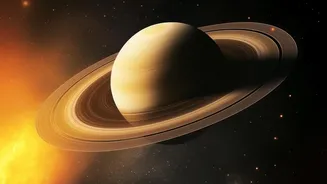
The confusion deepens when you compare a brown dwarf to a gas giant planet like Jupiter. They can have similar diameters, temperatures, and are composed primarily of hydrogen and helium. Recent findings from NASA's SPHEREx telescope have added a new layer to this comparison. By analyzing the light from dozens of brown dwarfs, scientists found their atmospheres contain a rich mix of molecules, including water, methane, carbon monoxide, and carbon dioxide. This chemical makeup is not unlike what we see in the atmospheres of giant planets in our own solar system. However, the similarities may end there. While astronomers once assumed brown dwarfs would have stable, Jupiter-like storm patterns and cloud bands, recent observations from other telescopes like the James Webb Space Telescope suggest their weather is far more chaotic and variable.
Enter the SPHEREx Telescope
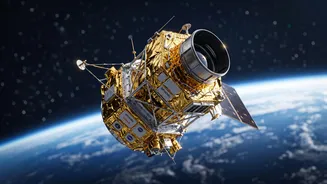
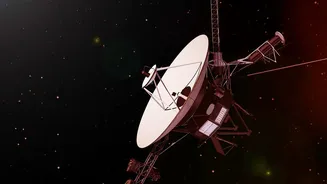
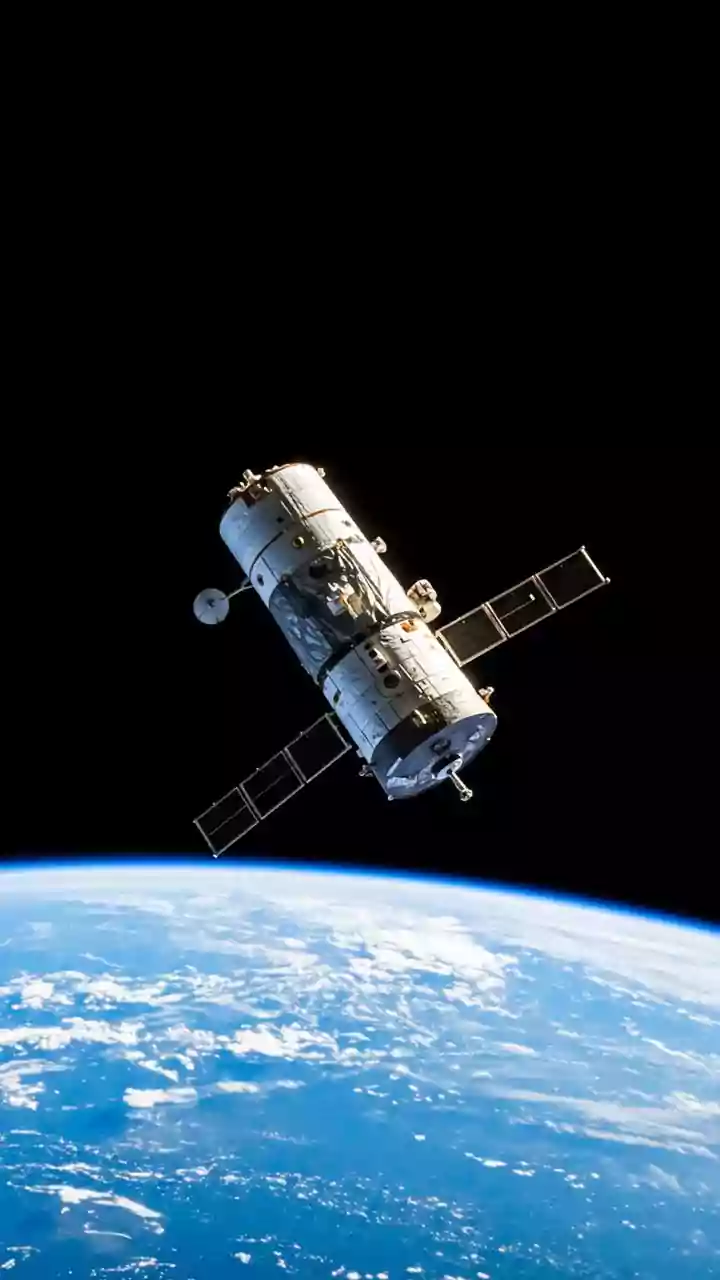
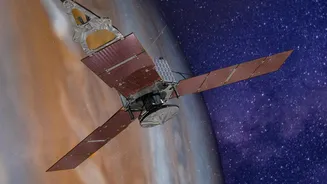
This is where NASA's SPHEREx (Spectro-Photometer for the History of the Universe, Epoch of Reionization, and Ices Explorer) comes in. Launched in March 2025, this space observatory is on a two-year mission to map the entire sky in near-infrared light. Unlike more targeted telescopes, SPHEREx is a survey instrument, scanning huge swathes of the cosmos to create an unprecedented 3D map of the universe. While its primary goals involve studying the origins of the universe and galaxies, it is also perfectly suited to hunt for and analyze brown dwarfs. By measuring the brightness of these objects across 102 different colours of light, SPHEREx creates a detailed spectrum, essentially a chemical fingerprint, of their atmospheres. This has allowed scientists to move from studying a few dozen brown dwarfs in detail to analyzing thousands.
Blurring the Lines of Formation
The key distinction between a star and a planet often comes down to how it was made. Stars form from the direct collapse of a gas cloud, while planets are thought to form from the leftover disk of material orbiting a newborn star. Brown dwarfs form like stars, but their planet-like atmospheres complicate the picture. The new data from SPHEREx shows just how diverse these objects are. Scientists found that even at the same temperature, no two brown dwarfs look exactly alike, challenging existing theoretical models. Some are in a dynamic phase where their exotic clouds thin out, revealing methane_rich atmospheres below. Understanding this atmospheric diversity helps scientists refine their theories on how both stars and giant planets evolve, providing a crucial real_world laboratory for conditions that are impossible to replicate on Earth.