
Understanding the Importance of Origin
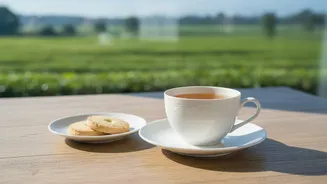
Just like wine, the environment where tea is grown—known as its terroir—plays a crucial role in its final taste. This concept covers everything from the soil and climate to the altitude. Teas from different parts of the world offer distinct flavour profiles.
For instance, a Darjeeling from the Himalayan foothills is often light and fragrant, celebrated as the "champagne of teas," while a black tea from Assam in India is typically robust, malty, and strong. Teas from China are incredibly diverse, offering everything from smoky Lapsang Souchong to delicate green teas. Higher altitudes and cooler temperatures often slow a tea leaf's growth, allowing it to develop more complex and sweeter flavour compounds. When you see a tea described as 'single-origin', it means it comes from one specific farm or region, offering a pure taste of that particular place. This traceability often points to a high-quality, carefully produced tea. Understanding a tea’s origin is the first step in predicting its character.
Decoding the Ingredients List
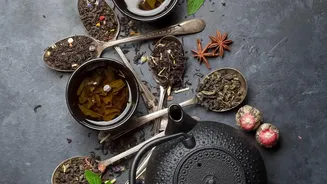
Beyond single-origin teas lie the world of blends and flavoured teas. A blended tea combines leaves from different regions to achieve a consistent and balanced flavour profile, like a classic English Breakfast. A flavoured tea, on the other hand, adds other components to the tea leaves. This can be done by scenting, where tea leaves absorb the aroma of flowers like jasmine, or by flavouring, where essential oils like bergamot are used to create Earl Grey. When looking at the ingredients, it’s helpful to distinguish between the tea base and complementary additions. Many fruit-flavoured teas use pieces of dried fruit more for visual appeal than for taste; the primary flavour often comes from natural or artificial flavourings that are absorbed by the tea leaf, which acts as a carrier. You'll also find herbal infusions, or tisanes, which contain no actual tea leaves (from the Camellia sinensis plant) and are instead made from herbs, flowers, fruits, and spices like chamomile, peppermint, or hibiscus. These are naturally caffeine-free.
Navigating Caffeine Content
Caffeine is a major consideration for many tea drinkers. While it's a common belief that black tea is always high in caffeine and green tea is low, the reality is more nuanced. As a general rule, black tea tends to have the most caffeine, followed by oolong, green, and then white tea, which typically has the least. An average eight-ounce cup of black tea might contain 40-70 milligrams of caffeine, compared to 20-45 mg in green tea and 15-40 mg in white tea. However, the ranges can overlap. Factors like the specific tea plant variety, how the leaf is processed, water temperature, and how long you steep the tea all have a significant impact on the final caffeine content in your cup. A strongly brewed green tea could potentially have more caffeine than a lightly brewed black tea. For a serious energy boost, matcha, which is made from powdered whole green tea leaves, can contain up to 70 mg per serving. And for those avoiding caffeine altogether, true herbal tisanes are always a safe and flavourful bet.
A Shopper's Guide to the Perfect Cup
Now, how do you put this all together in the shop? Start with your purpose. Are you looking for a bold morning pick-me-up? A single-origin Assam black tea is an excellent choice for its robust flavour and high caffeine. Need a calming, caffeine-free brew for the evening? A chamomile or rooibos herbal blend will be perfect. For a gentle afternoon lift, consider a Japanese sencha green tea, which balances moderate caffeine with a fresh, vegetal taste. If you're hosting and want something aromatic and intriguing, a jasmine-scented green tea or a fruity oolong could be a delightful option. Don't be afraid to ask questions and experiment with samples. Think about the flavours you already enjoy in food and drink. If you like bright, citrusy notes, an Earl Grey or a lemon-flavoured green tea might appeal. If you prefer rich, deep flavours, a malty breakfast blend or even a smoky Pu'erh could be your new favourite.