





Why Sitting Is the New Strain
Our bodies are designed for movement. When we sit for prolonged periods, especially with poor posture, we put immense strain on our spine. Slouching or hunching forward forces the spine into an unnatural position, increasing stress on the vertebrae and
the soft, cushion-like discs between them. A study even found that sitting can put 90% more pressure on your back than standing. This constant pressure can lead to the weakening of ligaments and muscles that support the spine, including the core and glutes. Over time, this inactivity and muscle imbalance can contribute to chronic pain, stiffness, and even nerve compression, leading to conditions like sciatica.
Your Ergonomic Lifeline
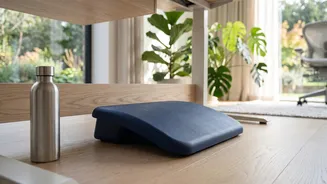
Creating a workspace that fits your body is one of the most effective ways to combat discomfort. Start with what experts call the '90-degree check'. Your elbows, hips, and knees should all be at roughly a 90-degree angle, with your feet flat on the floor. Adjust your chair and desk height to achieve this. The top of your computer monitor should be at or just below eye level, and about an arm's length away, so you don't have to crane your neck up or down. Your keyboard and mouse should be positioned to allow your wrists to remain straight and your shoulders relaxed. Avoid storing items under your desk, as this can restrict your legroom and prevent you from sitting correctly.
The Power of the Micro-Break
Even with a perfect setup, staying in one position for hours is detrimental. This is where micro-breaks become essential. These are short, frequent breaks designed to get you moving. Research shows that moving for even just two minutes every hour can make a significant difference. Set a timer to remind yourself to stand up, walk around, or stretch every 30 to 60 minutes. These small movements improve blood circulation, reset your posture, and relieve muscle tension. Beyond physical benefits, taking breaks has also been shown to improve focus, reduce mental fatigue, and boost productivity.
Simple Stretches at Your Desk
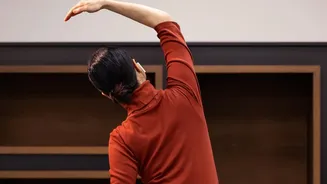
You don't need a yoga mat to find relief. Simple stretches can be done right at your desk to alleviate tension. For your neck, gently tilt your ear toward your shoulder and hold for 10-15 seconds on each side. You can also perform slow neck rolls, drawing circles with your nose to loosen up stiffness. For your back, try a spinal twist. While seated, cross one leg over the other and gently rotate your torso toward the crossed leg, using the chair for support. Hold the stretch and then repeat on the other side. To stretch your forearms and wrists, extend one arm out with fingers pointing down, and use your other hand to gently pull the fingers toward you.
Beyond the Workstation
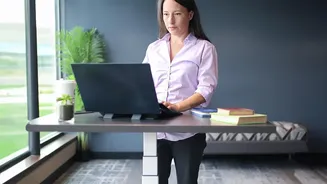
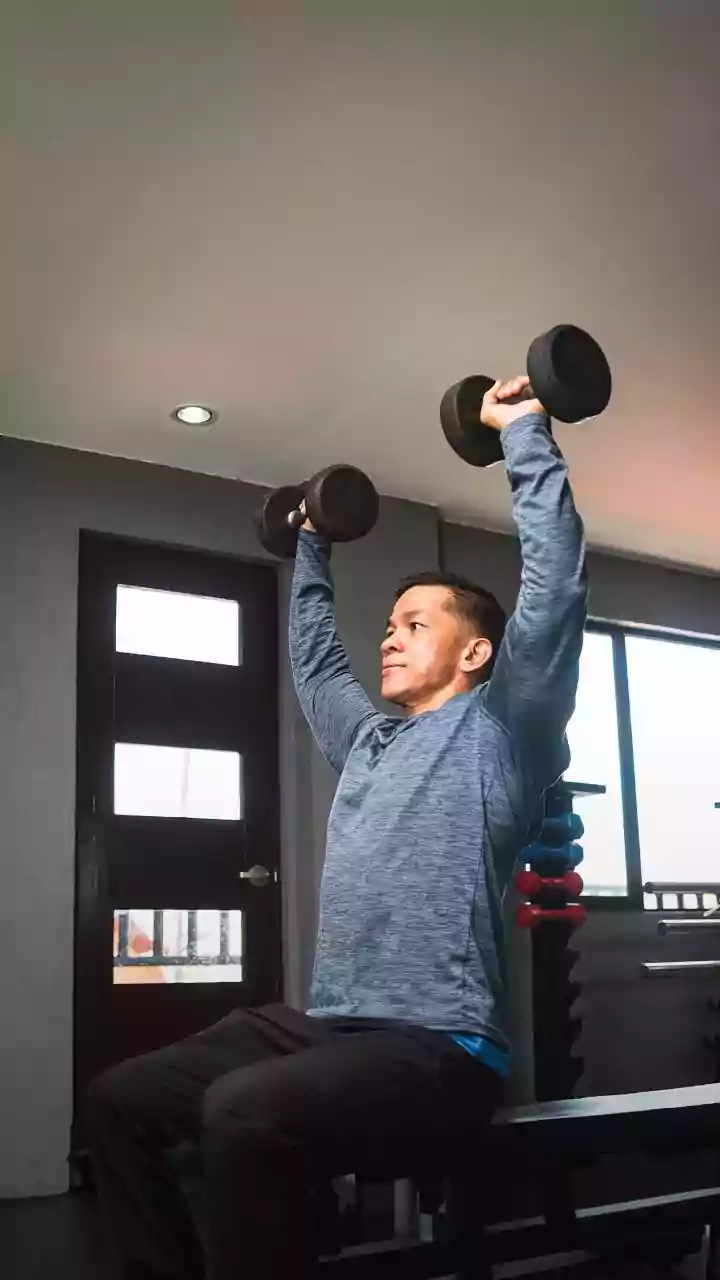
While desk-based habits are crucial, your overall activity level plays a major role. Look for opportunities to incorporate more movement throughout your entire day. Take the stairs instead of the elevator, go for a short walk during your lunch break, or stand up while taking phone calls. The goal is to break the cycle of prolonged sitting. The cumulative effect of these small choices helps strengthen the muscles that support your spine, improves your overall joint health, and counteracts the negative effects of a sedentary job. Think of it not as a workout, but as a necessary ingredient for a healthier, more comfortable workday.