



The Fiery Gulmohar Carpets
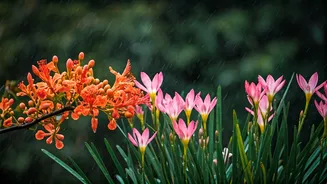
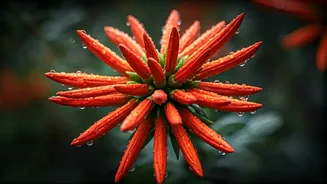
While the Gulmohar (Delonix regia) begins its bloom in the scorching summer, its peak beauty often coincides with the first monsoon showers. The sight of its fiery red-orange flowers carpeting the wet streets is an iconic image of the Indian monsoon.
The contrast of the vibrant petals against the grey skies and dark, wet tarmac is breathtaking. This 'flame of the forest' doesn't just bloom; it puts on a dramatic, unmissable performance. Its widespread presence in urban avenues means you don't need a garden to appreciate it—a simple walk or drive through the city becomes a floral safari. This is less a flower you grow and more one you experience as part of the collective seasonal shift.
The Ever-Cheerful Balsam
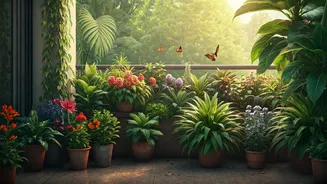
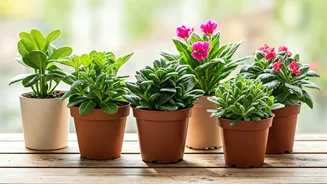
If there's one flower that defines easy monsoon gardening, it's the Balsam (Impatiens balsamina). Known colloquially in some regions as the 'touch-me-not' for its seed pods that burst when touched, this flower is a delight for amateur gardeners. It grows quickly, requires minimal fuss, and thrives in the monsoon's high humidity. Available in a spectrum of colours from pink and purple to red and white, Balsam adds pops of cheerfulness to balconies, window boxes, and garden beds. Their resilience and vibrant nature make them a favourite for anyone looking to add instant colour to their home during the rains. A small packet of seeds sown just as the rains begin can result in a lush, blooming display in just a few weeks.
The Intoxicating Jasmine (Mogra/Chameli)
Jasmine is a beloved fragrance year-round, but the monsoon elevates it to another level. The cool, humid air seems to hold and amplify the sweet, intoxicating scent of varieties like Mogra (Arabian Jasmine) and Chameli (Common Jasmine). The flowers, often blooming in the evening, release a perfume that mingles with the smell of wet earth (petrichor) to create the signature scent of a monsoon night. Women often weave the delicate white buds into their hair, and a small bowl of jasmine floating in water can perfume an entire room. This sensory connection makes jasmine more than just a flower; it's an essential part of the monsoon atmosphere, evoking feelings of romance and nostalgia.
The Hardy Hibiscus (Gudhal)
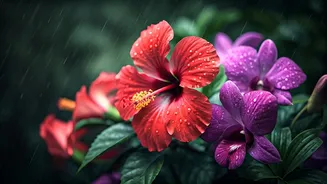
The humble Hibiscus (Gudhal) is a workhorse of the Indian garden, but it truly shows its love for the monsoon. The increased water and humidity encourage lush foliage and a profusion of large, brilliant blooms. From deep reds used in traditional offerings to delicate pinks, sunny yellows, and pristine whites, the hibiscus puts on a daily show. Each flower may last only a day, but the plant produces them in such abundance that it remains constantly in colour. It’s a symbol of simple, enduring beauty that thrives when the weather is at its most dramatic. For gardeners, it’s a reliable friend that asks for little but gives back so much visual joy.
The Spiritual Plumeria (Champa)
The Plumeria, or Champa, is another flower whose fragrance becomes almost magical during the monsoon. Its waxy, elegant petals—in shades of white, yellow, and pink—are famously used as temple offerings. The trees are a common sight in temple courtyards and old neighbourhoods, and their fallen blossoms are often collected first thing in the morning. The monsoon air seems to make their sweet, slightly fruity scent hang heavier, creating a serene and spiritual ambience. The Champa's ability to root easily from cuttings also makes it a popular plant to share among neighbours, turning it into a flower that builds community and shared beauty.
The Festive Marigold (Genda)
Marigolds (Genda) are synonymous with festivities in India, and the monsoon season is their prime growing time. Sown during the rains, they grow into bushy plants that burst into shades of orange and yellow just in time for the late monsoon and autumn festival season, from Ganesh Chaturthi to Diwali. Their bright, sun-like appearance is a perfect antidote to overcast days. They are incredibly easy to grow and are known for their pest-repelling properties, making them a useful companion plant in vegetable patches. The obsession with marigolds during this time is partly practical—getting ready for upcoming celebrations—and partly emotional, as their cheerful colour brings a feeling of warmth and festivity.