






A Sudden Cosmic Flash
In late 2019, astronomers noticed something extraordinary happening 300 million light-years away in the Virgo constellation. A previously unremarkable galaxy, known as SDSS1335+0728, began to shine with unprecedented intensity. For decades, it had been
calm and inactive. Then, a US-based automated survey called the Zwicky Transient Facility detected a dramatic change: the galaxy's core started to flare up. This wasn't a fleeting burst of light. More than four years later, the galaxy is still getting brighter, radiating more light across ultraviolet, optical, and infrared wavelengths than ever recorded from it. This sustained brightening pointed scientists away from typical transient events like a supernova, which fade in a matter of months. They were witnessing something entirely new.
What It Means for a Black Hole to 'Wake Up'
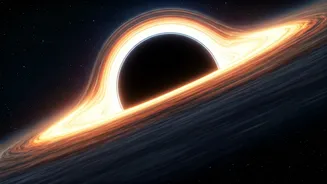
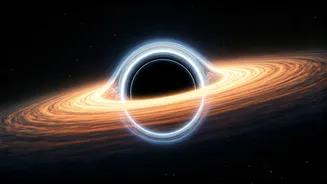
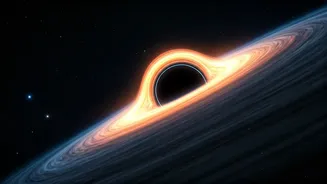
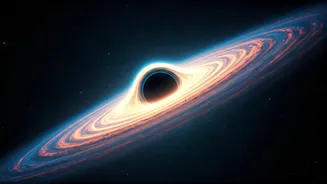
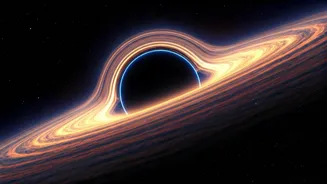
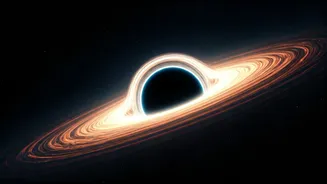
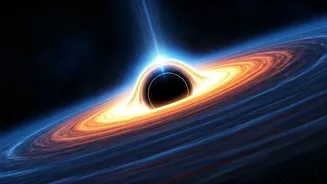
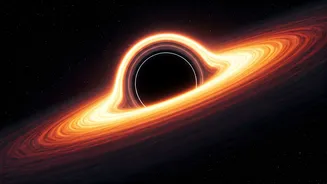
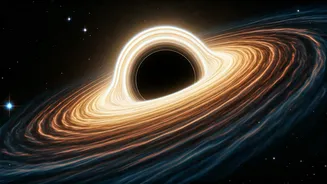
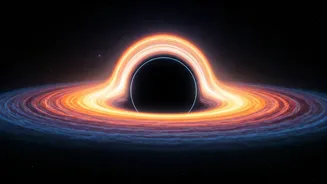
At the heart of most large galaxies, including our own Milky Way, lies a supermassive black hole—an object with a mass hundreds of thousands to billions of times that of our Sun. Most of these cosmic titans are dormant, or "sleeping." This means there isn't much material nearby for them to consume. A black hole "wakes up" when it begins to actively feast on a large supply of surrounding gas and dust. As this material is pulled in by the black hole's immense gravity, it forms a swirling, superheated disc called an accretion disk. This process releases an enormous amount of energy, causing the galaxy's center to shine brilliantly across the electromagnetic spectrum, from X-rays to radio waves. This intensely luminous region is known as an Active Galactic Nucleus, or AGN.
The Search for an Explanation
To understand what was happening to SDSS1335+0728, an international team of astronomers used a combination of new observations and archival data from multiple ground and space-based telescopes, including the European Southern Observatory's Very Large Telescope (VLT) in Chile. They had to consider other possibilities. One was a tidal disruption event (TDE), which occurs when a star gets too close to a black hole and is shredded. While TDEs are dramatic, they typically only last for a few hundred days at most. The fact that SDSS1335+0728 has continued to brighten for years makes a standard TDE unlikely, though scientists have not completely ruled out a very unusual, long-lasting version of such an event. The sustained and increasing luminosity strongly suggests something more profound is at play.
Witnessing the Birth of an AGN
The leading hypothesis is that astronomers are watching the birth of an Active Galactic Nucleus in real time—a process never observed before. The galaxy has now been reclassified as having an AGN due to its dramatic transformation. While scientists have seen galaxies that were inactive in the past and are active now, the actual process of 'switching on' has remained theoretical until now. Observations have revealed that since 2019, the galaxy has become four times brighter in ultraviolet light, twice as bright in mid-infrared, and even began emitting X-rays in February 2024. This slow and steady activation provides an unprecedented opportunity to study how these powerful cosmic engines form and evolve.
What Happens Next?
The scientific community is still closely monitoring SDSS1335+0728 to confirm the exact nature of this event. Future observations will be crucial to track its evolution and rule out any other explanations. This discovery opens a fascinating window into the life cycle of galaxies. It even raises questions about our own cosmic backyard. The supermassive black hole at the center of the Milky Way, Sagittarius A*, is currently dormant. Researchers say that an awakening like the one seen in SDSS1335+0728 could theoretically happen to our own galaxy's black hole, though the probability is unclear. For now, astronomers are relishing the chance to watch a cosmic giant stir from its slumber, offering clues that could reshape our understanding of the universe.