
The Ultimate Deep Freeze
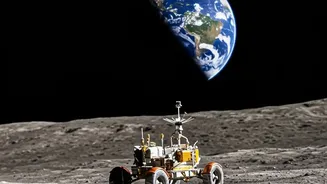
A lunar night is nothing like a night on Earth. Without an atmosphere to hold onto heat, surface temperatures on the Moon plummet once the sun goes down. For roughly 14 consecutive Earth days, the darkness is absolute and the cold is profound, with temperatures dropping
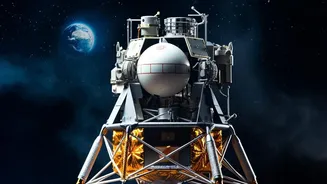
to –170°C and even as low as –250°C in permanently shadowed regions near the poles. This extreme environment is one of the single greatest barriers to long-term lunar exploration. Electronics fail, batteries lose their ability to hold a charge, and mechanical parts can become brittle and break. India's historic Chandrayaan-3 lander, which successfully touched down near the south pole, was designed for one lunar day. Once the long night fell, its mission came to a planned and honourable end as its systems, unequipped with heaters, went silent.
The Old Power Problem
For decades, space agencies have had a brute-force solution for keeping spacecraft warm: Radioisotope Heater Units (RHUs). These devices use the slow decay of radioactive materials, like plutonium, to generate a steady supply of heat. While effective, RHUs are complex, expensive, and rely on scarce materials, making them an impractical choice for the dozens of commercial and scientific missions now being planned. The alternative is using precious battery power to run conventional heaters. However, this is incredibly inefficient. It's estimated that for every watt of power used for heating during the lunar night, an additional five kilograms of battery mass is required at launch, a huge penalty when every gram counts. This fundamental challenge has kept most lunar missions short, limiting them to a single, 14-day window of sunlight.
A Hot Solution: Self-Heating Tech
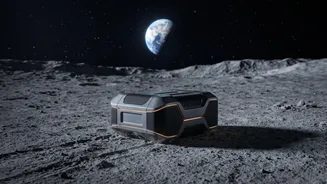
The latest innovations take a more elegant approach. Instead of trying to keep an entire lander warm or relying on nuclear sources, engineers are developing power systems that can keep themselves warm. These new self-heating power modules are designed to function as their own thermal solution. Technologies range from advanced battery packs with integrated heating elements to entire thermal management systems that intelligently manage energy flow. The concept is simple but revolutionary: use a tiny fraction of the battery's own power to maintain its core temperature, ensuring it operates efficiently even when the external environment is lethally cold. This allows the vast majority of the stored energy to be used for its intended purpose: running scientific instruments, communications equipment, and life support.
How It Works: An Intelligent System
These systems function like a sophisticated thermostat. Temperature sensors trigger internal heating elements when the battery's temperature drops to a critical threshold. This keeps the battery's internal chemistry active and prevents permanent damage from the cold. Other related technologies include advanced thermal switches and variable conductance heat pipes. During the scorching lunar day, these systems work in reverse, efficiently rejecting heat to prevent the electronics from overheating. At night, they effectively insulate the core components, trapping warmth and minimising heat loss to the freezing surroundings. NASA is developing systems like Bulk Metallic Glass Gears that can operate without heating at all, while commercial companies are building systems designed to be integrated into a new generation of lunar landers.
Unlocking a New Era of Lunar Exploration
The ability to survive the lunar night transforms what is possible on the Moon. It extends mission lifespans from just two weeks to months or even years. This is particularly crucial for exploring the lunar south pole, a top priority for agencies like NASA and ISRO, where permanently shadowed craters may hold vast quantities of water ice. Longer missions allow for more comprehensive scientific study, such as setting up long-term seismic monitors to listen for 'moonquakes'. It also enables the sustained operation of infrastructure. ISRO is already developing next-generation landers with the goal of surviving multiple lunar nights, potentially operating for 200 days or more. This leap in endurance is essential for prospecting resources, testing new technologies, and building the foundation for a permanent human presence on the Moon.