

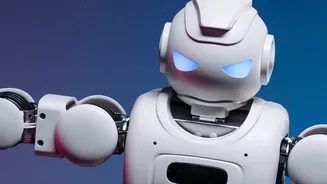
The age of the humanoid robot is no longer science fiction. Machines that walk, lift, and work are stepping off the screen and into warehouses. But for all the futuristic hype, businesses are asking hard, practical questions before signing up.
The Promise of a New Workforce
For decades,
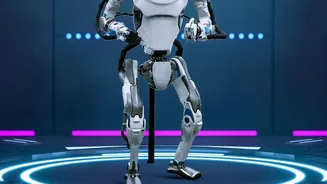
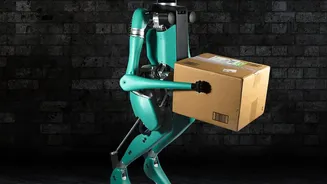
automation has meant stationary robotic arms bolted to a factory floor, performing one task with perfect repetition. Humanoid robots promise something far more flexible. Companies like Figure AI, Apptronik, Boston Dynamics, and Tesla are developing machines that can navigate environments built for people, handle a variety of tasks, and potentially fill critical labor gaps. This vision is now being tested in the real world. In a landmark move, Figure AI has deployed its robots at a BMW manufacturing plant in the US, handling automotive parts in a live production environment. Similarly, Amazon is using Agility Robotics' 'Digit' in its fulfillment centers. These aren't just demos; they are commercially structured pilot programs designed to prove the business case for a new kind of worker.
The Billion-Dollar Question: What Is the Cost?
Despite the excitement, the most significant barrier to widespread adoption is the bottom line. The cost of a single advanced humanoid robot can be substantial. While Boston Dynamics has never released a public price for its highly advanced Atlas robot, analyst estimates range from $130,000 to over $300,000 per unit. Other companies are targeting more accessible price points. Tesla aims to eventually sell its Optimus robot for between $20,000 and $30,000, while Figure AI and Apptronik are estimated to be in the $50,000 range. Some manufacturers offer a 'Robotics-as-a-Service' (RaaS) model, with hourly rates around $25, which lowers the upfront investment. Still, for any business, the calculation is about return on investment (ROI). A robot must not only perform its tasks effectively but also be more cost-efficient than human labor over its lifespan, a payback period that some analyses place at under two years, depending on the price.
More Than Price: The Reliability Hurdle
Even if the price is right, a robot that constantly breaks down or requires supervision is a net loss. Reliability is the second major hurdle. Early pilot programs, while promising, are still heavily monitored by engineers. Key concerns include battery life, which for many current models is around four to five hours, necessitating battery swapping systems for continuous operation. Dexterity and the ability to handle unexpected variations in a task are also critical. A robot that can pick up a box 99% of the time still fails once every 100 attempts, which can disrupt a fast-moving production line. Figure AI's recent trials in homes showed a task success rate jumping from 9% to 56% in a month thanks to better AI training, but a 44% failure rate is still far too high for most commercial applications. Proving that these machines can run for thousands of hours with minimal downtime is the core objective of the current tests at companies like BMW and Mercedes-Benz.
From Lab to Factory Floor: The Real_World Trials
The scale of current deployments is still small, often involving single_digit numbers of robots performing specific, repetitive tasks. At BMW's Spartanburg plant, Figure robots have worked over 1,250 hours, moving tens of thousands of parts. Apptronik's Apollo robot is in pilot programs with Mercedes_Benz for tasks like kit delivery and quality control. Meanwhile, Tesla is taking a different approach, deploying its Optimus robots internally within its own factories, primarily to gather data to train its AI rather than for immediate productive output. These trials are crucial for generating real_world data on everything from performance and safety to integration with human workers. The goal is to move from single_task pilots to multi_task, fleet_managed operations, but the industry is still in the early stages of proving that value.