





The Universe's Luminous Engines
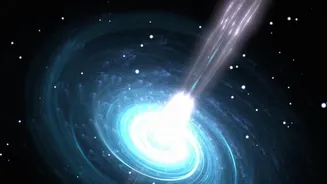
At the center of many large galaxies, including our own Milky Way, lurks a supermassive black hole. Most are quiet, but some are voracious eaters. When a black hole actively pulls in surrounding gas, dust, and stars, the material heats up immensely as it
spirals inward, creating a fiercely bright, compact region known as an Active Galactic Nucleus, or AGN. These AGNs are the most luminous persistent sources of energy in the universe, capable of outshining all the billions of stars in their host galaxy combined. They blast out radiation across the entire electromagnetic spectrum, from radio waves to gamma rays, sometimes launching colossal jets of particles that travel near the speed of light.
A Decade Spent Watching the Void
Because they are so bright, AGNs can be seen from across the universe, offering a window into the cosmos's distant past. For years, scientists held models that predicted how these cosmic engines should behave. The brightness, or luminosity, was expected to vary, but in somewhat understandable ways based on the rate of accretion. To test these ideas, a massive effort involving multiple observatories monitored thousands of AGNs over a period of more than ten years. This long-term approach was crucial, as significant changes in these massive systems can take years or even decades to unfold. The goal was to build a comprehensive picture of AGN behaviour, moving beyond single snapshots to create a long-form movie of their activity.
Embracing the Cosmic Chaos
The results of this sustained cosmic watch have been startling. The study confirmed that nearly all AGNs are variable, but many do not follow the expected patterns. Their brightness can flicker, flare, and fade with a wild unpredictability. Some AGNs were observed to change their fundamental characteristics in just a few years, a phenomenon astronomers call a 'changing-look' AGN, where broad emission lines in their spectra appear or disappear entirely. This is like a lighthouse suddenly changing the colour and rhythm of its beam without warning. This erratic behaviour suggests the processes happening close to the event horizon of a supermassive black hole are far more complex and chaotic than current models can account for.
Why This Unpredictability Matters
This discovery does more than just present astronomers with a fascinating new puzzle. The immense energy pumped out by an AGN has a profound impact on its entire host galaxy, a process known as 'feedback'. This energy can heat or blow away the gas needed to form new stars, effectively regulating the galaxy's growth. If the AGN's output is unpredictable, then its influence on the galaxy is also unpredictable. Understanding this relationship is fundamental to our theories of how galaxies form and evolve over billions of years. The study's findings mean that the neat and tidy models of galaxy evolution need a significant revision to incorporate this newly revealed randomness at their core.
A New Chapter in Cosmic Exploration
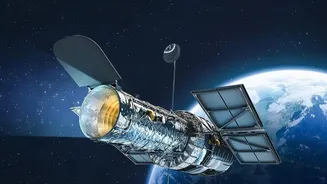
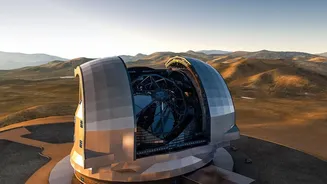
Far from being a setback, this discovery opens up exciting new avenues of research. The unpredictable nature of AGNs challenges theorists to develop more sophisticated models of black hole accretion and feedback. For observers, it highlights the need for continued, long-term monitoring of the skies with powerful instruments like the James Webb Space Telescope and other ground-based observatories. These 'misbehaving' black holes are not just cosmic curiosities; they are natural laboratories for studying physics in the most extreme environments imaginable. Each flicker and flare provides another clue to understanding the powerful forces that have shaped the universe we see today.