


1. The Hunt for Water and Resources
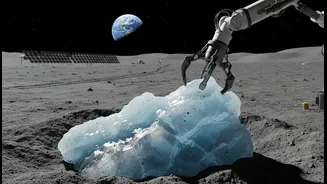
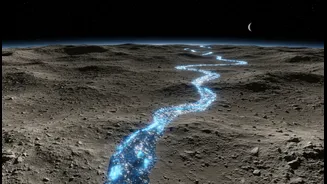
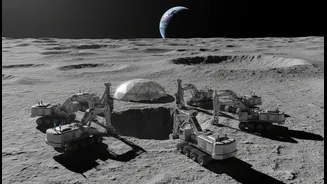
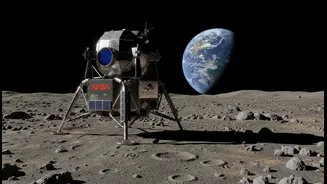
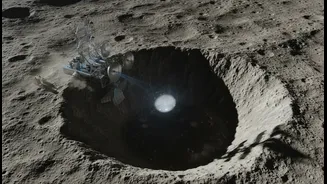
The single most important task is finding and learning how to use the Moon's resources, a concept called In-Situ Resource Utilization (ISRU). The main prize is water ice, believed to be trapped in permanently shadowed craters near the lunar south pole.
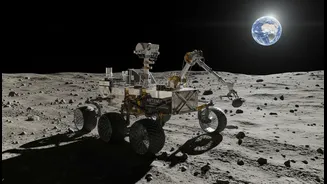
Finding accessible water is a game-changer. It can be purified for drinking and growing plants. More importantly, it can be split into hydrogen and oxygen, the primary components of rocket fuel. Being able to refuel on the Moon would dramatically lower the cost and complexity of deep space missions, making the base camp a vital pit stop for future journeys to Mars. This is why early robotic missions like the VIPER rover are designed to scout for these ice deposits.
2. Unlocking Planetary History
The Moon is a perfectly preserved time capsule of our solar system's history. Unlike Earth, it has no atmosphere, wind, or plate tectonics to erode its surface. This means the craters and rocks hold a pristine 4.5-billion-year-old record of asteroid impacts that have pummeled both the Earth and Moon. By studying lunar geology and collecting new samples, Artemis astronauts can help scientists understand the early, violent history of our cosmic neighborhood. This research will provide crucial insights into how Earth and other planets were formed and evolved, and could even reveal secrets about the ancient Sun.
3. A New Window to the Universe
A moon base offers an unparalleled platform for astronomy. The lack of an atmosphere means telescopes can see the universe without the distortion that blurs images from Earth. The Moon's far side is permanently shielded from Earth's radio noise, making it the quietest place in the inner solar system for radio astronomy. This would allow scientists to study the universe's "Dark Ages"—the period right after the Big Bang before the first stars formed. The stable lunar surface also allows for the construction of enormous telescopes and interferometers that would be impossible to build in orbit, opening up new frontiers in the search for exoplanets and the study of dark matter.
4. The Ultimate Testbed for Mars
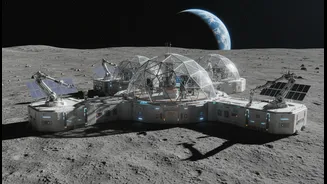
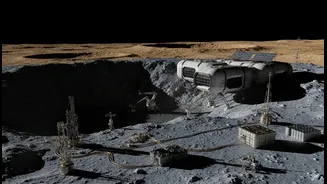
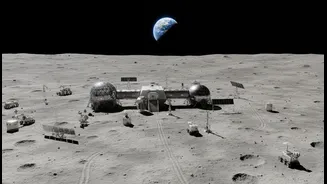
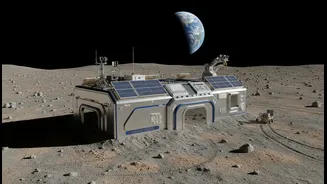
Every piece of technology and every procedure used at the Artemis Base Camp is a dress rehearsal for sending humans to Mars. The Moon provides a challenging but relatively close environment—just a few days' journey away—to test the systems needed for a multi-year mission to the Red Planet. This includes testing habitats, power systems, rovers, and life support. Learning to live and work for extended periods in the Moon's partial gravity and high-radiation environment will be crucial for developing the strategies and technologies to keep astronauts safe on the much longer and more dangerous trip to Mars.
5. Understanding Life Beyond Earth
A long-term lunar base is a critical laboratory for studying how life adapts to an off-world environment. Scientists are eager to understand the long-term effects of reduced gravity and increased radiation exposure on the human body. Astronauts will conduct experiments on everything from bone density and muscle loss to immune system function and mental health. This research is not just about keeping astronauts safe; it has direct applications on Earth, helping us understand aging, osteoporosis, and other diseases. The base will also host experiments on growing plants and managing ecosystems in a closed environment, crucial steps for creating self-sustaining outposts in space.