




A First for India, A First for the Moon
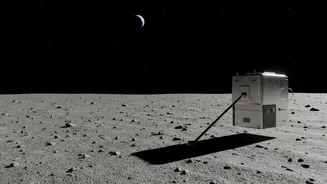
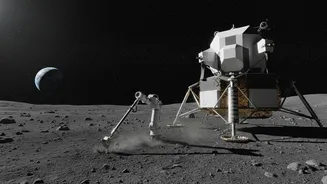
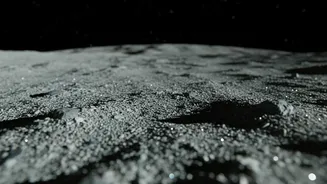
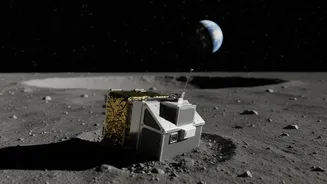
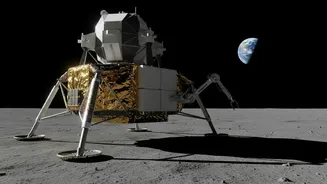
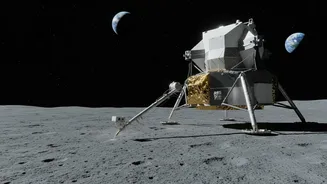
India's Chandrayaan-3 mission achieved a historic milestone by successfully soft-landing its Vikram lander near the lunar south pole, a region of immense scientific interest. Onboard was a crucial payload: the Chandra’s Surface Thermophysical Experiment,
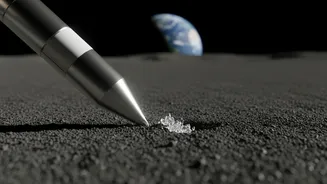
or ChaSTE. This instrument, developed by teams at the Space Physics Laboratory and the Physical Research Laboratory, was designed to do something no mission had ever done before in this region: perform an in-situ measurement of the temperature profile of the lunar topsoil. ChaSTE features a probe that can penetrate up to 10 centimetres into the lunar regolith, equipped with ten precision temperature sensors. While previous missions like Apollo had studied the Moon's thermal properties, they focused on equatorial regions; ChaSTE's observations are the very first from the high-latitude south polar region.
Decoding the Moon's Surprising Temperatures
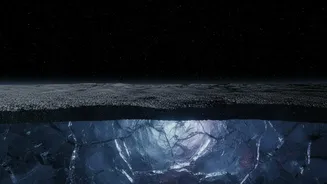
The initial data sent back by ChaSTE was startling. The instrument recorded a dramatic temperature difference between the lunar surface and just a few centimetres below it. Graphs released by ISRO showed that while the surface temperature could be around 50-60 degrees Celsius, it plummeted to approximately minus 10 degrees Celsius at a depth of just 8 centimetres. This massive temperature gradient of 50 to 80°C confirmed that the lunar topsoil, or regolith, is a highly effective thermal insulator. It doesn't conduct heat well at all, meaning the intense heat of the lunar day barely penetrates the subsurface, which remains remarkably cold. Understanding this behaviour is critical, as temperature dictates everything from the stability of minerals to the potential presence of water ice.
The Indirect Hunt for Water Ice
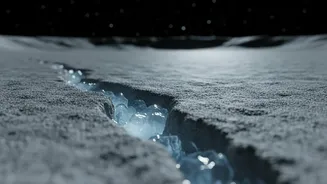
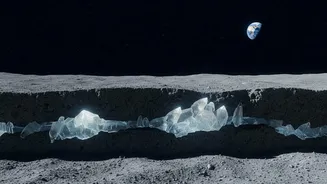
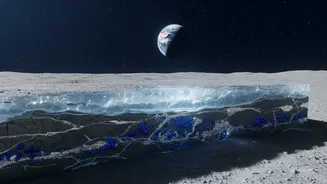
While ChaSTE was not designed to detect water ice directly, its thermal data provides crucial clues about where it could be preserved. Water ice is only stable in extremely cold conditions. Scientists believe that in permanently shadowed regions of the lunar poles, temperatures are low enough to trap ice. ChaSTE's findings add a new layer to this theory. The data shows that even in sunlit areas, the subsurface remains insulated and frigid. It suggests that local terrain features, like small poleward-facing slopes, could create micro-environments cold enough to harbour shallow subsurface ice, even outside of the large, permanently dark craters. This insight significantly broadens the potential areas where future missions could go prospecting for this vital resource.
Why These Thermal Clues Matter
The implications of ChaSTE's findings are profound. The potential for accessible water ice is a game-changer for the future of space exploration. Water can be broken down into hydrogen and oxygen, providing breathable air for astronauts and propellant for rockets. Finding ice in shallow, more accessible locations rather than just in the treacherous terrain of deep, dark craters makes the prospect of in-situ resource utilization (ISRU) far more viable. Furthermore, this data provides a vital ground-truth for scientists. It helps refine complex 3D thermophysical models of the Moon, ensuring that our understanding is based on direct measurement, not just remote observation and theory. For any future lunar habitat or long-term robotic mission, knowing the precise thermal properties of the ground is essential for designing equipment that can survive and operate effectively.