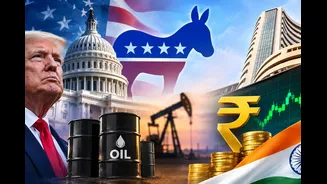





The US midterm elections have delivered a seismic shift in Washington, with Democrats securing control of both the House and Senate. This outcome creates a new dynamic of divided government and is already sending ripples across global financial markets.
An Initial Sigh of Relief
The immediate reaction from Wall Street was broadly positive, with major indices like the Dow Jones and S&P 500 rallying after the results were confirmed. Investors often welcome the kind of political gridlock that a divided government creates. The reasoning is that with a Republican President and a Democratic Congress, the path for radical, market-moving legislation becomes much harder. This reduces policy uncertainty and allows businesses to operate with fewer surprises. The result was seen as a check on the presidency, which markets hope will lead to less impulsive policy-making, particularly on trade and tariffs. The US dollar softened, and bond yields fell as investors recalibrated expectations for future fiscal stimulus.
Sector Spotlight: A Tale of Two Tapes
Beneath the surface of the broad market rally, a more nuanced story is unfolding across different sectors. Healthcare stocks, particularly insurers and hospital operators, saw significant gains. This was fuelled by expectations that a Democratic Congress will push to protect and expand healthcare spending, potentially reversing previous cuts. Clean energy stocks also jumped on hopes that federal support and approvals for renewables will be a priority. On the other hand, the technology sector, especially companies linked to the Artificial Intelligence (AI) buildout, faced immediate pressure. Many newly elected Democrats campaigned on a platform of greater regulatory scrutiny for AI and data centres, sparking fears of new restrictions and a potential slowdown in investment. Defence stocks also weakened on expectations of increased oversight on military spending and foreign policy.
The New Policy Landscape
With control of congressional committees, Democrats will gain significant power over oversight and funding, even if they cannot pass laws without presidential approval. We can expect a wave of hearings and investigations into various industries and the administration's actions. This increased oversight is likely to target everything from technology export controls to the environmental impact of data centres and energy policy. While the President's authority on tariffs remains largely intact, the new Congress can exert pressure through hearings on price impacts and by refusing to extend temporary measures. This may not reverse existing tariffs but could reduce the likelihood of further trade escalations.
What It Means for India
The US election results will be felt in Indian markets through several channels. A key area to watch is energy. A Democratic Congress is expected to apply more scrutiny to foreign conflicts, which could lead to a de_escalation in West Asia and, consequently, lower crude oil prices. A fall in Brent crude is a significant positive for India, an energy_importing nation. The softer US dollar could also make Indian markets more attractive, potentially leading to increased foreign portfolio investor (FPI) flows. However, the outlook for India's crucial IT sector is mixed. While a potential easing of H_1B visa restrictions would be a positive, the prospect of stricter regulation of the AI industry in the US could create headwinds for companies with exposure to that sector. On trade, experts believe the US administration might now be more motivated to close a trade deal with India as a political win, which could accelerate talks but also intensify pressure on New Delhi to make concessions.