




A Packed Launch Itinerary
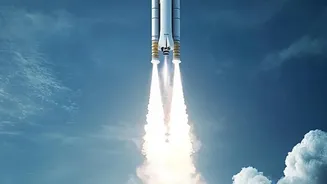
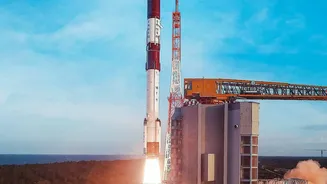
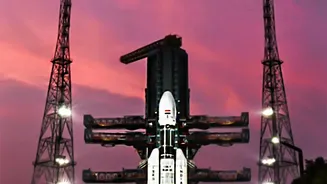
The second half of 2026 is shaping up to be exceptionally busy for ISRO, with plans for at least seven launches before the financial year ends. This rapid succession of missions is a clear indicator of the organisation's growing operational capacity.
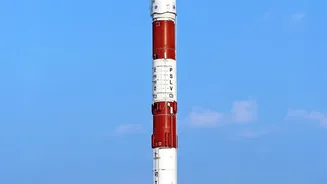
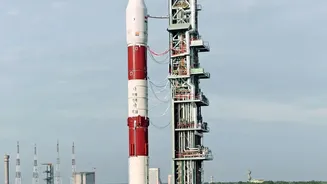
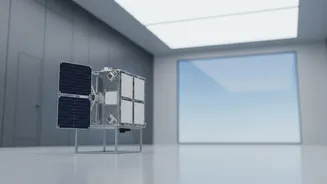
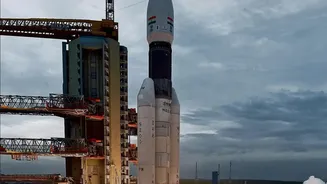
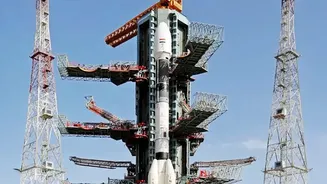
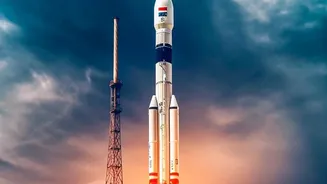
The schedule includes a diverse mix of flights using its reliable Polar Satellite Launch Vehicle (PSLV), the heavy-lift LVM3, and the agile Small Satellite Launch Vehicle (SSLV). Upcoming missions include the first uncrewed flight of the Gaganyaan programme, targeted for the third quarter of 2026, alongside several earth observation and communication satellite deployments. This high tempo is made possible by years of investment in infrastructure, including a new launch complex at Kulasekarapattinam in Tamil Nadu, designed to handle the increasing frequency of commercial and strategic launches.
The Commercial Frontier
A key driver of this busy schedule is the growing global demand for satellite launch services. Through its commercial arm, NewSpace India Limited (NSIL), ISRO is aggressively marketing its launch capabilities to international clients. The SSLV, in particular, is a game-changer. Designed for quick, on-demand launches of small satellites, it caters to the booming market for satellite constellations. With India's space economy projected to grow from its current $8.4 billion to over $40 billion by 2033, commercialisation is paramount. Policy reforms, such as the Indian Space Policy 2023, have opened the doors for private participation and foreign direct investment, fueling the growth of over 400 space startups. This synergy between a government agency and a thriving private sector is creating a powerful ecosystem for capturing a larger slice of the lucrative global launch market.
The Gaganyaan Game-Changer
Beyond commercial interests, the Gaganyaan programme—India's first human spaceflight mission—is a monumental undertaking that promises to enhance the country's prestige and technological prowess. The first uncrewed test flight, scheduled for later in 2026, is a critical milestone. While the first crewed flight is planned for 2027, the ongoing preparations and successful qualification tests are already pushing Indian industry to develop cutting-edge life support, propulsion, and re-entry technologies. Successfully sending astronauts to orbit will place India in an elite club of nations, alongside the US, Russia, and China, opening new avenues for international collaboration and scientific research. The immense complexity of the Gaganyaan mission is also a significant driver of talent and expertise within ISRO, despite challenges in retaining personnel for such critical projects.
The Reusability Revolution
To remain competitive long-term, reducing launch costs is essential. This is where ISRO's Reusable Launch Vehicle (RLV) programme, nicknamed 'Pushpak', comes in. In mid-2024, ISRO successfully completed a hat-trick of landing experiments, demonstrating the autonomous landing capability of its winged vehicle under challenging conditions. These tests are a crucial step towards developing a two-stage-to-orbit reusable rocket, conceptually similar to what global players like SpaceX are using. While an orbital test is still some time away, the progress with Pushpak shows a clear strategic intent to drastically lower the cost of access to space. This focus on reusability is vital for India's ambition to move from being a cost-effective launch provider to a leader in space logistics and technology.