





First, Just Use Your Eyes
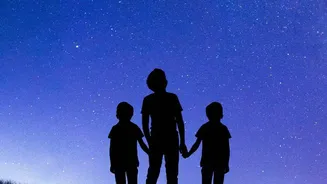
Before any equipment enters the picture, the most fundamental tool for stargazing is you. Your own eyes are powerful enough to begin this journey. The first and most important step is to simply go outside on a clear night and look up. The goal is to get
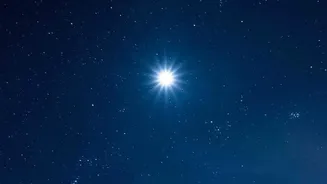
familiar with the celestial landscape. Learning to identify major constellations is like learning the main streets of a new city; it provides a map for all future explorations. Start by finding a location away from bright city lights, as darkness is crucial for your eyes to adapt. It can take up to 30 minutes for your eyes to fully adjust to the dark, a process called night adaptation, which is essential for seeing fainter stars. Learn to spot prominent patterns like the Big Dipper (which is part of the Ursa Major constellation) and use them as signposts to find other celestial landmarks, like Polaris, the North Star.
The Best First 'Telescope' Is A Pair Of Binoculars
Many seasoned astronomers advise that a good pair of binoculars is the best first optical instrument for a beginner, not a telescope. Binoculars are more intuitive to use, more affordable, and highly portable. They offer a wider field of view than most telescopes, making it easier to scan the Milky Way and locate larger celestial objects like star clusters, nebulae, and even the Andromeda Galaxy. For astronomical viewing, look for models like 7x50 or 10x50. The first number represents magnification (7x or 10x), while the second is the diameter of the objective lenses in millimeters (50mm). A 50mm lens is great for gathering light from faint stars, and a 7x or 10x magnification is generally the sweet spot for handheld viewing without excessive shaking. Brands like Celestron, Nikon, and Pentax offer excellent entry-level options that can reveal stunning views of the Moon's craters and the moons of Jupiter.
Get A Guide: Apps And Star Charts
Once you're outside, how do you know what you're looking at? This is where a good guide comes in. Traditionally, stargazers used a planisphere (a rotating star chart) to identify what's visible on any given night. Today, smartphone apps have become indispensable tools for beginners. Apps like Star Walk 2, Sky Guide, and Stellarium use your phone's location and internal gyroscope to create a real-time map of the sky. You simply point your phone upwards, and the app identifies the stars, planets, and constellations in that direction. Many of these apps have features that overlay the mythological figures onto the star patterns, helping you learn them more easily. Just be sure to use the app's 'night mode,' which turns the screen red. A bright, white screen from your phone will instantly ruin your night vision, setting your adaptation back significantly.
Protect Your Night Vision
Speaking of night vision, protecting it is one of the most critical skills in stargazing. It takes a while for your pupils to dilate and for your eyes to become sensitive to low light. A single glance at a bright white light can reset the entire process. This is why experienced astronomers use red flashlights. Red light has a longer wavelength that doesn't trigger the same pupil-constricting reflex as white or blue light, allowing you to read a star chart or find your way in the dark without losing your sensitivity to the faint light of distant galaxies. You don't need to buy expensive gear; you can easily make one by taping red cellophane over a standard flashlight. It’s a simple trick that makes a massive difference in what you're able to see.
Set Your Expectations Realistically
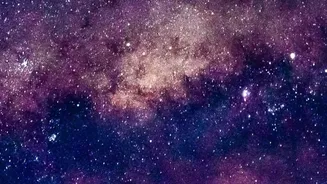
One of the biggest reasons beginners get discouraged is the gap between expectation and reality. The breathtaking, colourful images of galaxies and nebulae we see online are the result of long-exposure astrophotography, where cameras collect light for minutes or even hours. Visually, through binoculars or even a beginner telescope, these objects will appear as faint, grey smudges. Stars will always look like pinpoints of light. This is not disappointing; it's authentic. The thrill of stargazing comes from the hunt and the awe of seeing these distant objects with your own eyes, knowing the incredible journey their light has taken to reach you. Learning to appreciate the subtle beauty of the cosmos is part of the experience. The planets and the Moon, however, can offer stunning detail even through modest equipment.