



The Plastic Problem on Our Plates
India’s food delivery and takeaway market is experiencing explosive growth, but this convenience comes at a high environmental cost. The country generates millions of tonnes of plastic waste annually, with a significant portion coming from single-use
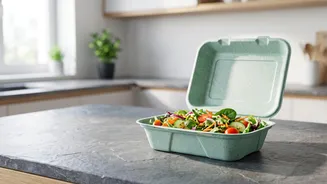
food containers that are used for minutes but pollute for centuries. Major food delivery platforms facilitate millions of orders daily, translating into billions of plastic containers a year that often end up in landfills and oceans, breaking down into harmful microplastics that contaminate the entire food chain. While consumers are increasingly aware and willing to support sustainable brands, the industry has struggled to find alternatives that are both effective and scalable.
The Ocean’s Answer to Landfill Overload
The solution, it turns out, may lie beneath the waves. Seaweed, a form of macroalgae, is emerging as a powerful, sustainable alternative to petroleum-based plastics. Unlike land-based crops used for some bioplastics, seaweed requires no freshwater, soil, or fertilisers to grow. It grows rapidly, absorbs carbon dioxide, and helps restore marine ecosystems. Several Indian startups are now harnessing the natural polymers in seaweed to create packaging that is not only biodegradable but, in some cases, home-compostable and even safe for marine life to consume. These materials can be engineered to be grease-proof and water-resistant, making them ideal for the demands of food delivery.
Pioneers of Sustainable Packaging
Leading this charge in India is Zerocircle, a startup founded by ex-Google employee Neha Jain. Zerocircle develops fully bio-based materials from seaweed that can be used for films, coatings, and papers. Their products are designed to decompose naturally, leaving no microplastics or toxic residue behind. The company works on a B2B model, sourcing its seaweed from farming communities in states like Gujarat and Tamil Nadu, thereby supporting local livelihoods. Another key player is the Bangalore-based Sea6 Energy, which has developed compostable coatings and is working on bioplastic films and straws. These companies aren’t just creating niche products; they are building a framework for industrial-scale replacement of single-use plastics.
From Seaweed to Takeaway Box: How It Works
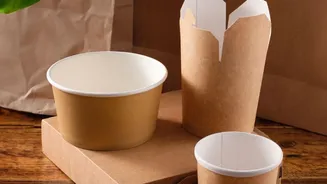
The process of turning seaweed into packaging involves extracting its natural polymers, like alginate and agar. The harvested seaweed is dried and ground into a powder, which is then transformed through a proprietary process into a liquid. This liquid can be formed into flexible films to replace plastic wraps or used as a waterproof coating on paper and cardboard containers, eliminating the need for the thin plastic linings that make most takeaway boxes non-recyclable. Zerocircle's patented technology even allows their materials to run on existing plastic and paper manufacturing machinery, removing a significant barrier to adoption for large-scale producers.
The Road to a Plastic-Free Future
Despite the immense promise, challenges remain. The primary hurdle is cost. Currently, seaweed-based packaging can be more expensive than its plastic counterpart, though innovators like Zerocircle expect to significantly reduce costs as they scale production. Building a robust supply chain, from seaweed cultivation to final product manufacturing, is another critical step that requires investment and coordination. However, momentum is building. Government initiatives like the ban on certain single-use plastics and support for seaweed cultivation are creating a favourable environment for these innovations. As consumer demand for sustainability grows and companies feel the pressure to adopt greener practices, the tide is turning in favour of solutions born from the sea.