





Why We Fear the Sun’s Temper
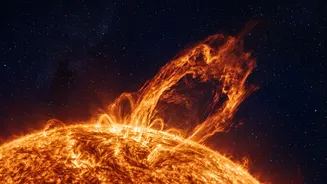
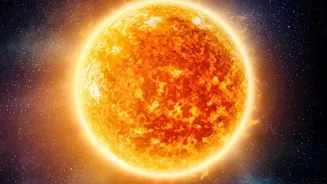
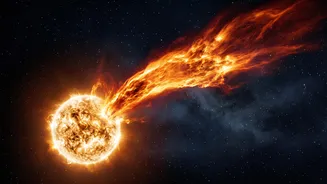
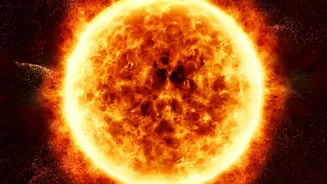
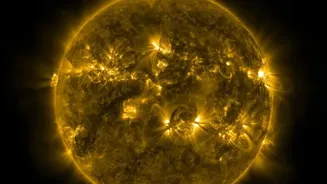
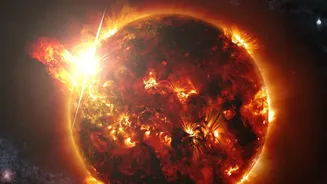
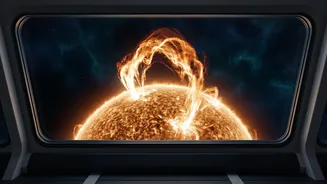
Our modern world runs on technology that is surprisingly vulnerable to events happening 93 million miles away. The Sun frequently erupts with solar flares, which are intense bursts of radiation, and coronal mass ejections (CMEs), which are giant clouds
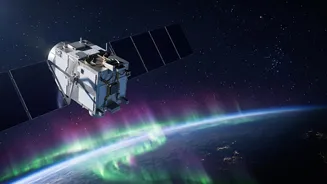
of solar plasma hurled into space. When these events are directed at Earth, they can cause geomagnetic storms. While they can create beautiful auroras, these storms pose a serious threat. They can induce powerful currents in the ground that can overload and damage electrical power grids, potentially leading to widespread and long-lasting blackouts. They also disrupt high-frequency radio communications used by aircraft and can damage the sensitive electronics on satellites, affecting everything from GPS navigation to television broadcasts and financial transactions. In a worst-case scenario, a massive storm could knock out critical infrastructure for weeks or even months.
The Challenge of Looking into the Sun
For decades, predicting this 'space weather' has been a massive challenge for scientists. Forecasting was often a slow process, struggling to provide more than a few moments of warning before the impact of a solar event was felt on Earth. Traditional physics-based models have found it difficult to accurately predict the disruptive effects of solar storms due to the complex and non-linear relationship between the Sun's activity and its impact on Earth's magnetic field and atmosphere. This left satellite operators and power grid managers with very little time to take protective measures, such as powering down sensitive components or rerouting systems. The need for a faster, more accurate warning system has become increasingly urgent as our global reliance on satellite and power infrastructure grows every year.
NASA's New AI-Powered Watchdog
This is where the new AI-powered phase begins. A model called DAGGER (Deep Learning Geomagnetic Perturbation) is changing the game. Developed by researchers at the Frontier Development Lab, a public-private partnership involving NASA, DAGGER uses a form of AI called deep learning to analyze real-time data from a fleet of spacecraft that monitor the solar wind—the constant stream of particles flowing from the Sun. By training on vast amounts of historical data on past solar storms and their effects, the AI has learned to identify the subtle signatures in the solar wind that precede a geomagnetic disturbance on Earth. This allows it to make predictions with incredible speed, generating a new forecast every minute for any location on the globe.
A Crucial 30-Minute Advantage
The single biggest breakthrough offered by DAGGER is its ability to provide a reliable 30-minute advance warning before a geomagnetic disturbance strikes. Thirty minutes may not sound like much, but in the world of infrastructure protection, it’s a game-changer. This window of time is enough for power grid operators to reconfigure their systems to better absorb the impact, preventing transformer damage and blackouts. Satellite operators can put their spacecraft into a protective 'safe mode' to shield their electronics from harmful radiation. Airlines can also reroute flights that pass over the poles, where the effects of solar radiation are strongest and can disrupt communications. This half-hour warning effectively transforms our response from damage control into proactive prevention.
What This Means for India and the World
For a nation as digitally integrated as India, this technology is vital. From the UPI payment network and stock markets to ride-hailing apps and defence systems, countless daily activities depend on the flawless functioning of GPS and communication satellites. An unpredictable solar storm poses a significant economic and national security risk. Better forecasting helps safeguard this critical digital infrastructure. Moreover, as India pursues ambitious human spaceflight missions like Gaganyaan, the ability to protect astronauts from sudden bursts of solar radiation becomes paramount. This new AI capability represents an essential shield, not just for our assets in orbit, but for the smooth functioning of modern life on the ground. One of the lead authors on the paper introducing the DAGGER model was Vishal Upendran of the Inter-University Center for Astronomy and Astrophysics in India, highlighting the global and collaborative nature of this scientific advancement.