




More Than Just Breathing
Pranayama is a Sanskrit term meaning 'control of the life force'. It involves a variety of techniques to consciously regulate the breath—its timing, duration, and frequency. While we all breathe automatically, Pranayama transforms this involuntary process
into a deliberate practice. The core idea, known intuitively for centuries, is that by controlling our breath, we can influence our mental and physiological states. Modern science is now providing evidence for what yogis have long understood: conscious breathing is a direct pathway to calming the mind and body.
Hacking Your Nervous System
Our bodies have two opposing internal systems: the sympathetic nervous system (SNS) and the parasympathetic nervous system (PNS). The SNS triggers our 'fight-or-flight' response, preparing us for action with a racing heart and heightened senses. The PNS, conversely, governs our 'rest-and-digest' state, promoting relaxation and recovery. Chronic stress and anxiety keep the SNS in overdrive. Pranayama acts as a biological 'reset button'. Slow, deep breathing techniques stimulate the vagus nerve, a primary component of the PNS. This activation signals to your brain that you are safe, helping to shift your body out of high alert and into a state of calm.
Reducing Anxiety and Stress Hormones
When you're stressed, your body releases hormones like cortisol. Prolonged high cortisol levels can lead to a host of health issues, including chronic anxiety. Studies have shown that regular Pranayama practice can help regulate the body's stress response. By enhancing the activity of the parasympathetic nervous system, it helps lower blood pressure, reduce heart rate, and decrease the production of cortisol. This physiological shift directly counters the feelings of tension and worry associated with anxiety, leading to greater emotional balance. Brain imaging studies have even indicated that Pranayama can modulate activity in regions like the amygdala, which is central to processing fear and anxiety.
Paving the Way for Restful Sleep
For many, the biggest obstacle to sleep is a racing mind. Pranayama helps quiet this mental chatter. By focusing on the rhythm of your breath, you draw your attention away from distracting or anxious thoughts, creating a state of mental stillness. The calming effect on the nervous system prepares the body physically for sleep. Some research suggests that the vibrations created during certain techniques, like Bhramari (Bee Breath), may stimulate the pineal gland, which regulates sleep cycles through the production of melatonin. Studies have shown that Pranayama can improve sleep quality, reduce snoring, and lessen daytime sleepiness, making it a valuable tool for those struggling with insomnia or sleep disturbances.
Simple Techniques to Get Started
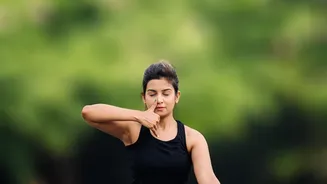
You don't need to be a yoga expert to benefit. Here are two beginner-friendly techniques: Anulom Vilom (Alternate Nostril Breathing): Known for its balancing and calming effects, this practice helps soothe mental restlessness. Sit comfortably and use your right thumb to gently close your right nostril. Inhale slowly through your left nostril. Then, close your left nostril with your ring finger and exhale slowly through the right. Inhale through the right nostril, close it, and exhale through the left. Continue this gentle cycle for 5-10 rounds. Bhramari (Humming Bee Breath): This technique is excellent for calming the mind before bed. Sit comfortably, close your eyes, and gently close your ears with your fingers. Inhale deeply. As you exhale, keep your mouth closed and make a low, steady humming sound, like a bee. The vibration has a deeply soothing effect on the nervous system. Repeat for 6-8 rounds.