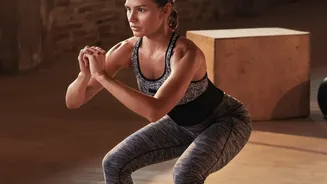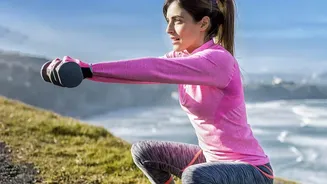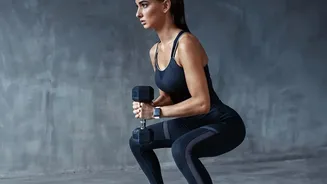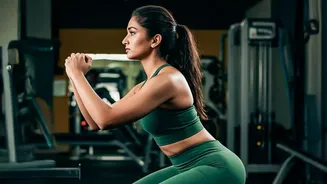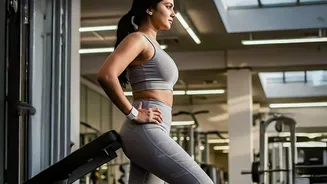





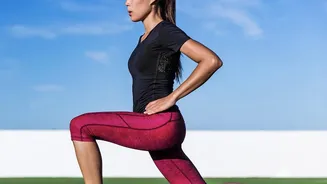
Sonam Bajwa's dedication to fitness is clear, and a strong lower body is the foundation of her powerful physique. The secret isn't a single magic exercise, but a smart combination of staples like squats and lunges. But what do they each do?
The Squat: Your Foundation for Power
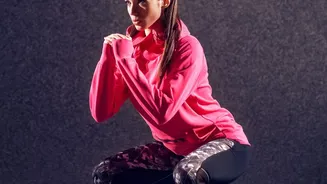
The squat is
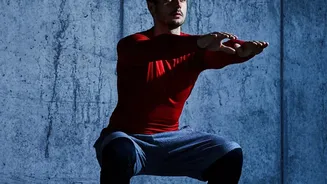
often called the king of leg exercises for a good reason. It’s a bilateral, compound movement, meaning it uses both legs simultaneously and works multiple muscle groups at once. When you perform a squat, you’re primarily targeting the large muscles of your lower body: the quadriceps (front of the thighs), the hamstrings (back of the thighs), and, crucially, the gluteus maximus (your main buttock muscle). Think of it as your primary tool for building overall strength and muscle mass. Because both feet are planted firmly on the ground, you can progressively add more weight over time, making it incredibly effective for developing raw power. But it doesn't stop there. To keep your torso upright and stable throughout the movement, your core muscles—including your abdominals and lower back—have to work hard isometrically. This makes the squat a full-body-in-disguise exercise, building a strong, stable foundation from the ground up.
The Lunge: For Balance and Precision
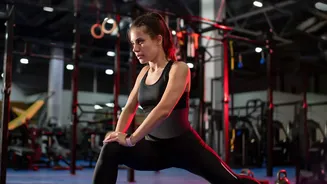
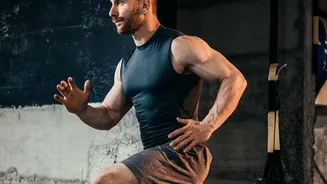
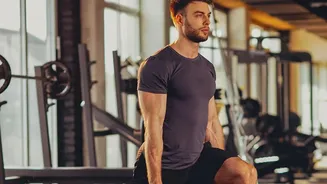
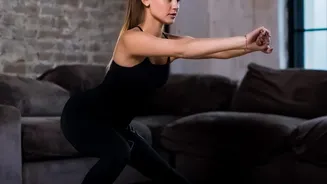
If the squat is about raw power, the lunge is about functional strength, balance, and precision. The lunge is a unilateral exercise, meaning it focuses on one leg at a time. This immediately introduces a challenge to your stability. Your body has to recruit a host of smaller, stabilising muscles to keep you from toppling over. This includes the gluteus medius (a smaller muscle on the side of your hip), which is crucial for pelvic stability and preventing your knees from caving inward. Like squats, lunges work the quads, hamstrings, and glutes. However, because of the single-leg nature, they are exceptionally good at identifying and correcting muscle imbalances between your left and right sides. You can't rely on a stronger leg to compensate for a weaker one. This focus on individual leg strength and stability is what makes lunges so 'functional'—they mimic everyday movements like walking, climbing stairs, and stepping over objects.
The Key Difference: Stability vs. Mobility
So, what's the core difference? Squats are performed from a stable, two-footed base. This allows you to lift heavier loads, making them superior for building maximum strength and muscle mass. Lunges are performed from a staggered stance, requiring you to control your body through multiple planes of motion. This makes them better for improving balance, coordination, and single-leg stability. While both exercises target the same primary muscles, some research suggests that lunges may activate the glutes more significantly than squats, especially when factors like intensity are matched. This is likely because the lunge requires the glutes not just to lift the weight, but also to stabilise the hip of the working leg. Squats work your legs together; lunges teach them to work independently and in coordination with your core.
Why You Need Both in Your Routine
A well rounded physique like Sonam Bajwa’s isn’t built on just one movement. Relying only on squats might build powerful legs, but could neglect smaller stabilising muscles or hide strength imbalances. Relying only on lunges might improve your balance and functional strength, but you might miss out on the heavy load stimulus that squats provide for overall muscle growth. The most effective leg day workout incorporates both. Use squats as your heavy hitter to build a strong foundation and overall size. Then, use lunges to ensure that strength is balanced, functional, and aesthetically detailed. Think of it as building the house with squats, and then doing the precision interior work with lunges. Together, they ensure you’re not just strong, but also stable, coordinated, and resilient against injury.
Mastering the Form: A Quick Guide
Proper form is crucial to maximise benefits and prevent injury. For squats, stand with your feet shoulder width apart and initiate the movement by pushing your hips back as if sitting in a chair. Keep your chest up and your back straight, lowering until your thighs are at least parallel to the floor before driving back up through your heels. For lunges, take a controlled step forward, keeping your feet hip width apart (not on a tightrope). Lower your hips until both knees are bent at approximately 90 degree angles, ensuring your front knee tracks over your foot and doesn't push past your toes. Keep your torso upright and core engaged. Push off the front foot to return to the start. Always master the bodyweight version of each exercise before adding weights.