


The Moon's Radiation Problem
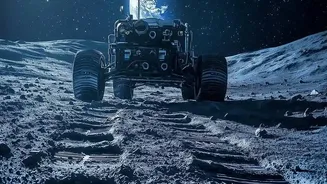
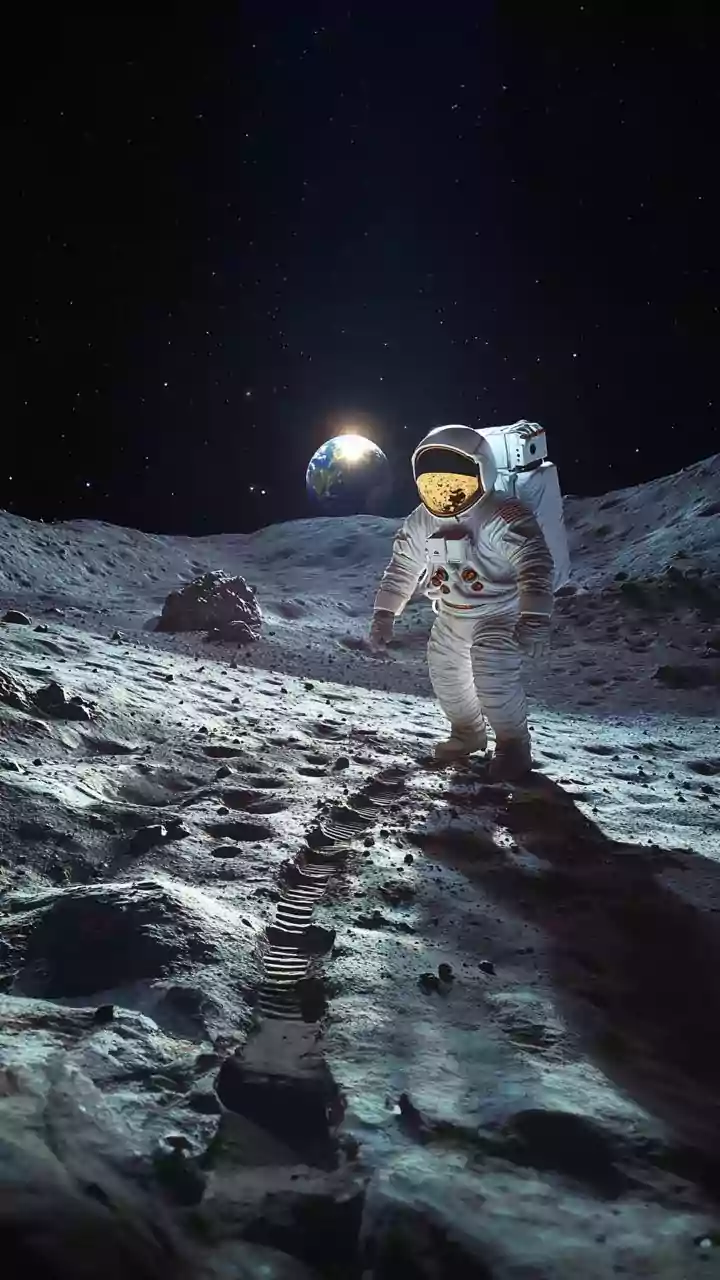
The Moon's surface is an incredibly hostile environment. Without a protective atmosphere or magnetic field like Earth's, it is constantly bombarded by dangerous cosmic radiation and solar particles. This radiation can damage electronics and poses a lethal
threat to long-term human presence. Studies show radiation levels on the lunar surface are up to 400 times higher than what we experience on Earth, making surface habitats a significant engineering challenge. Any permanent base would require immensely thick shielding, which is expensive and difficult to transport from Earth.
A Natural Solution: Lava Tubes
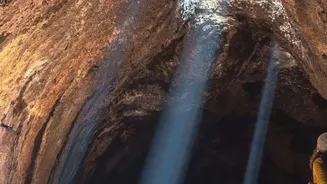
Fortunately, the Moon offers a natural solution: lava tubes. These are massive underground tunnels, some large enough to house entire cities, formed billions of years ago when molten lava flows cooled on the surface while the lava inside drained away. These subterranean caverns are protected by a thick roof of solid volcanic rock, sometimes over 40 metres thick. This natural shielding dramatically reduces radiation exposure to levels comparable to those on Earth, providing a safe haven for astronauts. Furthermore, these tubes offer protection from micrometeorite impacts and the extreme temperature swings of the lunar surface, which can vary from a scorching 127°C to a frigid -173°C. Inside a lava tube, the temperature is a stable and relatively mild -20°C.
The Explorers: Autonomous Rovers
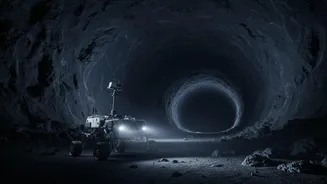
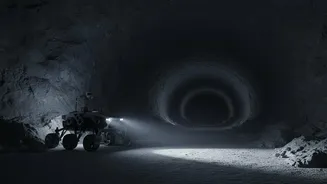
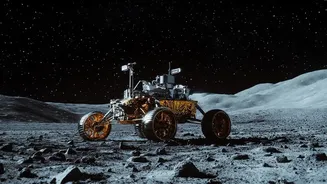
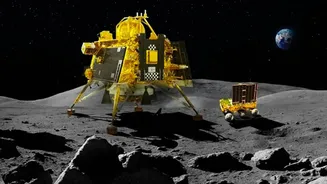
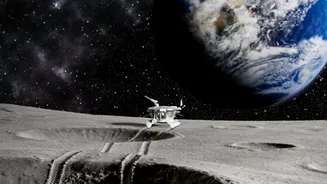
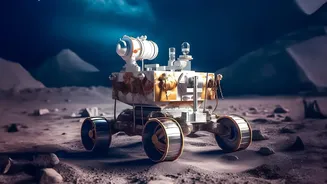
Before we can build in these caves, we first need to find and map them. That’s where subterranean rovers come in. Various space agencies and private companies are developing robotic systems specifically designed for this task. The European Space Agency (ESA), for instance, has been funding projects like DAEDALUS, which envisions a spherical robot that can be dropped into a lunar pit, or skylight, to explore and create 3D maps. Another approach involves a trio of robots working together: one to survey the entrance, another to lower a scout rover, and the scout itself to explore the tunnel. These rovers need to be highly autonomous, capable of navigating treacherous, unknown terrain in complete darkness without a GPS signal or direct control from Earth.
Mapping the Unseen
Mapping a GPS-denied, pitch-black cave requires innovative technology. Many proposed rovers are equipped with LiDAR (Light Detection and Ranging) and stereo cameras to build a 3D map of their surroundings in real-time. This technique, known as Simultaneous Localisation and Mapping (SLAM), allows the rover to know where it is by continuously mapping the environment and locating itself within that map. Other concepts involve using gravimetric surveying from the surface; a rover would measure subtle changes in gravity around a suspected pit to confirm the presence and extent of a hollow tube below before any attempt to enter is made. Some ambitious concepts even propose laser-powered drones connected to a surface lander by a fiber-optic tether to explore deep inside the caves.
From Map to Moon Base
Once a suitable lava tube is fully mapped and deemed structurally sound, it can become the site of a future lunar base. The initial steps wouldn't involve sealing the entire cave, which could be kilometres long. A more practical approach is to deploy construction robots to clear and level a section of the cave floor. Then, inflatable or modular habitats could be set up inside the protection of the tube. This strategy leverages the natural protection of the lava tube, saving the immense cost and logistical challenges of transporting massive amounts of shielding material from Earth. China, for instance, is actively planning missions to explore lava tubes with the long-term goal of establishing a crewed underground research base, complete with residential and research facilities.