




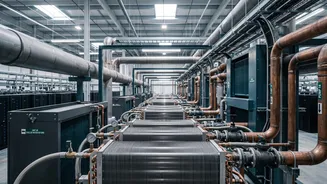


The Engine Room of the Digital Age
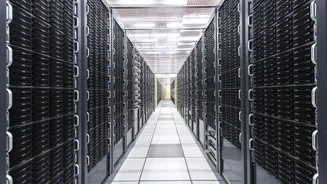
Data centres are the physical heart of the internet. They are secure, industrial-scale buildings packed with tens of thousands of computer servers, storage systems, and networking gear. These facilities operate 24/7 to store, process, and distribute the vast
amounts of information that fuel our modern economy and social lives. For years, the industry made remarkable strides in efficiency. Despite an explosion in data demand, global data centre energy use remained relatively flat for much of the last decade. Companies became adept at doing more with less, using advanced cooling techniques and more efficient hardware. However, that era of easy wins appears to be over.
AI Boom Ignites Power Demand
The primary driver behind the new surge in energy consumption is the explosive growth of artificial intelligence. Training and running large AI models, like those behind generative AI services, is an incredibly energy-intensive process. According to the International Energy Agency (IEA), global electricity demand from data centres, AI, and cryptocurrencies could double by 2026. A single ChatGPT query, for instance, consumes nearly ten times more electricity than a simple Google search. The IEA's latest reports, issued in late 2026, warn that data centres could account for a significant portion of global electricity demand by 2030, with AI being the main cause. This rapid acceleration is straining power grids and forcing a difficult conversation about the environmental cost of technological progress.
What the New Research Uncovered
Recent studies paint a stark picture. A landmark study from Harvard University, analyzing facility-level data through April 2025, found that just 403 of the largest 'hyperscale' data centres in the US consumed 1.8% of the country's total electricity. Their combined annual carbon emissions were equivalent to those of the entire country of Denmark. Researchers noted this is likely a conservative estimate, as the data is already becoming 'ancient history' in the fast-moving AI sector. Furthermore, the research revealed a heavy reliance on fossil fuels; about 54% of the electricity powering these centres came from natural gas and coal. Another IEA report from November 2026 projects that data centre carbon emissions could rise by 70% by 2030 as companies turn to fossil fuels to meet the urgent demand for power.
The Challenge for India
This global trend has profound implications for India, which is in the midst of its own data centre boom. Driven by data localisation policies, widespread digitalisation, and the push for AI, India's data centre capacity is projected to surge dramatically, from around 1.4 gigawatts in 2024 to nearly 10 GW by 2030. This expansion is concentrated in cities like Mumbai, Chennai, and Hyderabad, many of which already face significant water and electricity stress. While the growth promises economic benefits and digital innovation, it also creates real risks. The challenge is to power this expansion sustainably, without overburdening local grids or compromising the country's climate goals. Currently, national policies have yet to fully address the environmental trade-offs, leaving much of the responsibility to state governments and private companies.
The Search for Sustainable Solutions
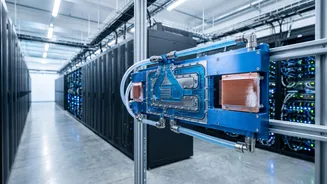
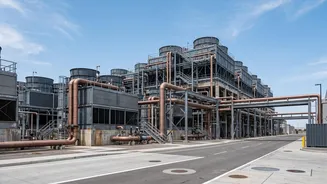
The industry is not standing still. There is a race to develop and deploy more sustainable solutions. One of the biggest areas of focus is cooling, which accounts for a huge portion of a data centre's energy use. Innovations like direct liquid cooling, which circulates coolants directly over hot computer chips, are far more efficient than traditional air conditioning. Some designs even involve fully immersing servers in a non-conductive fluid. Beyond cooling, companies are also exploring smarter software that can shift computing jobs to times when renewable energy is most abundant on the grid. Capturing and reusing the immense waste heat generated by data centres, for example to warm nearby buildings or greenhouses, is another promising frontier. However, the scale and speed of the AI-driven expansion mean that these efficiency gains are struggling to keep pace with soaring demand.