





The Policy Shift That Opened the Skies
The single biggest catalyst for this transformation is the Indian Space Policy, 2023. This landmark policy officially opened the doors for private companies to participate in end-to-end space activities—from building rockets and satellites to providing
space-based services. Before this, the private sector's role was largely supportive, supplying components to the Indian Space Research Organisation (ISRO). Now, they are encouraged to innovate and operate independently. To oversee this new era, the government established the Indian National Space Promotion and Authorisation Centre (IN-SPACe). It acts as a single-window agency to promote, authorise, and regulate the activities of Non-Government Entities (NGEs), making it easier for startups and companies to navigate the complex field. This has created a predictable and clear regulatory regime, boosting investor confidence and entrepreneurial activity.
Beyond ISRO: Meet the New Private Players
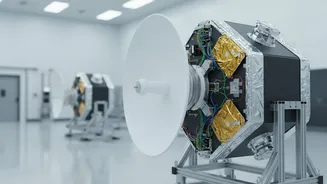
The result of these policy changes has been explosive. In just a few years, India's space startup ecosystem has grown from a handful of companies to over 450. These ventures are attracting significant investment and creating a vibrant, competitive landscape. Companies like Skyroot Aerospace and Agnikul Cosmos are at the forefront of building India's first privately developed rockets. Skyroot recently marked a historic milestone with the successful orbital launch of its Vikram-1 rocket. Meanwhile, firms like Pixxel are deploying constellations of advanced Earth-observation satellites for applications in agriculture and climate monitoring, and Dhruva Space is specialising in satellite buses. This rapid growth means the Indian space economy, valued at $8.4 billion, is projected to reach $44 billion by 2033.
The New Universe of Job Roles
This expanding ecosystem requires a workforce with a wide array of skills, far beyond just rocket science. While ISRO continues to recruit for scientific and technical roles, the private sector is hiring across the entire value chain. The demand for aerospace and astronautical engineers remains strong, but the new space economy is also creating thousands of jobs for software developers, data scientists, and AI and machine learning experts. There are growing opportunities in satellite systems engineering, avionics, robotics, and cybersecurity for space assets. Furthermore, these companies need professionals in business development, finance, law, and marketing who understand the unique challenges of the space industry. This diversification means that students from various engineering and even non-technical backgrounds can now realistically aim for a career in space.
Building Your Launchpad: Skills in Demand
For aspiring space professionals, a strong foundation in core engineering disciplines like mechanical, electronics, and computer science is crucial. However, the modern space industry also values interdisciplinary skills. Expertise in software development, AI, data analytics, and robotics is becoming increasingly important as spacecraft and missions become more autonomous and data-driven. Practical, hands-on experience is highly valued by private startups. Participating in university projects like building CubeSats or model rocketry can provide a significant advantage. A deep passion for aerospace combined with strong analytical and problem-solving skills is what new employers are looking for. The industry needs innovators who can contribute to building cost-effective and cutting-edge space technology.