

A Rare Messenger From the Stars
Imagine a message in a bottle, not from across an ocean, but from across the vast, dark sea between stars. That’s essentially what the comet 3I/ATLAS represents to astronomers. Discovered on July 1, 2025, by a telescope system designed to hunt for potentially
hazardous asteroids, this object immediately stood out. Its path was not the familiar, looping orbit of comets born in our own solar system. Instead, it was on a one-way trip, a tourist just passing through. This makes it an incredibly rare sample of a planetary system that isn't ours. While everything in our solar system—from Jupiter to the dust on your windowsill—shares a common origin, 3I/ATLAS is a true outsider, carrying with it the chemical fingerprint of its birthplace around a different star.
The Telltale Signs of an Interstellar Visitor
How can scientists be so sure 3I/ATLAS isn't from around here? It comes down to speed and trajectory. Objects that belong to our solar system are gravitationally bound to the Sun, following elliptical paths. 3I/ATLAS, however, is travelling along a path known as a hyperbolic trajectory, meaning it’s moving too fast to be captured by the Sun's gravity. It entered our system at an incredible velocity, accelerated as it got closer to the Sun, and is now heading back out into deep space, never to return. At its peak, it reached speeds of roughly 250,000 km/h. Its extreme speed, far higher than the Sun's escape velocity, is the definitive proof that it began its journey far, far away.
A Window Into Alien Worlds
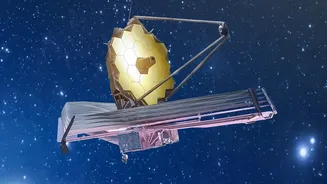
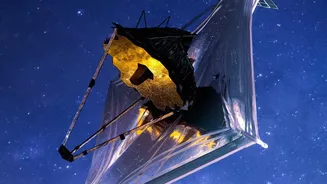
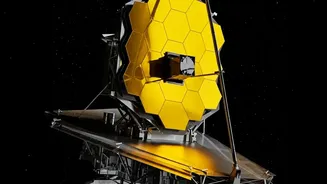
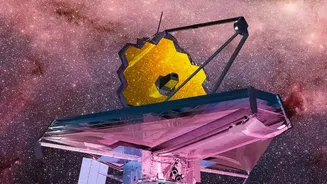
The real excitement surrounding 3I/ATLAS is what it can teach us. As the comet approached our Sun, its icy body began to heat up, releasing gas and dust that had been frozen for potentially billions of years. This cloud, called a coma, is a treasure trove of information. By analysing the light passing through it with powerful tools like the James Webb Space Telescope, scientists can determine its chemical makeup. This gives them an unprecedented chance to study the building blocks of another planetary system. Early findings have already revealed fascinating differences. For instance, 3I/ATLAS is rich in certain gases like carbon monoxide and has a much higher concentration of 'heavy water' (water made with a heavier type of hydrogen called deuterium) than comets from our own system.
An Ancient, Chilly Origin
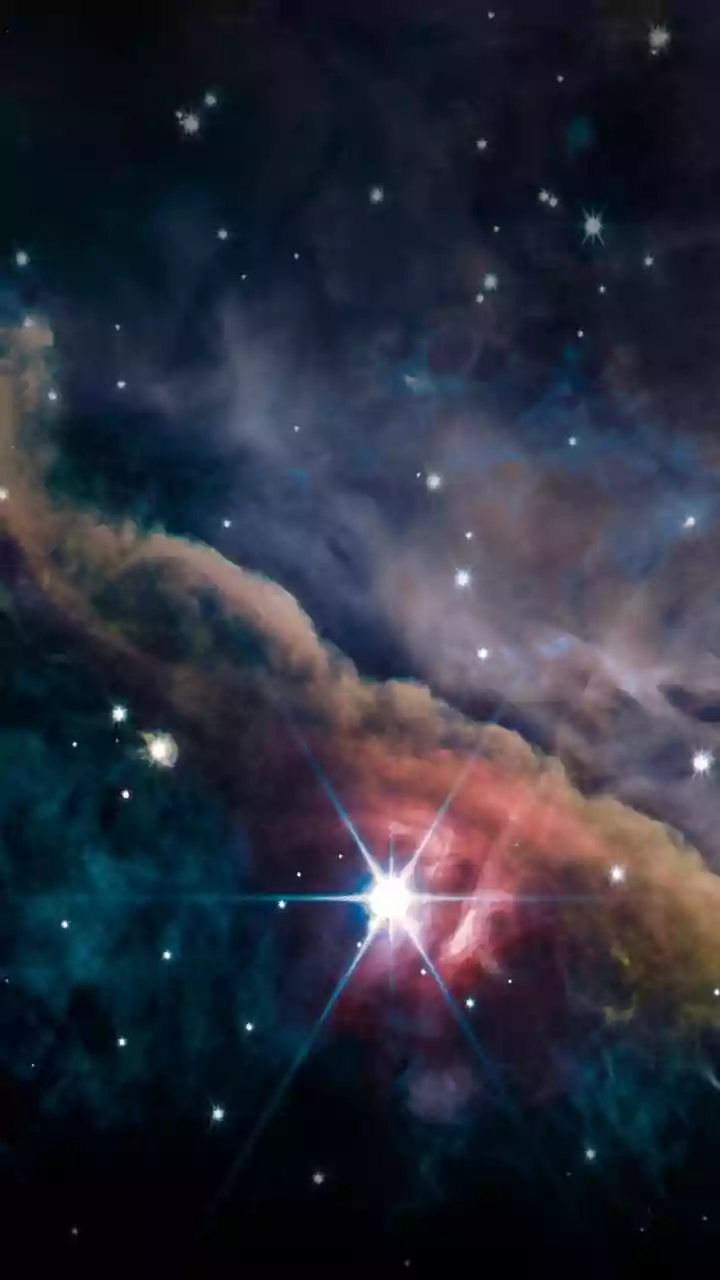
These chemical clues are helping to paint a picture of the comet's home. The high levels of heavy water and volatile gases that would normally burn off in warmer conditions suggest 3I/ATLAS formed in an extremely cold environment, likely in the far outer reaches of its own star's protoplanetary disk. Furthermore, its trajectory and speed suggest it originated from an old population of stars in what's known as the Milky Way's 'thick disk'. Some analyses suggest the comet could be incredibly ancient, perhaps as old as 11 billion years, making it a relic from the early history of our galaxy. Studying it is like opening a time capsule that can tell us not only about other star systems but also about what our galaxy was like long before the Sun and Earth even existed.
The Race to Observe a Fleeting Guest
Since its discovery, it has been a race against time for the world's astronomers. Teams have been using a network of telescopes on the ground and in space—including Hubble and Webb—to gather as much data as possible before 3I/ATLAS fades from view. Even spacecraft on missions to other planets, like Mars orbiters, have been tasked with catching a glimpse as it passes by. Unlike its predecessors, 'Oumuamua (which was spotted as it was leaving) and 2I/Borisov, 3I/ATLAS was detected with enough lead time to allow for a coordinated global observation campaign. Each new piece of data helps to build a more complete picture of this mysterious visitor and the diverse ways planetary systems can form across the galaxy.