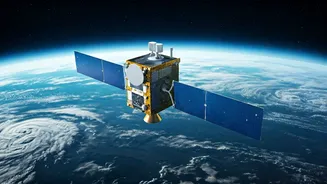










Not Your Grandfather’s Space Race
When you think of a career in space, the image of an astronaut in a bulky suit likely comes to mind. While that remains the ultimate aspiration for some, the reality of today's space industry is far broader and more accessible. The new space age isn't
just driven by government agencies in a geopolitical contest; it’s a booming commercial sector fueled by private investment, technological breakthroughs, and a fresh wave of innovation. For every astronaut launched into orbit, there are now thousands of engineers, software developers, data scientists, marketing professionals, lawyers, and technicians working on the ground to make it happen. This is the key difference that’s drawing in Gen Z: space is no longer just a destination for a handful of elite pilots, but a vibrant and expanding industry with a place for almost every skill set.
The 'Chandrayaan' Inspiration
In India, this global trend has a powerful local catalyst: the Indian Space Research Organisation (ISRO). The spectacular success of missions like Chandrayaan-3 and the Aditya-L1 solar observatory has done more than just put India in an elite club of space-faring nations; it has ignited a fire in the hearts of millions of young people. These achievements, broadcast live and celebrated across the country, have made space tangible, exciting, and a source of immense national pride. Unlike the space race of the 20th century, which felt distant to many, ISRO’s recent triumphs feel personal and accessible. This 'ISRO effect' has created a powerful pull factor, inspiring students to pursue STEM subjects with a clear goal in mind: to be part of India’s journey to the stars. Universities are reporting a surge in applications for aerospace engineering, but the interest goes far beyond that single discipline.
The Startup Launchpad
While ISRO provides the inspiration, it’s the burgeoning private space-tech ecosystem that provides the jobs. A new generation of Indian startups like Skyroot Aerospace, which successfully launched India's first private rocket, and Agnikul Cosmos, known for its 3D-printed rocket engines, are democratising access to space. These companies are agile, innovative, and looking for young talent who are not afraid to tackle big challenges. They offer a work environment that is often more aligned with Gen Z's values: purpose-driven work, a flat hierarchy, and the chance to have a tangible impact. Working for a space startup is no longer a niche dream; it's a viable, exciting career path where a young engineer can help build a satellite or a software developer can write the code that guides a rocket. This private-sector boom is creating a diverse range of roles that didn't exist a decade ago.
What Skills Are in Demand?
The skill set required for the modern space economy is incredibly diverse. Of course, core engineering disciplines like aerospace, mechanical, and electronics are crucial. However, the biggest demand is often in software engineering, data analytics, and artificial intelligence. Every rocket, satellite, and ground station generates enormous amounts of data that needs to be processed, analysed, and acted upon. Cybersecurity experts are needed to protect these critical assets. Beyond the technical, there is a growing need for non-STEM roles. Space companies need lawyers who understand international space law, marketing teams to build their brand, finance professionals to manage massive investments, and designers to work on everything from user interfaces to astronaut habitats. The message to Gen Z is clear: you don't have to be a rocket scientist to work in the space industry.