






The Gut Health Gold Rush
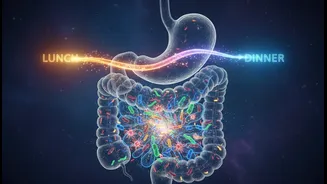
It seems like everyone is talking about the gut microbiome, the bustling community of trillions of bacteria, fungi, and other microbes living in your digestive tract. This isn't just a wellness trend; a growing body of research highlights the microbiome's
connection to digestion, immunity, and even mental health. Companies now offer to analyze your gut and provide personalized nutrition plans, promising to optimize your health by feeding the 'good' microbes. The idea is alluring: eat for your unique gut, and unlock better health. This has led to a gold rush of supplements, tests, and diet plans all aimed at rebalancing your inner ecosystem.
What 'Association' Really Means
Here's where things get tricky. Many of these recommendations are based on studies that find an 'association' or 'correlation' between a certain microbe and a health outcome. But in science, association is not the same as causation. An association simply means two things are observed together. For example, a study might find that people with higher levels of a 'good' bacterium also eat a lot of broccoli. That's an association. It does not prove that eating broccoli causes the good bacteria to flourish. It could be that people who eat broccoli also have other healthy habits—like exercising more or smoking less—that are the real reason for their healthy gut. Scientific research is shifting from simply finding correlations to trying to prove causation, but establishing that direct link is incredibly complex and often requires much more than one study.
From a Lab Finding to a False Rule
The media and wellness industries can sometimes oversimplify these findings, turning a tentative association into a hard-and-fast rule. A headline might scream, "Eat This Food for a Healthy Gut!" based on a single study. This is a huge leap. Your body is not a controlled lab experiment. The way a microbe behaves can depend on your genetics, your other lifestyle habits, the medications you take, and the thousands of other microbes it lives with. A food that seems to benefit one person might have no effect—or even a negative one—on another. This is why a simple food-microbe pairing found in a study should not be treated as a universal dietary command.
Your Gut Is Not a Simple Equation
The dream of perfectly personalized nutrition based on your microbiome is getting closer, but we are not there yet. Researchers are still working to understand the vast and complex interactions within the gut. There isn't even a universal definition of what a single 'healthy' microbiome looks like, because it varies so much between individuals. Many scientists argue that focusing on single microbes or single foods is too simplistic. The overall pattern of your diet and the diversity of your gut community are likely far more important than whether you have high levels of one specific bacterium.
Smarter Ways to Support Your Gut
So, what should you do? Instead of chasing specific food-microbe pairings, experts recommend focusing on broad, evidence-backed principles for gut health. The best way to cultivate a healthy and diverse microbiome is to eat a wide variety of whole, unprocessed foods. Prioritize getting enough fiber from fruits, vegetables, legumes, and whole grains, as fiber is the primary food for your gut microbes. Including fermented foods like yogurt, kefir, and kimchi can introduce beneficial bacteria (probiotics) into your system. Staying hydrated, getting regular exercise, and managing stress are also proven to support a healthy gut.