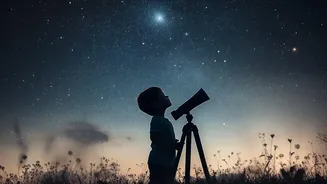






In India’s bustling cities, the night sky is a forgotten casualty, erased by a constant urban glow. Now, a growing movement sees young Indians traveling far from home, not for beaches or monuments, but for a chance to simply look up and see the stars.
The Great Escape from City Lights
For hundreds of millions of people in urban India, a truly dark sky is a memory or a myth. In major metropolises like Delhi, Mumbai, and Bangalore, relentless light pollution has created a permanent 'skyglow' that blankets the heavens, rendering all but the brightest planets and the moon invisible. This constant, artificial twilight is the primary 'push' factor driving the rise of astro-tourism. Young professionals and Gen Z, who have spent most of their lives in these environments, are increasingly feeling a deficit of nature and wonder. The desire to escape the city is no longer just about seeking quiet or clean air; it's about reclaiming a fundamental human experience that light and air pollution have stolen.
A Search for Wonder and Authenticity
While escaping city glare is the trigger, the appeal of astro-tourism runs deeper. It taps into a global generational desire for authentic, experience-based travel over conventional sightseeing. Fatigued by screen time and curated digital lives, many young travelers are seeking genuine moments of awe. Staring into the cosmos from a remote, silent location provides a profound sense of perspective, a feeling often described as realizing one's 'smallness in the universe'. This isn't just a nerdy hobby for amateur astronomers; it's being framed as a form of wellness, a digital detox, and a way to reconnect with both the natural world and a shared celestial heritage.
An Ecosystem of 'Astro-Preneurs' Emerges
This growing demand has been met by a new wave of Indian entrepreneurs. Startups like Starscapes, Astroport, and Stargazing India are building a thriving industry from the ground up. They offer everything from 'star parties' and guided telescope sessions to astrophotography workshops and overnight camps in dark-sky locations. These companies are establishing a chain of small, private observatories in accessible yet dark places like Uttarakhand, Coorg, and near Jaipur. This formal infrastructure makes stargazing accessible to novices, providing equipment and expert guides who can explain the cosmos, turning a simple glance upward into a structured, educational experience.
The New Celestial Hotspots
The geography of Indian tourism is being redrawn by this trend. High-altitude, remote regions are the natural epicenters. Ladakh, with its dry air and minimal light pollution, has become a premier destination, culminating in the 2022 designation of Hanle as India's first official Dark Sky Reserve. Here, local communities are being trained as 'Astronomy Ambassadors' to guide tourists, creating a sustainable economic model. Other key locations include the Spiti Valley in Himachal Pradesh, the salt flats of the Rann of Kutch, and hill stations in Uttarakhand. This movement is not just about finding darkness; it's about creating economic opportunities in remote areas and fostering a nationwide conversation about the importance of preserving the night sky.