

Forget the Eiffel Tower and the Colosseum for a moment. The true architectural soul of a European city often lies in the buildings you won't find on a postcard. Ready to look beyond the landmarks and discover structures with a story to tell?
Rotterdam’s Cube Houses: Living in a Tilted Forest
In a city
that had to reinvent itself after World War II, Rotterdam’s architecture is famously bold, and nothing embodies this spirit more than the Cube Houses (Kubuswoningen). Designed by architect Piet Blom in the late 1970s, these striking yellow cubes are tilted at a 45-degree angle and perched on hexagonal pylons. Blom envisioned them as a 'forest,' with each house representing a tree and the entire complex forming a 'village within a city'. The design was a creative solution to build housing over a pedestrian bridge, leaving the ground level open for public use. While they look mind-bending from the outside, they are fully functional three-story homes. For the curious, one of the cubes is open as a 'Show Cube' museum, offering a peek into what life is like inside these geometric wonders.
Belgrade’s Brutalism: Concrete Giants with a Soul
Often misunderstood, Brutalist architecture is having a renaissance, and Belgrade is its unofficial capital. Born from Yugoslavia's unique position between the East and West, the nation developed its own powerful architectural identity. Rather than being grey and monolithic, Belgrade’s 'Blokovi' (Blocks) in New Belgrade were part of a post-war vision for a modern, progressive society. The Genex Tower, also known as the Western City Gate, is a prime example: two soaring concrete towers connected by a sky bridge, designed to welcome visitors arriving from the airport. Another must-see is the Eastern City Gate, a trio of triangular residential towers that create a dramatic silhouette on the city's edge. These structures aren’t just buildings; they are monuments to a specific moment in history, representing ambition, strength, and a utopian dream cast in concrete.
Riga’s Art Nouveau: An Explosion of Ornate Detail
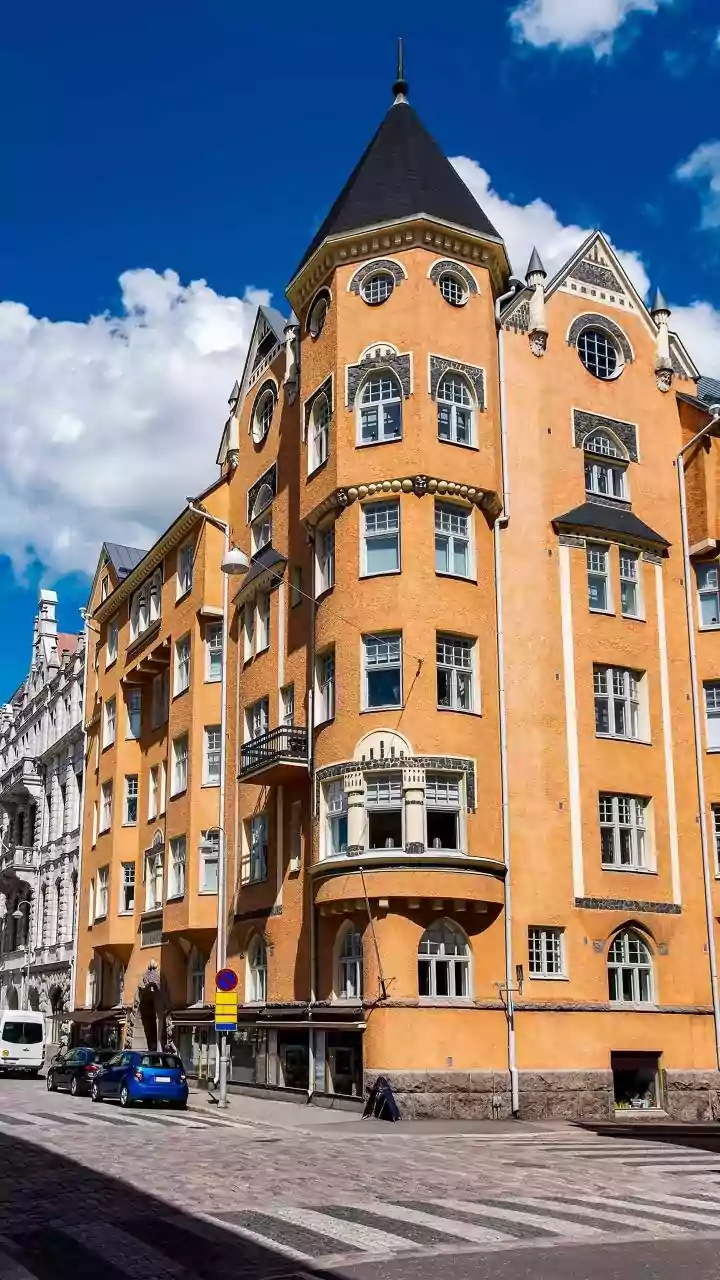
While cities like Paris and Vienna are known for Art Nouveau, nearly a third of all buildings in central Riga were built in this ornate style, making it one of the world's most impressive collections. During a period of rapid economic growth in the early 1900s, architects like Mikhail Eisenstein and Konstantīns Pēkšēns turned entire streets into an outdoor art gallery. Head to the 'Quiet Centre,' particularly Alberta Iela (Albert Street), where you'll find facades teeming with intricate details: screaming masks, flowing floral motifs, elegant goddesses, and mythological creatures. Much of it is part of a style known as National Romanticism, which incorporated local folk art and natural materials. A visit to the Riga Art Nouveau Centre, located in Pēkšēns’ former apartment, offers a look inside one of these masterpieces.
Valencia’s City of Arts and Sciences: A Futuristic Riverbed
In the dried-out riverbed of the Turia River lies a startlingly futuristic vision: the City of Arts and Sciences (Ciudad de las Artes y las Ciencias). Designed by Valencian architect Santiago Calatrava, this sprawling complex looks like a collection of alien skeletons or sci-fi structures. It’s not one building but an ensemble of several, each with a distinct and dramatic form. There’s L'Hemisfèric, which resembles a giant eye and houses a planetarium; the Palau de les Arts Reina Sofía, an opera house that looks like a warrior's helmet or a fish; and L'Oceanogràfic, Europe's largest aquarium, with its flowing, water-lily-inspired roofs. The entire complex, surrounded by shimmering pools of water, is a masterpiece of modern architecture and a symbol of Valencia's cultural rebirth.