


The Big Picture: From Space Internet to Your Pocket
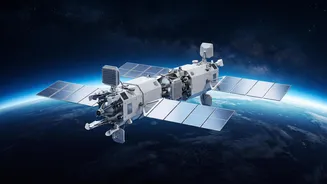
SpaceX's Starlink is already known for beaming broadband internet from space to rural and remote areas. Its new plan is far more ambitious: to integrate directly with mobile phones everywhere. This involves a 'direct-to-cell' strategy, where Starlink's
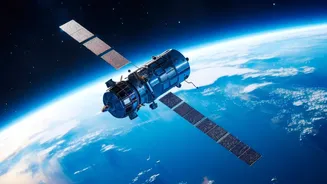
satellites in low-Earth orbit act like floating mobile towers. Initially, Starlink Mobile launched as a supplemental service in partnership with carriers like T-Mobile in the US, designed to fill in dead zones where traditional signals can't reach. However, recent moves show a grander vision. SpaceX has announced plans to combine its satellite network with ground-based infrastructure, positioning itself to become a major mobile carrier in its own right.
Cracking the Indoor Signal Problem
A major weakness of satellite-based communication is its poor performance indoors; signals struggle to get through roofs and walls. To solve this, SpaceX has agreed to acquire low-band radio spectrum, specifically in the 800 MHz range. These frequencies are excellent at penetrating buildings, which is why existing mobile carriers like AT&T and Verizon use similar low-band spectrum for widespread, reliable coverage. By securing its own slice of this valuable spectrum, SpaceX aims to offer a hybrid service. This means combining its satellite reach with a terrestrial network that uses this newly acquired spectrum to ensure your phone maintains a strong signal, whether you are outdoors, in a car, or inside a building.
How the Technology Works
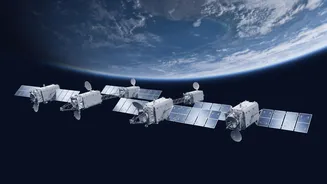
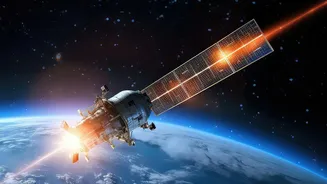
The plan doesn't require users to buy a bulky satellite phone. Starlink's 'direct-to-cell' service is designed to work with existing LTE smartphones. The satellites are equipped with advanced antennas that function as a cell tower in space. When you're in a remote area, your phone would connect directly to a Starlink satellite overhead. That signal is then relayed through a mesh network of satellites using lasers before being sent down to a ground station connected to the internet. For indoor coverage, the system would likely use a combination of the next-generation V2 satellites and the terrestrial spectrum to seamlessly connect devices everywhere. This hybrid approach is key to moving Starlink from a niche 'dead zone' solution to a full-fledged competitor.
What This Means for India
While SpaceX's mobile ambitions are clear in the US, the path in India is more complex. Starlink has been preparing to enter the Indian market for nearly five years and has already secured a key GMPCS licence. It has even formed partnerships with major players like Reliance Jio and Bharti Airtel. However, a commercial launch is still pending, awaiting final approvals including security clearance and a formal spectrum allocation framework from the government. The delay has been a point of public frustration for Elon Musk, who has questioned the holdup. Meanwhile, competitors like Bharti Enterprises' Sunil Bharti Mittal have noted that they are also in the queue for similar approvals, highlighting the rigorous regulatory environment for satellite communications in India.
The Competitive Landscape and Future Challenges
SpaceX's move has sent ripples through the telecom industry, with shares of major carriers dipping on the news of a powerful new potential competitor. SpaceX President Gwynne Shotwell has stated she anticipates acquiring customers from existing carriers by offering a better service that eliminates dead zones. However, the road ahead is challenging. Building out ground infrastructure takes significant time and resources. Furthermore, some existing partners are wary. The CEO of Deutsche Telekom, T-Mobile's parent company, has cautioned other carriers against partnerships that could help Starlink undermine their own business. While the promise of global, seamless connectivity is compelling, SpaceX must still navigate complex regulatory hurdles, manage massive infrastructure investment, and convince consumers to make the switch.